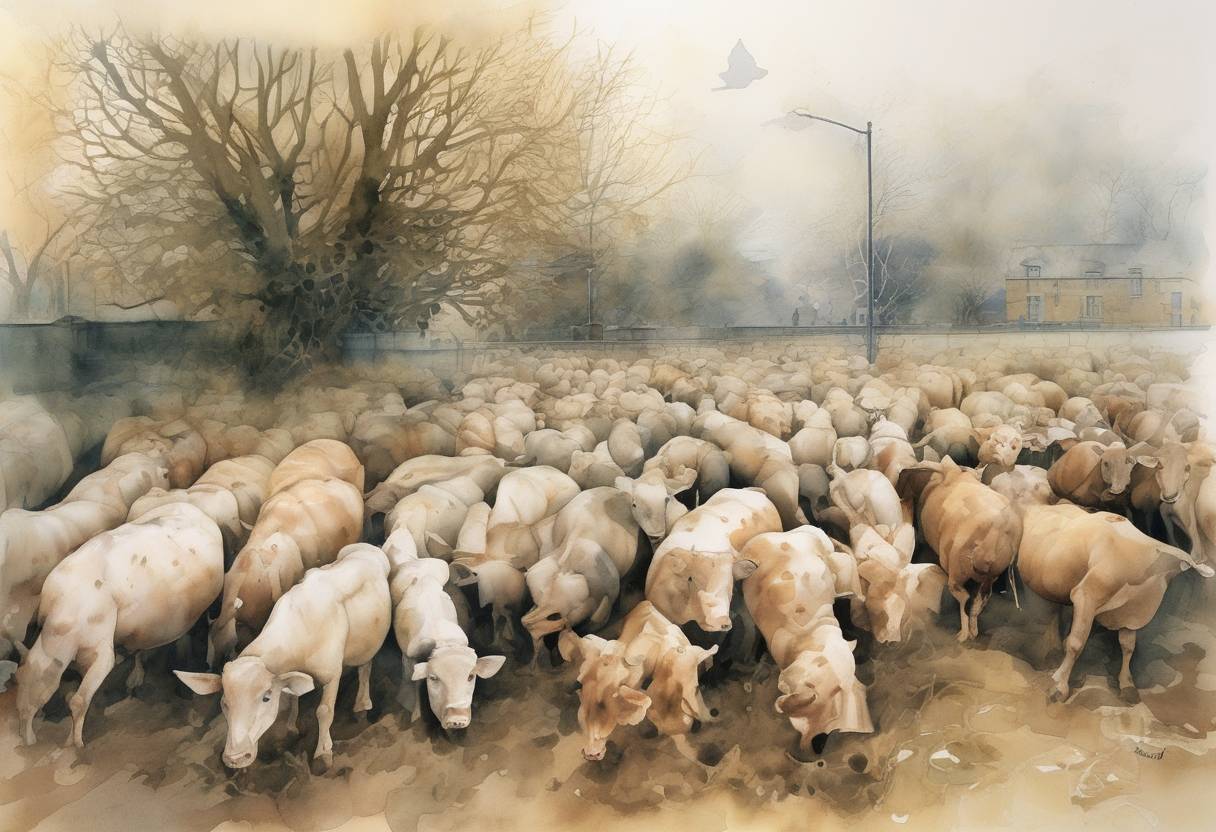
On March 5, 2001, the United Kingdom faced a significant escalation in its foot-and-mouth disease (FMD) crisis. The government announced the culling of thousands of animals in an effort to contain and prevent the further spread of the disease. This decision marked a critical point in a crisis that had profound impacts on the agricultural sector and rural communities across the country.
Background
Foot-and-mouth disease is a highly contagious viral disease that affects cloven-hoofed animals, including cattle, sheep, pigs, and goats. The outbreak in the UK began in February 2001, with the first case confirmed at an abattoir in Essex. The disease quickly spread to other parts of the country, prompting urgent measures to control it.
Key Events Leading Up to March 5, 2001
- February 19, 2001: The first case of FMD was confirmed in Essex, leading to immediate restrictions on animal movements.
- Late February 2001: The disease spread rapidly, with cases reported in various regions, including Cumbria and Devon, areas with significant livestock populations.
- Early March 2001: The government faced mounting pressure to take decisive action as the number of confirmed cases continued to rise.
March 5, 2001: Government’s Response
On March 5, 2001, the UK government announced a large-scale culling operation to control the outbreak. This involved the slaughter of thousands of animals in affected and at-risk areas. The decision was based on scientific advice that culling was necessary to prevent the disease from spreading further.
Measures Implemented
- Culling: The government ordered the culling of animals on infected farms and those within a certain radius of confirmed cases.
- Movement Restrictions: Strict controls were placed on the movement of livestock across the country to limit the spread of the virus.
- Public Awareness: Efforts were made to inform the public and farmers about the disease and the importance of biosecurity measures.
Consequences and Aftermath
The culling and movement restrictions had significant economic and social impacts:
- Economic Impact: The agricultural sector suffered heavy financial losses, with many farmers facing ruin due to the loss of livestock and the inability to trade.
- Rural Communities: The crisis affected rural communities deeply, leading to psychological stress and disruption of rural life.
- Tourism: The outbreak also impacted the tourism industry, as rural areas were effectively closed off to visitors.
Long-term Effects
The 2001 FMD outbreak led to changes in agricultural practices and policies, including:
- Improved Biosecurity: Enhanced biosecurity measures were implemented to prevent future outbreaks.
- Policy Reforms: The crisis prompted reviews and reforms in disease management and response strategies.
Historical Significance
The 2001 foot-and-mouth disease crisis highlighted the vulnerabilities of the agricultural sector to infectious diseases and underscored the importance of rapid response and effective management strategies. It also demonstrated the interconnectedness of agriculture, rural communities, and the broader economy.
The crisis remains a significant event in the history of UK agriculture, serving as a case study for managing animal disease outbreaks and their wide-ranging impacts.