The Trial of Former Egyptian President Mohamed Morsi
2014 · Cairo, Egypt
The trial of former Egyptian President Mohamed Morsi begins, where he faces charges related to inciting the killing of protesters during his time in office.
June 2, 2012
Former Egyptian President Hosni Mubarak was sentenced to life imprisonment for his role in the killing of protesters during the 2011 Egyptian revolution.
Cairo, Egypt | Egyptian Judiciary
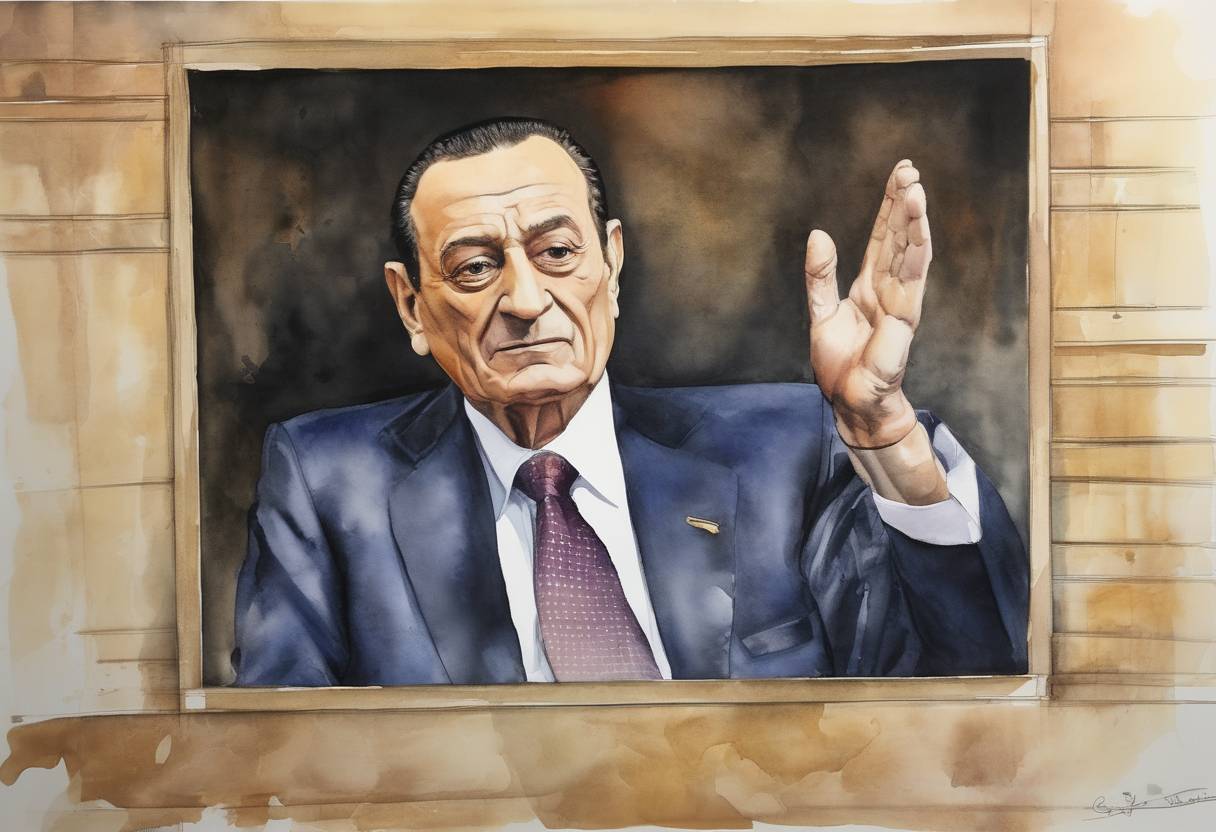
On June 2, 2012, former Egyptian President Hosni Mubarak was sentenced to life imprisonment for his role in the killing of protesters during the 2011 Egyptian revolution. This event marked a significant moment in Egypt’s tumultuous transition following the Arab Spring, which saw widespread protests and demands for political reform across the Middle East and North Africa.
Hosni Mubarak had been in power since 1981, ruling Egypt with an authoritarian grip. His regime was characterized by widespread corruption, economic stagnation, and political repression. The Egyptian revolution, part of the broader Arab Spring movement, began on January 25, 2011, with mass protests demanding Mubarak’s resignation, greater political freedom, and social justice.
The protests were met with a violent crackdown by security forces, resulting in the deaths of hundreds of demonstrators. The intensity of the protests and international pressure eventually led to Mubarak’s resignation on February 11, 2011, after 18 days of sustained demonstrations.
Mubarak’s trial began on August 3, 2011, and was a historic moment as it was the first time an Arab leader was tried in his own country by his own people. The charges against him included complicity in the killing of protesters and corruption. The trial was broadcast live on state television, capturing the attention of millions of Egyptians and the international community.
On June 2, 2012, the Cairo Criminal Court found Mubarak guilty of complicity in the killing of protesters and sentenced him to life imprisonment. The verdict was met with mixed reactions. Many Egyptians celebrated the ruling as a victory for justice and accountability, while others were dissatisfied, feeling that the sentence was too lenient and that Mubarak should have faced the death penalty.
The sentencing of Mubarak was a pivotal moment in Egypt’s post-revolutionary period, symbolizing a break from the past and a step towards accountability. However, the political landscape in Egypt remained unstable. The verdict did not quell public discontent, and protests continued, fueled by dissatisfaction with the pace of reforms and the military’s role in governance.
In 2014, Mubarak was retried and acquitted of the charges related to the killing of protesters, although he remained convicted on corruption charges. He was released from detention in 2017 after serving time for the corruption charges.
Mubarak’s trial and sentencing were emblematic of the challenges faced by countries in the aftermath of the Arab Spring. It highlighted the complexities of transitional justice and the difficulties in dismantling entrenched systems of power. The events surrounding Mubarak’s trial continue to influence Egyptian politics and the broader region’s approach to governance and reform.
Overall, the sentencing of Hosni Mubarak was a landmark event in Egypt’s modern history, reflecting both the potential for change and the enduring challenges of achieving true democratic reform.
Source: www.bbc.com