The Last Executions of the Salem Witch Trials: September 22, 1692
1692 · Salem, United States
The last executions of the Salem witch trials took place, with eight people hanged for witchcraft in Salem, Massachusetts.
February 29, 1692
The first warrants are issued in the Salem witch trials.
Salem, United States | Massachusetts Bay Colony
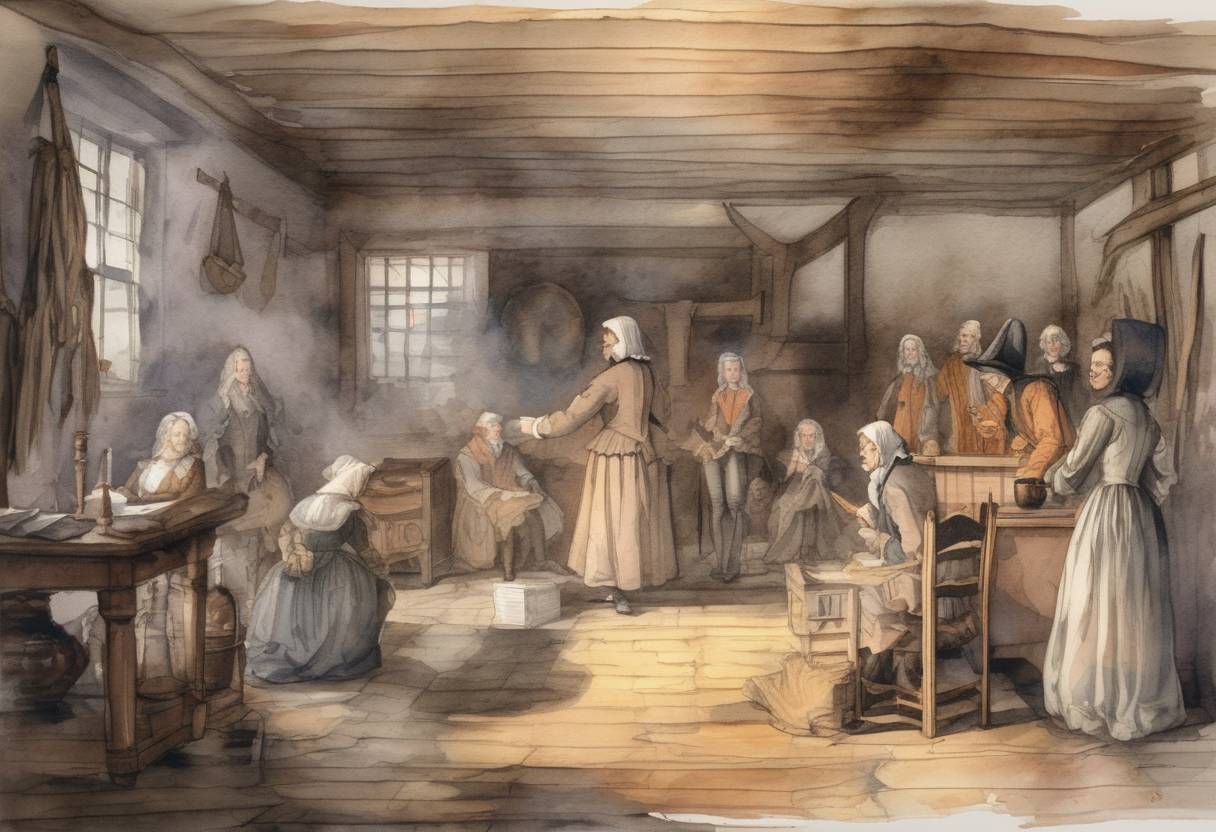
On February 29, 1692, the Salem witch trials began in earnest with the issuance of the first warrants for the arrest of individuals accused of witchcraft. This marked a pivotal moment in the infamous series of events that unfolded in colonial Massachusetts, leading to widespread hysteria and the eventual execution of 20 people.
The Salem witch trials were rooted in a complex web of social, religious, and political factors. The Puritan community of Salem Village (now Danvers, Massachusetts) was characterized by strict religious observance and a belief in the supernatural. Tensions were high due to local disputes, economic hardships, and fear of Native American attacks. In January 1692, the strange behavior of two young girls, Betty Parris and Abigail Williams, sparked concern. They exhibited fits, contortions, and outbursts, which were attributed to witchcraft.
On February 29, 1692, magistrates John Hathorne and Jonathan Corwin issued warrants for the arrest of three women: Sarah Good, Sarah Osborne, and Tituba, an enslaved woman of Native American and African descent. These women were among the first to be accused of practicing witchcraft, largely based on the testimony of the afflicted girls.
The arrest of these women set off a chain reaction of accusations and trials. Tituba’s confession under duress, in which she claimed to have been approached by the Devil and implicated others, fueled the hysteria. Her testimony was particularly influential, as it seemed to confirm the presence of a witchcraft conspiracy.
The trials continued throughout 1692, resulting in the arrest of over 150 people. The legal proceedings were marked by dubious evidence, such as spectral evidence (testimony that the spirit or specter of the accused was seen committing witchcraft), and the trials were conducted in an atmosphere of fear and paranoia.
The Salem witch trials concluded in May 1693, when Governor William Phips dissolved the special court and prohibited further arrests. The trials left a lasting impact on the American legal system, highlighting the dangers of mass hysteria and the importance of due process.
In the years following the trials, public opinion shifted, and many involved expressed regret. The events at Salem have since become a cautionary tale about the consequences of extremism and the breakdown of justice.
The Salem witch trials remain a significant chapter in American history, reflecting the complex interplay of fear, superstition, and societal pressures. They serve as a reminder of the importance of safeguarding individual rights and maintaining a fair judicial process.
Source: www.smithsonianmag.com