The Treaty of Rheinfelden (June 5, 1283)
1283 · Rheinfelden, Switzerland
The Treaty of Rheinfelden was signed, which was an agreement between the Habsburg brothers Albert I and Rudolf II, dividing their inheritance and territories.
September 7, 1379
The Treaty of Neuberg was signed, dividing the Habsburg lands between Albert III and Leopold III.
Neuberg an der Mürz, Austria | Habsburg Dynasty
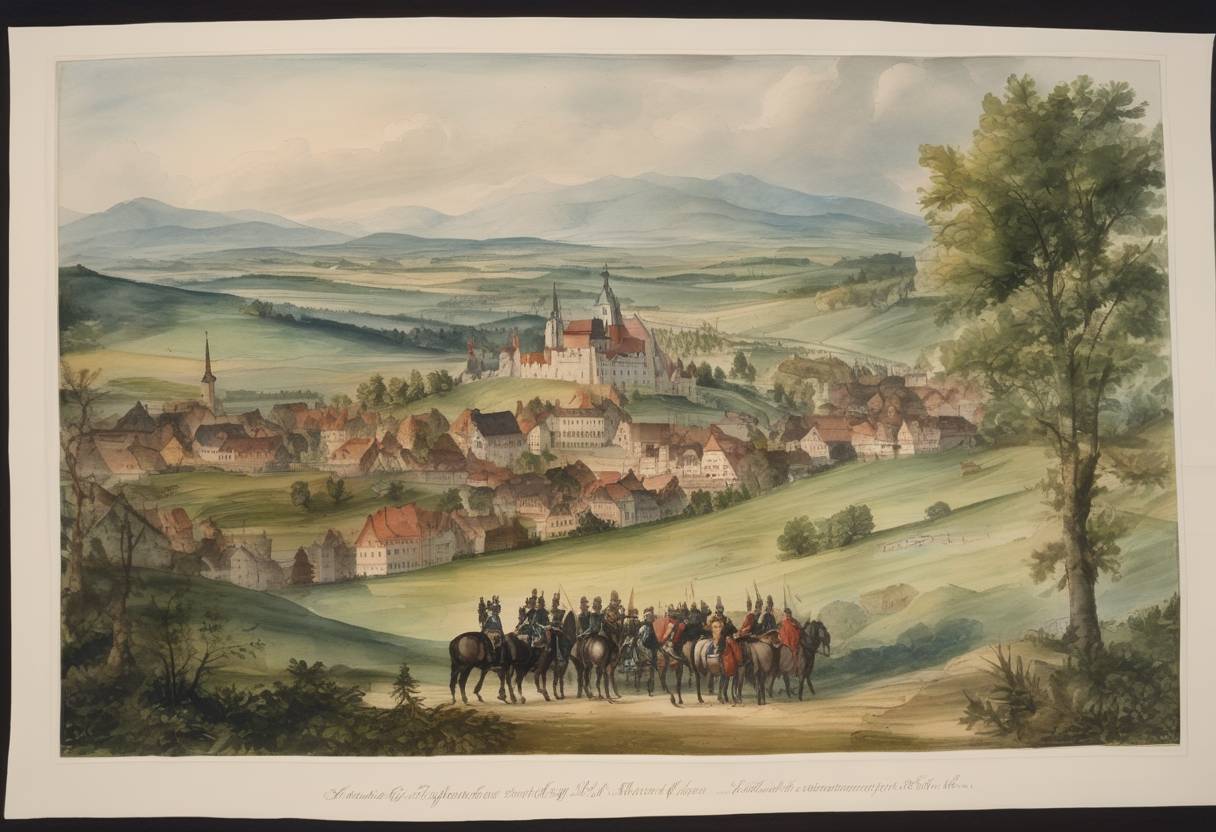
On September 9, 1379, the Treaty of Neuberg was signed, a significant event that led to the division of the Habsburg lands between Dukes Albert III and Leopold III of Austria. This treaty was a pivotal moment in the history of the Habsburg dynasty, shaping the political landscape of Central Europe for years to come.
The roots of the Treaty of Neuberg can be traced back to internal disputes within the Habsburg family regarding the rightful distribution of their expansive territories. The Habsburg dynasty, a prominent and influential ruling house, had acquired substantial lands across Central Europe by the late 14th century. However, these acquisitions had also led to conflicts over succession and territorial rights among family members.
Albert III (Albert with the Braid) and Leopold III were sons of Duke Albert II, and after their father’s death, they inherited the Habsburg lands. Disagreements on how to manage and govern these territories prompted the need for an official settlement, culminating in the Treaty of Neuberg.
The Treaty of Neuberg effectively split the Habsburg lands into two separate domains:
Albertinian Line: Albert III received control over the Duchy of Austria, which included the core regions such as Lower Austria and Upper Austria. These areas were economically prosperous and strategically significant, providing a strong foundation for Albert III’s rule.
Leopoldian Line: Leopold III was granted the rule over the other Habsburg territories, which included Styria, Carinthia, Carniola, as well as parts of present-day Slovenia and Italy. Despite the more fragmented nature of these regions, they allowed Leopold to establish a distinct power base.
The division of the Habsburg lands established by the Treaty of Neuberg had lasting implications. It marked the beginning of a dual branch structure within the Habsburg dynasty, which persisted for generations. The Albertinian and Leopoldian lines maintained separate domains, yet they remained under the overarching Habsburg umbrella, contributing to the dynasty’s enduring influence in European affairs.
The treaty also underscored the challenges of managing vast and diverse territories within a single monarchy, a recurring theme in the history of European noble houses. The impact of this division carried significant ramifications for the political dynamics of the region, influencing both internal governance and interactions with neighboring powers.
The Treaty of Neuberg is a notable example of how familial rivalries and the complexities of inheritance shaped medieval European politics, setting the stage for future developments within the Habsburg dynasty and the territories under their control.
Source: en.wikipedia.org