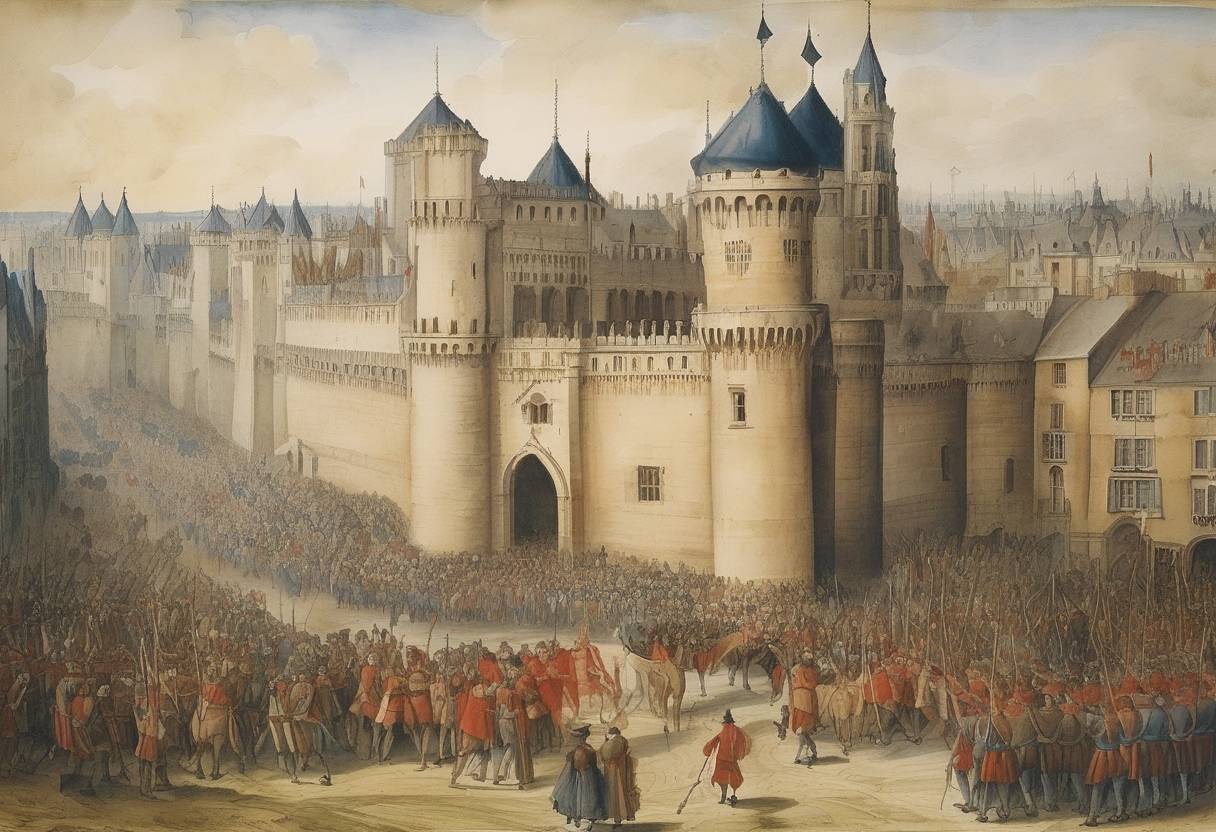
Expulsion of Jews from France on July 25, 1394
On July 25, 1394, King Charles VI of France issued an edict ordering the expulsion of all Jews from his kingdom. This decree followed a series of earlier European measures targeting Jewish communities, indicative of the widespread antisemitic sentiment of the period.
Context and Background
During the medieval period, Jews in Europe faced sporadic waves of persecution and expulsion, driven by religious intolerance, economic envy, and political manipulation. Prior to the 1394 expulsion, Jews in France had been subject to multiple expulsions and temporary returns. The fluctuations in their legal status were often driven by the financial needs of the monarchy, as Jews were a source of loans and taxes.
In 1182, King Philip II had expelled Jews from the royal domains and confiscated their properties, but they were subsequently readmitted under harsh conditions. Louis IX later prohibited the practice of Judaism in 1269, culminating in another expulsion in 1306. However, economic necessities and negotiations allowed for their gradual return over the following decades.
By the reign of Charles VI, Jews had been permitted to reside in various regions of France, albeit under restrictive conditions and heavy taxation. Nonetheless, they remained a marginalized community, frequently accused of crimes without evidence, including poisoning wells and desecrating the host.
The 1394 Edict
The 1394 expulsion was the result of escalating pressure from both the church and segments of the French populace who harbored longstanding antisemitic attitudes. Reports of ritual murder and host desecration, although unfounded, fueled a hostile environment. Encouraged by influential court advisors who viewed the Jewish presence as contrary to Christian values and unity, Charles VI enacted the expulsion edict.
The specific provisions of the edict demanded that all Jews leave the kingdom by All Saints’ Day, November 1, 1394. This expulsion marked the end of an official Jewish presence in France for over two centuries, until the formal acceptance of Jewish communities during the French Revolution.
Aftermath and Consequences
The expulsion decree had profound effects on the displaced Jewish communities. Many sought refuge in neighboring countries with more tolerant environments, such as the Papal States, parts of Germany, and the Eastern European principalities. The forced migration often resulted in the fragmentation of families and the loss of heritage and property.
This event underscored a broader trend across medieval Europe, where Jews were repeatedly subjected to expulsions and forced into diaspora. Despite this, Jewish communities adapted, maintained their cultural identity, and contributed significantly to the economic and cultural life of their new host lands.
The 1394 expulsion remains a poignant example of the persecution faced by Jews in the medieval era, a cycle of marginalization that paved the way for modern understandings of religious intolerance and ethnic discrimination.
Broader Historical Implications
The expulsion highlights the fragile nature of medieval Jewish existence in Christian-dominated societies and serves as an early example of religious intolerance facilitated by law. It contributed to shifts in the demographic and cultural landscapes of Western Europe and foreshadowed future episodes of systemic persecution. The resilience of the Jewish diaspora, despite such adversity, showcases their enduring capacity for cultural preservation and adaptation throughout history.