The Publication of the First Installment of 'The Pickwick Papers'
1836 · London, United Kingdom
The first installment of the serialized novel 'The Pickwick Papers' by Charles Dickens is published.
December 16, 1843
Charles Dickens' novella 'A Christmas Carol' was published for the first time. The work has become one of the most beloved Christmas stories and has had a lasting impact on holiday traditions.
London, United Kingdom | Chapman & Hall
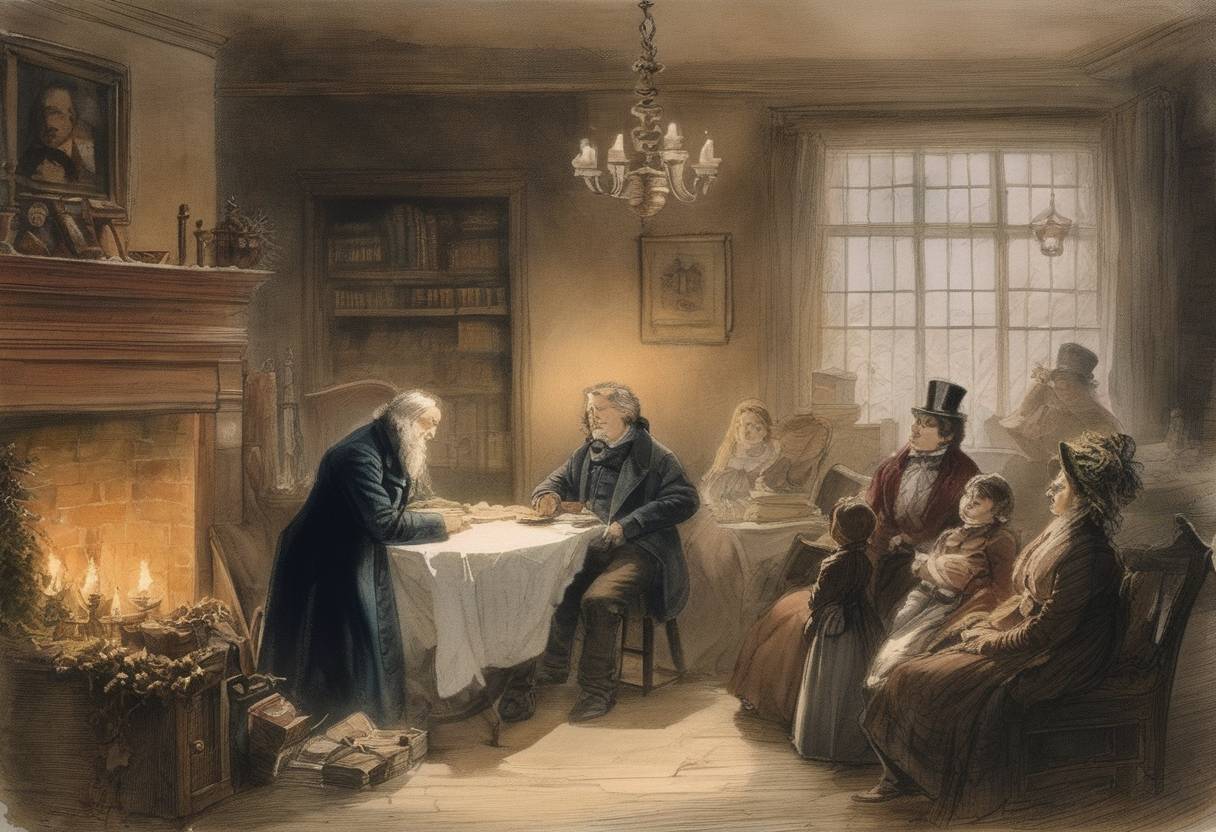
On December 19, 1843, Charles Dickens’ novella A Christmas Carol was published for the very first time in London by Chapman & Hall. Dickens wrote the book in a rapid six-week span, with the intention of addressing the social issues of his time, particularly the stark disparity between the wealthy and the poor.
In the early 19th century, England was undergoing significant social and economic changes. The Industrial Revolution led to urbanization and dramatic shifts in living conditions. Dickens, known for his social criticism, was deeply moved by the plight of the poor, especially children, which he witnessed in his visits to factories and law courts.
A Christmas Carol follows the story of Ebenezer Scrooge, a miserly old man who, after being visited by the ghosts of Christmas Past, Present, and Yet to Come, transforms into a more compassionate and generous individual. The novella’s themes of redemption, compassion, and the spirit of Christmas resonated deeply with readers.
The story had a profound cultural impact, popularizing the term “Merry Christmas” and influencing numerous holiday traditions related to generosity and festivity. It also contributed to the revival of Christmas as a major holiday, embedding the practice of family gatherings, seasonal generosity, and even festive decorations into popular culture.
The first edition of A Christmas Carol was a sensation, with the initial print of 6,000 copies selling out by Christmas Eve of the same year. Despite its rapid publication timeline, Dickens paid meticulous attention to the physical quality of the book, ensuring it was well-illustrated and bound, enhancing its appeal as a Christmas gift.
The novella was immediately praised for its heartwarming narrative and social conscience. Reviews from the period highlighted its ability to touch emotions and provoke reflection on personal and societal values.
Over the years, A Christmas Carol has never been out of print and has been adapted into numerous films, plays, and other media, cementing its status as one of the quintessential Christmas stories. The character of Scrooge remains an enduring symbol of personal redemption and the transformative power of kindness and empathy.
Charles Dickens’ work remains influential, reminding subsequent generations of the enduring Christmas spirit and the importance of community, charity, and goodwill.
Source: www.britannica.com