Jeong Do-jeon: Born November 29, 1342
1394 · Gyeongju, Korea
The Korean intellectual and philosopher Jeong Do-jeon was born.
October 2, 1392
King Taejo of Joseon ascended to the throne of Korea. This event marked the foundation of the Joseon Dynasty, which would go on to dominate Korean politics, society, and culture for over five centuries.
Seoul, Korea | Joseon Dynasty
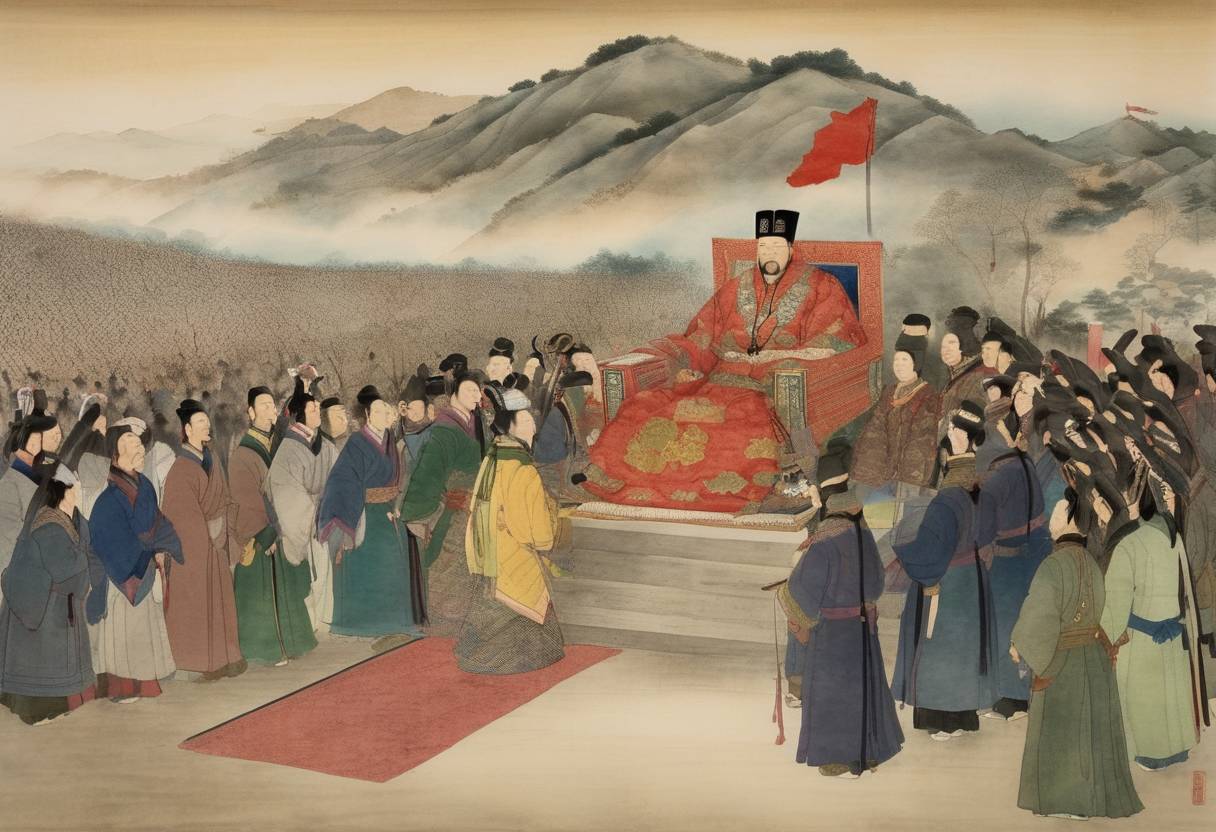
On October 2, 1392, 태조 (Taejo), formerly known as 이성계 (Yi Seong-gye), ascended the throne, marking the official foundation of the Joseon Dynasty in Korea. This event inaugurated an era that would extensively influence Korean politics, society, and culture for over five centuries until the dynasty’s end in 1910.
Before Taejo’s reign, Korea was under the rule of the Goryeo Dynasty, which had governed the Korean Peninsula since the 10th century. By the late 14th century, Goryeo was weakened by internal strife, corruption, and invasions by the Mongols. These challenges prompted widespread dissatisfaction and calls for reform.
Yi Seong-gye, a prominent military commander, leveraged his influence and popularity to address grievances within Goryeo. After successfully defending Korean territories against foreign threats, he gained significant military and popular support. His decisive actions in 1388, including his return from a campaign against the Ming Dynasty, known as the “Wihwado Retreat,” positioned him as a powerful figure capable of overthrowing the ineffective Goryeo regime.
The transition from Goryeo to Joseon was marked by political maneuvering, where Yi Seong-gye collaborated with reform-minded Confucian scholars and officials who sought to establish a new governance structure based on Confucian ideals. On October 2, 1392, Yi Seong-gye declared himself King Taejo of Joseon and took control of the state apparatus, officially ending the Goryeo Dynasty.
King Taejo’s ascension was significant not only for the foundation of a new dynasty but also for initiating profound changes in Korean society. Taejo and his successors prioritized Confucianism, which became the state ideology, shaping the social, political, and cultural landscape of Korea.
Taejo’s reign laid the groundwork for a centralized bureaucratic state with an emphasis on meritocracy, education, and cultural development. His leadership paved the way for notable successors, such as King Sejong the Great, who furthered Korea’s cultural and scientific advancements.
The Joseon Dynasty’s influence persists in contemporary Korea, with its foundations in governance, legal systems, and cultural traditions continuing to resonate. Taejo’s establishment of the dynasty marked a pivotal moment in Korean history, viewed as a time of innovation and stability that profoundly impacted the identity and development of Korea.
Source: en.wikipedia.org