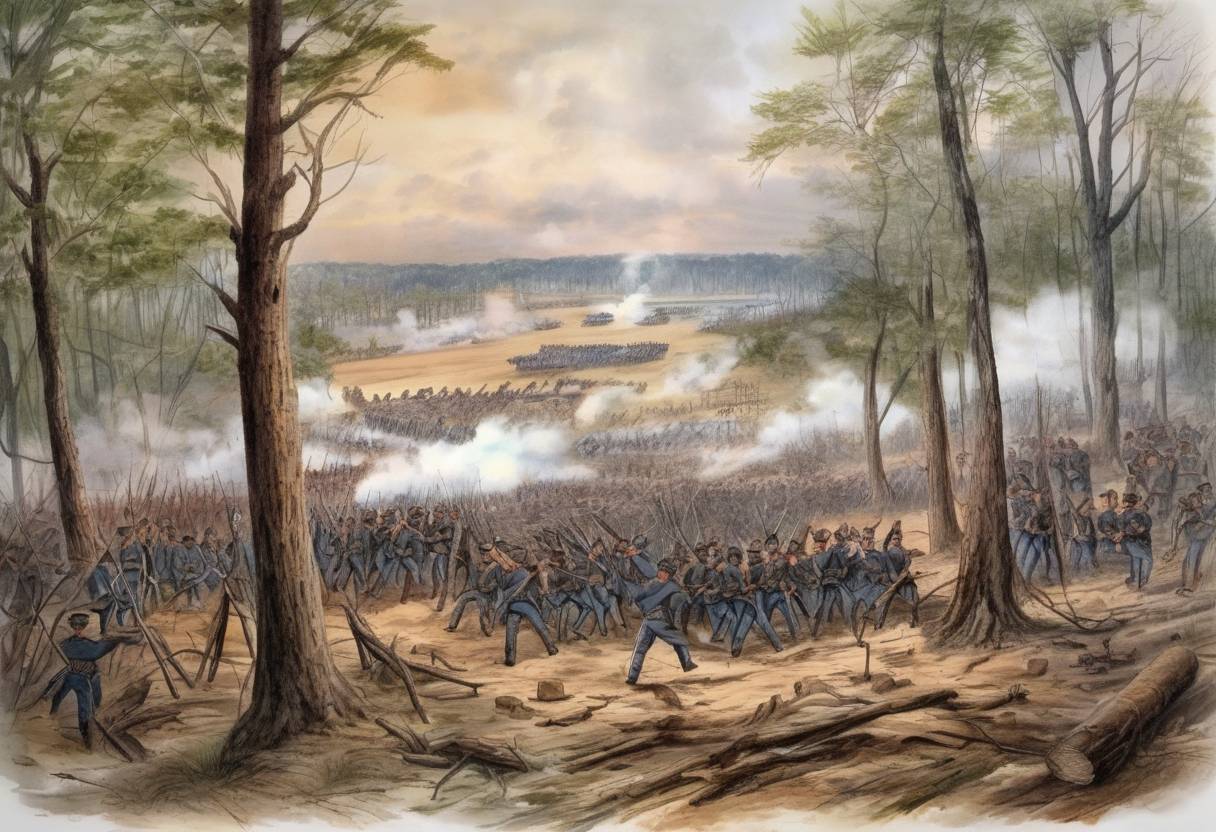
The Battle of Shiloh: April 6, 1862
The Battle of Shiloh, also known as the Battle of Pittsburg Landing, was a significant early engagement in the American Civil War, taking place on April 6-7, 1862, in southwestern Tennessee. This battle marked a pivotal moment in the Western Theater of the war and had profound implications for both the Union and Confederate forces.
Context and Prelude
- Location: The battle occurred near Pittsburg Landing on the Tennessee River, close to Shiloh Church, from which it derives its name.
- Union Strategy: Under the command of Major General Ulysses S. Grant, Union forces aimed to penetrate deeper into the Confederate-held South, following their success at Forts Henry and Donelson.
- Confederate Response: Confederate forces, led by General Albert Sidney Johnston and General P.G.T. Beauregard, sought to halt the Union advance and regain lost territory in Tennessee.
Key Events of April 6, 1862
- Surprise Attack: At dawn on April 6, Confederate forces launched a surprise attack on the Union encampment. The Union troops were largely unprepared, as they had not fortified their positions.
- Initial Confederate Success: The Confederates achieved early success, driving Union forces back towards the Tennessee River. The intensity of the attack caught many Union soldiers off guard, leading to significant initial losses.
- Hornet’s Nest: A fierce and prolonged battle occurred at a location known as the “Hornet’s Nest,” where Union troops held a stubborn defense, delaying Confederate advances and buying time for reinforcements.
Aftermath and Consequences
- Union Reinforcements: Overnight, Union reinforcements arrived, including troops led by Major General Don Carlos Buell. This bolstered Union strength and allowed them to launch a counterattack on April 7.
- Confederate Retreat: By the end of the second day, the Union forces had regained lost ground, and the Confederates were forced to retreat to Corinth, Mississippi.
- Casualties: The battle resulted in approximately 23,000 casualties, making it one of the bloodiest battles in American history at that time. The high number of casualties shocked both the North and the South.
Historical Significance
- Union Victory: The Union’s ability to hold their ground and eventually force a Confederate retreat marked a strategic victory, bolstering Northern morale and solidifying Grant’s reputation as a capable leader.
- Impact on the War: The Battle of Shiloh underscored the brutal and protracted nature of the Civil War, dispelling any illusions of a quick conflict. It highlighted the need for better preparation and fortifications in future engagements.
- Leadership Changes: The death of General Albert Sidney Johnston, one of the highest-ranking Confederate officers, during the battle was a significant loss for the Confederacy and led to leadership changes.
The Battle of Shiloh was a turning point in the Civil War, demonstrating the war’s potential for massive casualties and the importance of strategic planning and reinforcements in military engagements.