Warsaw Surrenders to Nazi Germany - September 27, 1939
1939 · Warsaw, Poland
Warsaw surrenders to Nazi Germany during the Invasion of Poland, marking a significant event in the early stages of World War II.
August 31, 1939
Nazi Germany stages a fake Polish attack on a German radio station, providing a pretext for the invasion of Poland.
Gleiwitz, Germany | Nazi Germany
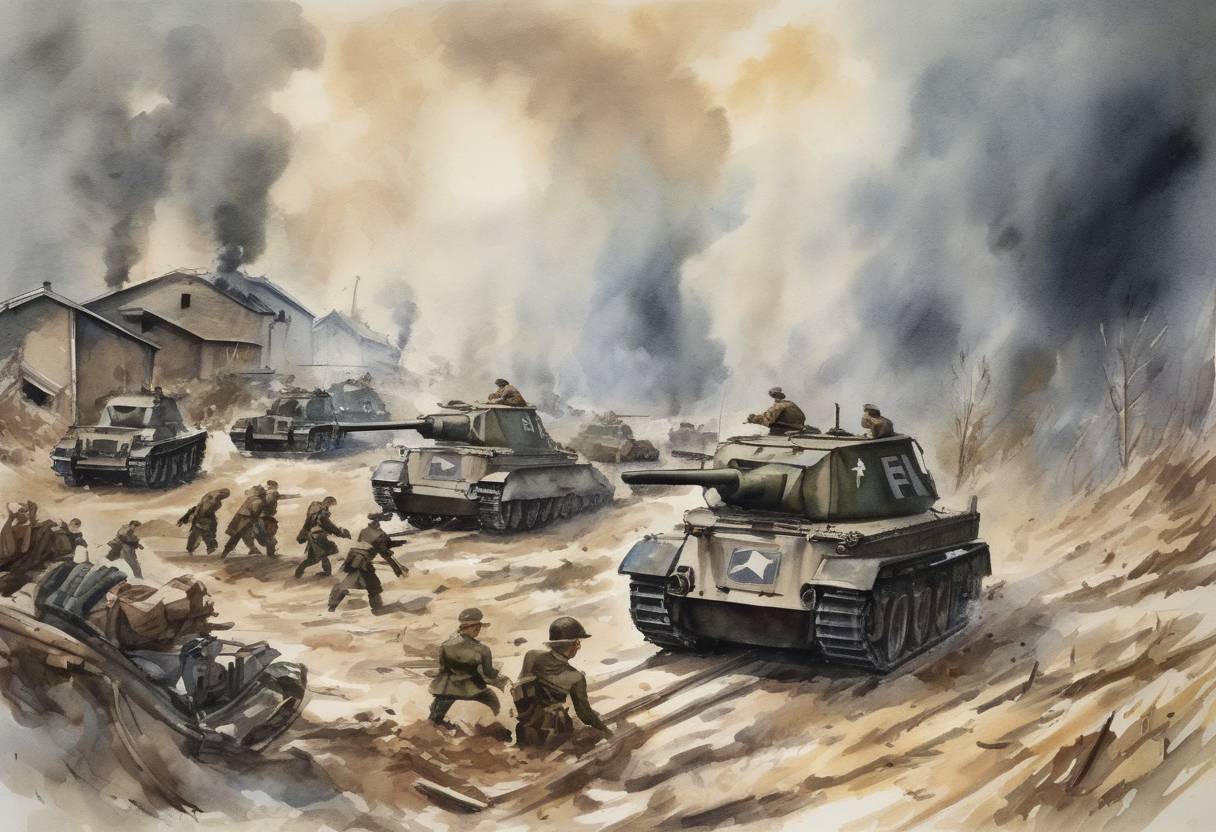
On August 31, 1939, Nazi Germany orchestrated a false flag operation known as the Gleiwitz Incident, which served as a pretext for the invasion of Poland. This event was part of a larger series of staged provocations, collectively referred to as Operation Himmler, designed to justify Germany’s aggressive military actions.
In the late 1930s, tensions between Germany and Poland were escalating. Adolf Hitler sought to expand German territory and influence, and Poland was a key target. However, to avoid international backlash, particularly from France and the United Kingdom, Germany needed to fabricate a justification for its planned invasion.
The Gleiwitz Incident took place at a German radio station located in Gleiwitz (now Gliwice, Poland), near the German-Polish border. The operation was masterminded by Heinrich Himmler, head of the SS, and executed by SS officer Alfred Naujocks.
Preparation: On the evening of August 31, a group of German operatives, dressed in Polish military uniforms, seized the radio station.
Broadcast: The operatives broadcasted an anti-German message in Polish, intended to make it appear as though Polish forces had attacked the station.
“Canned Goods”: To lend credibility to the ruse, the Germans used concentration camp prisoners, dressed them in Polish uniforms, and killed them at the site. These victims were referred to as “canned goods” (Konserve) in Nazi terminology.
The following day, on September 1, 1939, Germany launched its invasion of Poland, marking the beginning of World War II. Hitler cited the Gleiwitz Incident and other similar staged attacks as evidence of Polish aggression, justifying the invasion to the German public and the international community.
World War II: The invasion of Poland prompted Britain and France to declare war on Germany on September 3, 1939, officially starting World War II.
Propaganda: The Gleiwitz Incident exemplifies the use of propaganda and deception in warfare, highlighting the lengths to which the Nazi regime would go to manipulate public perception and international opinion.
Historical Impact: The incident remains a stark reminder of the dangers of fabricated pretexts for war and the devastating consequences that can follow.
In summary, the Gleiwitz Incident was a calculated act of deception by Nazi Germany, setting the stage for one of the most catastrophic conflicts in human history.
Source: en.wikipedia.org