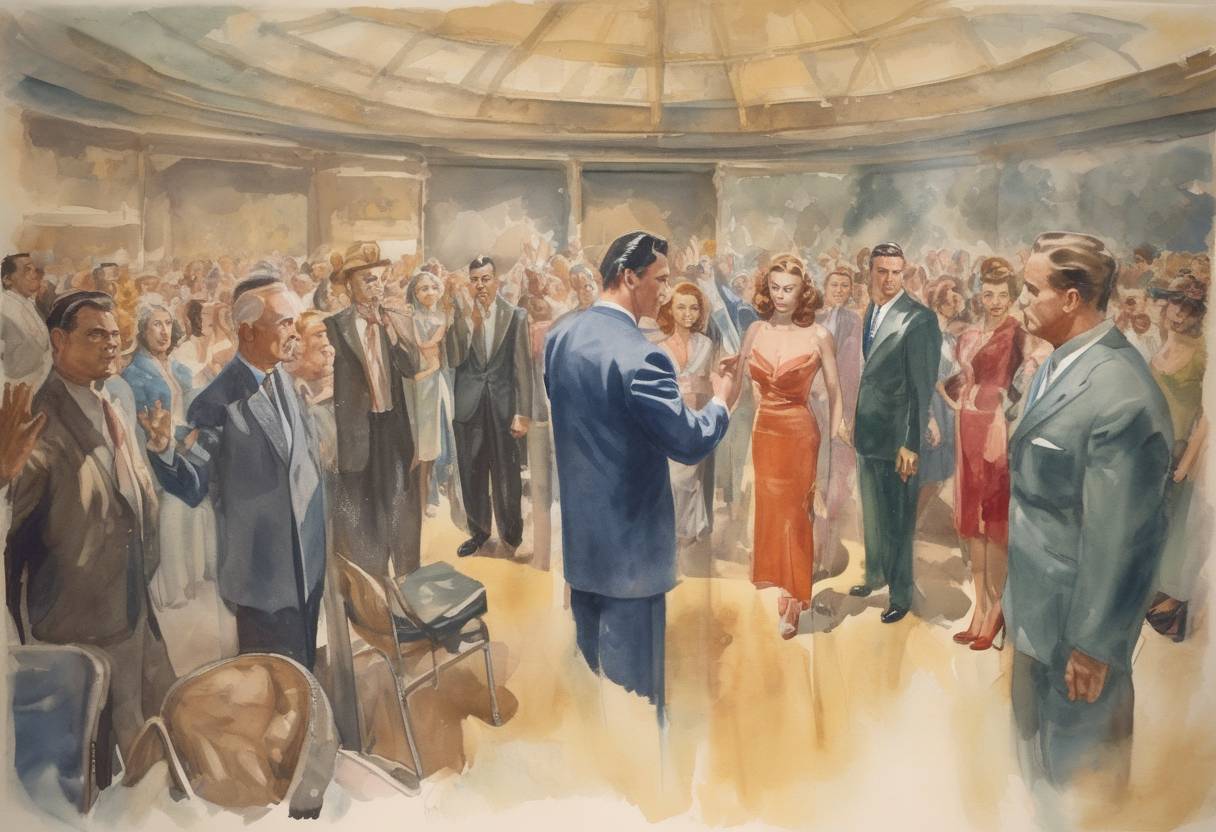
The Screen Actors Guild and the Voluntary Loyalty Oath - November 17, 1947
On November 17, 1947, the Screen Actors Guild (SAG) implemented a voluntary loyalty oath as part of a broader effort to combat alleged communist influence within Hollywood. This action was a response to the heightened political tensions of the era, particularly the fear of communist infiltration during the early stages of the Cold War.
Context
The late 1940s in the United States were marked by the Red Scare, a period of intense fear of communism and its potential spread within American institutions. This fear was exacerbated by the geopolitical tensions between the United States and the Soviet Union following World War II. In Hollywood, concerns about communist influence were particularly pronounced, given the industry’s significant cultural impact.
The House Un-American Activities Committee (HUAC) played a central role in investigating alleged communist activities. In 1947, HUAC held hearings to probe communist influence in the film industry, leading to the infamous Hollywood blacklist, which barred individuals suspected of communist ties from working in the industry.
The Loyalty Oath
In this climate of suspicion and fear, the Screen Actors Guild, under the presidency of Ronald Reagan, introduced a voluntary loyalty oath. The oath was designed to affirm the patriotism of its members and distance the guild from any perceived communist sympathies. Members who took the oath pledged their allegiance to the United States and disavowed any affiliation with the Communist Party.
Key Events Leading Up to the Oath
HUAC Hearings: The HUAC hearings in October 1947 were pivotal, as they brought national attention to the issue of communism in Hollywood. The hearings resulted in the Hollywood Ten, a group of screenwriters and directors who were blacklisted for refusing to testify.
Industry Pressure: The film industry faced significant pressure from both the government and the public to demonstrate its loyalty to American values. Studios and guilds were eager to avoid negative publicity and potential boycotts.
Aftermath and Consequences
Hollywood Blacklist: The loyalty oath was part of a broader trend that saw many in Hollywood blacklisted, losing their jobs and careers due to real or suspected communist affiliations. The blacklist persisted for over a decade, significantly impacting the lives and careers of many artists.
Cultural Impact: The loyalty oath and the blacklist had a chilling effect on creative expression in Hollywood. Many artists were forced to work under pseudonyms or leave the country to continue their careers.
Legacy: The events of this period are now seen as a cautionary tale about the dangers of political paranoia and the infringement of civil liberties. The loyalty oath and the blacklist are often cited in discussions about freedom of speech and the role of government in regulating cultural industries.
In summary, the implementation of the voluntary loyalty oath by the Screen Actors Guild on November 17, 1947, was a significant moment in Hollywood’s history, reflecting the broader societal fears and political pressures of the time. It serves as a reminder of the complex interplay between politics and culture during the Cold War era.