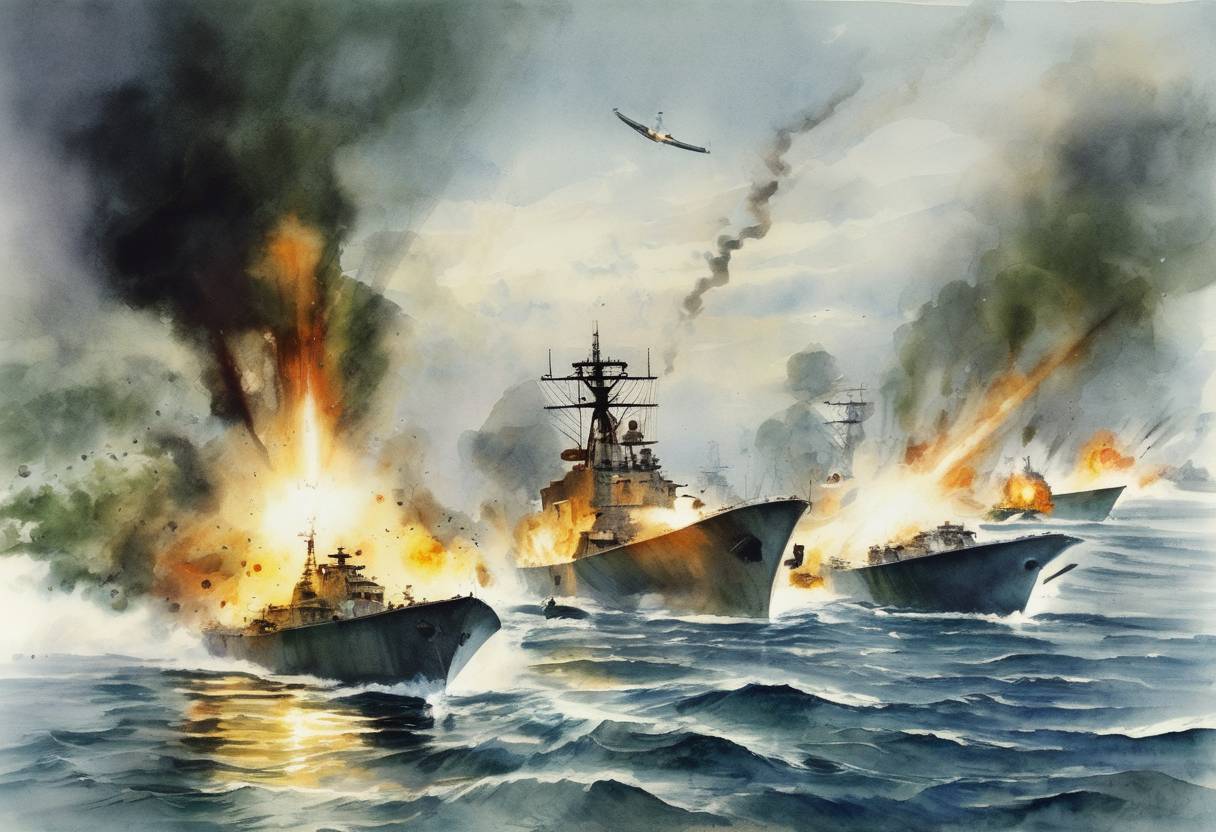
Vietnam War: American Warships Begin Bombardment - May 27, 1965
On May 27, 1965, during the Vietnam War, American warships commenced their first bombardment of National Liberation Front (NLF) targets within South Vietnam. This marked a significant escalation in U.S. military involvement in the conflict, reflecting a shift in strategy and an intensification of efforts to combat the communist forces.
Context Leading Up to the Event
The Vietnam War was a prolonged conflict that pitted the communist government of North Vietnam and its allies in South Vietnam, known as the Viet Cong or National Liberation Front, against the government of South Vietnam and its principal ally, the United States. The war was rooted in the broader context of the Cold War, with the U.S. aiming to prevent the spread of communism in Southeast Asia.
By 1965, the situation in Vietnam had deteriorated significantly. The Viet Cong had increased their insurgency activities, and the South Vietnamese government was struggling to maintain control. In response, the U.S. began to escalate its military involvement, transitioning from an advisory role to active combat operations.
The Bombardment
The bombardment on May 27, 1965, involved U.S. Navy warships targeting NLF positions in South Vietnam. This operation was part of a broader strategy to weaken the Viet Cong’s military capabilities and disrupt their supply lines. The use of naval artillery was intended to support ground operations and provide a tactical advantage to South Vietnamese and American forces.
Significance and Consequences
The bombardment signaled a new phase in the Vietnam War, characterized by increased American military intervention. It demonstrated the U.S. commitment to supporting the South Vietnamese government and highlighted the growing intensity of the conflict.
The escalation of military actions, including naval bombardments, contributed to the increasing U.S. troop presence in Vietnam. By the end of 1965, the number of American troops in Vietnam had risen significantly, marking a deeper entanglement in the war.
The intensification of the conflict had far-reaching consequences, both domestically and internationally. It led to increased anti-war sentiment in the United States and sparked widespread protests. The war’s escalation also strained U.S. relations with other countries and contributed to the broader geopolitical tensions of the Cold War era.
Conclusion
The bombardment of NLF targets by American warships on May 27, 1965, was a pivotal moment in the Vietnam War, reflecting the U.S.’s deepening involvement in the conflict. It underscored the challenges of the war and foreshadowed the prolonged and costly military engagement that would continue for years to come.