NASA Launches the Mars Science Laboratory Mission
2011 · Cape Canaveral, United States
NASA launches the Mars Science Laboratory mission, with its rover Curiosity, from Cape Canaveral, Florida, to explore the Gale Crater on Mars.
November 18, 2013
NASA launched the MAVEN spacecraft to study the Martian atmosphere, aiming to understand the planet's climate history and the loss of its atmosphere.
Cape Canaveral, United States | NASA
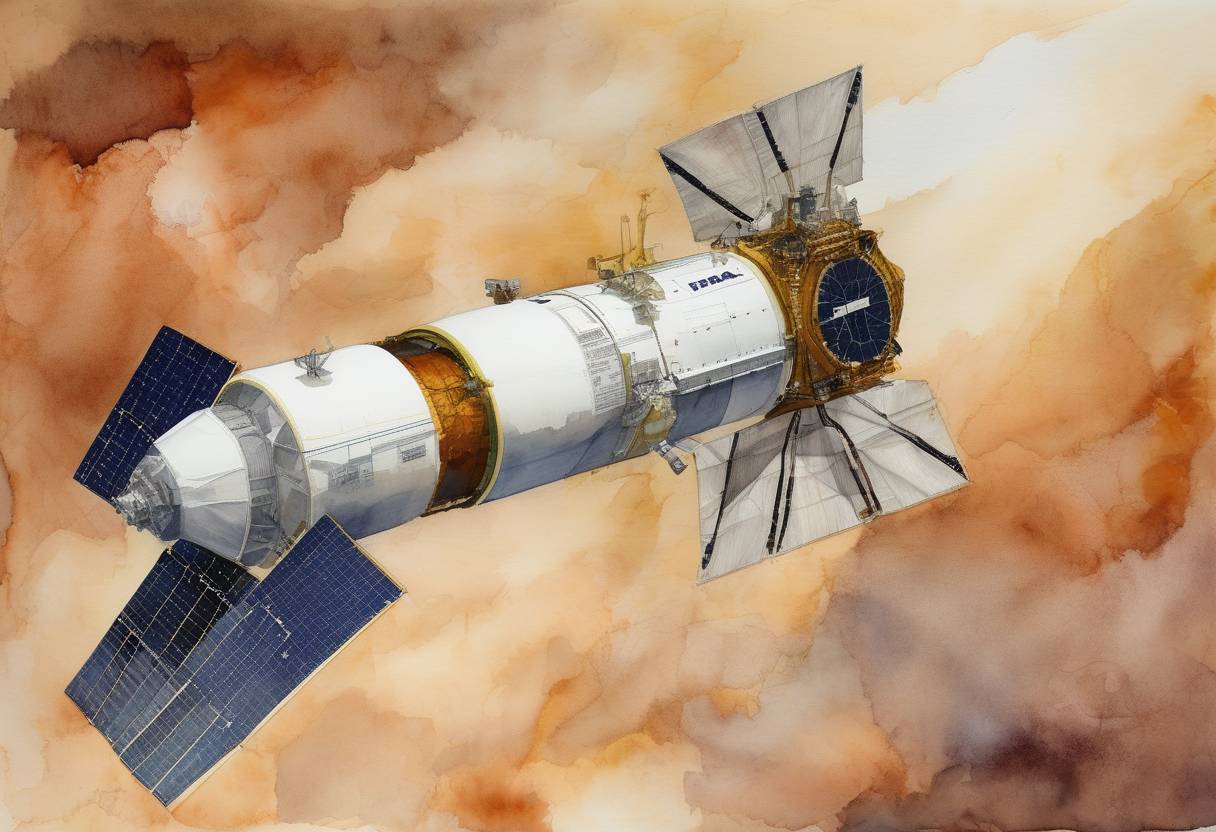
On November 18, 2013, NASA successfully launched the Mars Atmosphere and Volatile EvolutioN (MAVEN) spacecraft. This mission was a significant step in understanding the Martian atmosphere and its climate history, particularly focusing on how Mars lost much of its atmosphere over time.
Mars, often referred to as the “Red Planet,” has long intrigued scientists due to its similarities and differences with Earth. One of the most compelling mysteries is how Mars transitioned from a potentially warm and wet planet to the cold, arid world we see today. Understanding the loss of its atmosphere is crucial to unraveling this mystery.
The primary objectives of the MAVEN mission were:
Study the Upper Atmosphere: MAVEN was designed to explore the upper atmosphere of Mars, including the ionosphere and the interactions with the solar wind.
Understand Atmospheric Loss: By examining the current rate of atmospheric escape to space, MAVEN aimed to provide insights into how much atmosphere Mars has lost over time.
Climate History: The data collected would help scientists reconstruct the planet’s climate history and assess its habitability in the past.
Mission Approval: MAVEN was selected as part of NASA’s Mars Scout Program, which focused on smaller, cost-effective missions to explore Mars.
Development and Construction: The spacecraft was developed by NASA’s Goddard Space Flight Center, with significant contributions from the University of Colorado Boulder, Lockheed Martin, and other partners.
Launch Preparation: The spacecraft was launched aboard an Atlas V rocket from Cape Canaveral Air Force Station in Florida.
The MAVEN mission has provided critical data that has enhanced our understanding of Mars’ atmospheric loss and its implications for the planet’s climate history. The findings have been instrumental in piecing together the environmental changes Mars has undergone, offering clues about its potential to support life in the past.
The successful launch and operation of the MAVEN spacecraft marked a pivotal moment in Mars exploration. By shedding light on the atmospheric processes of Mars, MAVEN has contributed significantly to our understanding of planetary atmospheres and the factors influencing their evolution, offering broader insights into the habitability of planets beyond Earth.
Source: www.nasa.gov