August 29, 1526

The Battle of Mohács took place, marking a decisive victory for the Ottoman Empire over the Kingdom of Hungary. This battle led to the partition of Hungary for several centuries.


Mohács, Hungary | Ottoman Empire
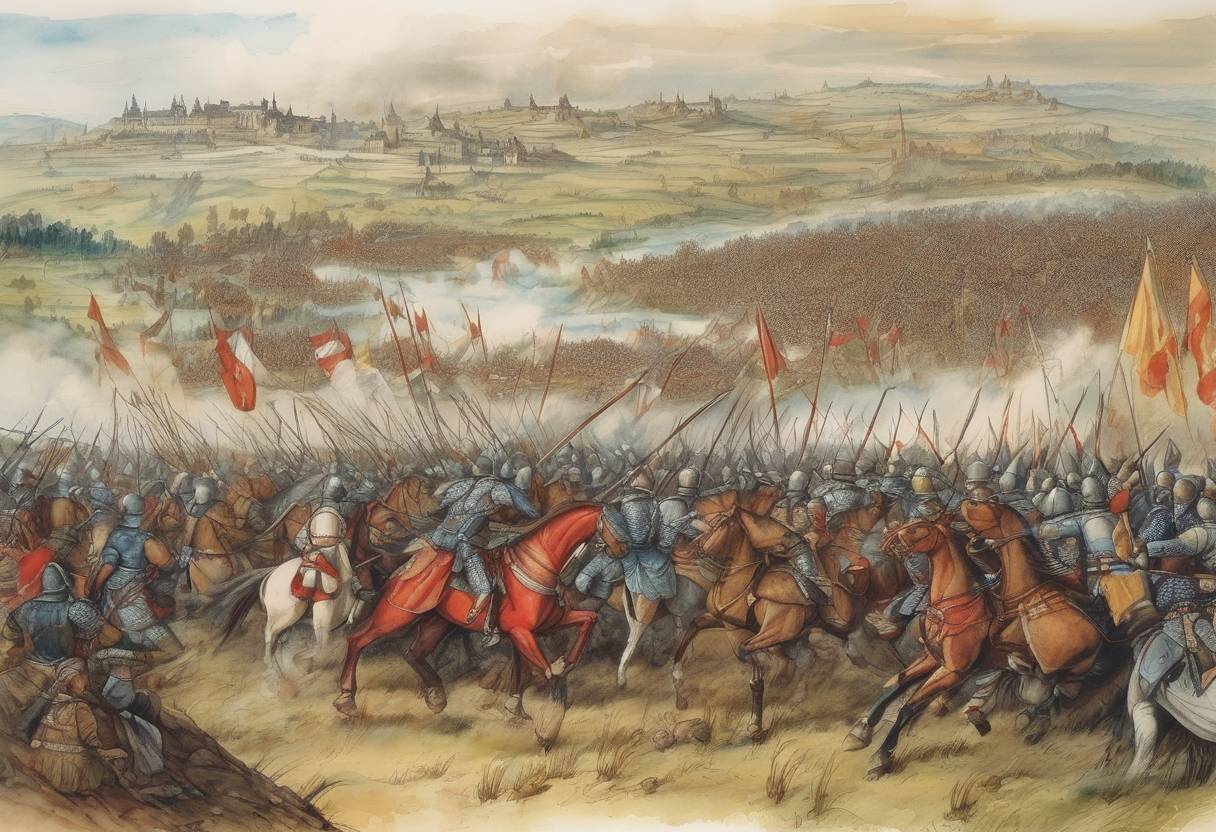
Watercolor painting based depiction of The Battle of Mohács took place, marking a decisive victory for the Ottoman Empire over the Kingdom of Hungary. This battle led to the partition of Hungary for several centuries. (1526)

The Battle of Mohács: A Decisive Ottoman Victory

Context and Prelude

The Battle of Mohács, fought on August 29, 1526, was a pivotal conflict between the forces of the Ottoman Empire, led by Sultan Suleiman the Magnificent, and the Kingdom of Hungary, under King Louis II. This battle was a significant event in the expansion of the Ottoman Empire into Central Europe and marked a turning point in Hungarian history.

Background

  • Ottoman Expansion: By the early 16th century, the Ottoman Empire had been steadily expanding its territories in Europe. The fall of Constantinople in 1453 and subsequent conquests in the Balkans set the stage for further incursions into Central Europe.
  • Hungarian Vulnerability: The Kingdom of Hungary, weakened by internal strife and lacking strong alliances, was ill-prepared to face the might of the Ottoman military machine. The death of King Matthias Corvinus in 1490 had left Hungary politically fragmented.

The Battle

Forces Involved

  • Ottoman Army: Commanded by Suleiman the Magnificent, the Ottoman forces were well-organized and equipped, numbering around 60,000 to 100,000 troops, including elite Janissaries and formidable artillery units.
  • Hungarian Army: King Louis II led a hastily assembled army of approximately 25,000 to 30,000 soldiers, comprising nobility, mercenaries, and local levies.

The Conflict

  • Location: The battle took place near the town of Mohács, in southern Hungary, a strategically significant location for controlling the Danube River and access to Central Europe.
  • Outcome: The battle was brief but devastating. The Hungarian forces were overwhelmed by the superior numbers and tactics of the Ottomans. King Louis II died during the retreat, reportedly drowning in a nearby river.

Aftermath and Consequences

  • Partition of Hungary: The defeat at Mohács led to the effective collapse of the medieval Kingdom of Hungary. The territory was divided into three parts:

    • Ottoman Hungary: The central and southern regions came under direct Ottoman control.
    • Habsburg Hungary: The western and northern parts were absorbed into the Habsburg Monarchy.
    • Principality of Transylvania: This region became a semi-independent vassal state under Ottoman suzerainty.
  • Long-term Impact: The partition of Hungary lasted for over 150 years, significantly altering the political landscape of Central Europe. The battle also marked the beginning of a prolonged period of Ottoman dominance in the region.

Historical Significance

The Battle of Mohács is often seen as a symbol of the end of the medieval Hungarian kingdom and the beginning of a new era of Ottoman influence in Europe. It underscored the military prowess of the Ottoman Empire and highlighted the vulnerabilities of European states during this period. The battle’s outcome had lasting implications for the balance of power in Europe and set the stage for future conflicts between the Ottomans and European powers.