Eugene B. Ely's Historic Landing on the USS Pennsylvania
1911 · San Francisco, United States
Eugene B. Ely landed on the deck of the USS Pennsylvania stationed in San Francisco Bay, marking the first time an aircraft landed on a ship.
November 14, 1910
Eugene Burton Ely performs the first takeoff from a ship, the USS Birmingham, in Hampton Roads, Virginia, marking a significant event in naval aviation history.
Hampton Roads, United States | United States Navy
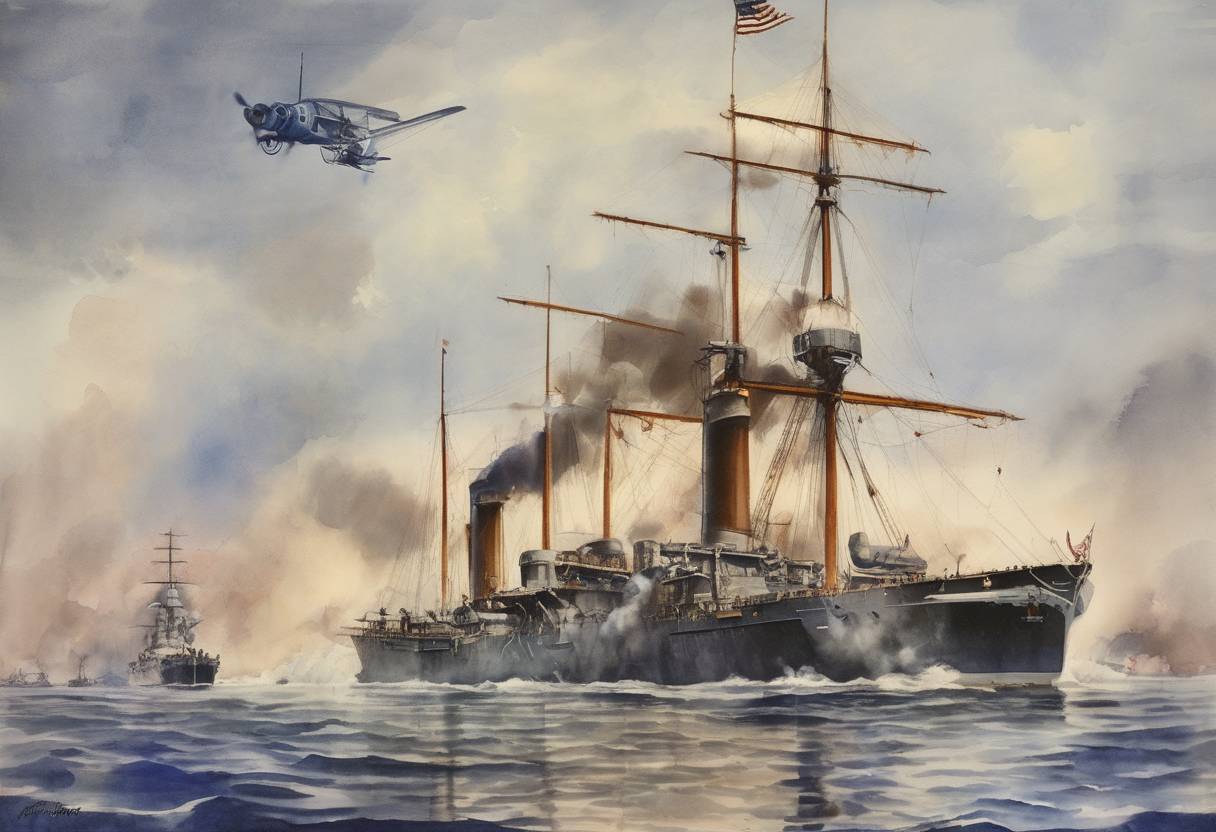
On November 14, 1910, Eugene Burton Ely, an American aviator, made history by performing the first successful takeoff from a ship, marking a pivotal moment in naval aviation. This event took place in Hampton Roads, Virginia, and involved the USS Birmingham, a light cruiser of the United States Navy.
Eugene Burton Ely: Ely was a pioneering aviator born in 1886 in Iowa. He was known for his daring spirit and innovative contributions to early aviation. Before his historic flight, Ely worked as a demonstration pilot for Glenn Curtiss, a prominent aviation pioneer and manufacturer.
Naval Aviation Interest: At the turn of the 20th century, the U.S. Navy was exploring the potential of integrating aircraft into naval operations. The ability to launch and recover aircraft from ships was seen as a strategic advantage, offering enhanced reconnaissance and offensive capabilities.
Preparation: The USS Birmingham was fitted with a temporary wooden platform extending over its bow to facilitate the takeoff. The platform was about 83 feet long and sloped downward to provide additional lift for the aircraft.
The Aircraft: Ely piloted a Curtiss Model D biplane, which was equipped with a 50-horsepower engine. The aircraft was modified with flotation devices in case of a water landing.
The Flight: On the afternoon of November 14, Ely successfully took off from the USS Birmingham. The takeoff was not without challenges; the aircraft dipped dangerously close to the water, and its wheels briefly touched the surface before gaining altitude.
Landing: Ely landed safely on a nearby beach, completing the first-ever takeoff from a ship. This demonstration proved the feasibility of ship-based aviation operations.
Impact on Naval Strategy: Ely’s successful takeoff demonstrated the potential for aircraft to operate from naval vessels, influencing future naval strategies and the development of aircraft carriers.
Further Developments: Ely continued to push the boundaries of naval aviation. On January 18, 1911, he performed the first successful landing on a ship, the USS Pennsylvania, in San Francisco Bay, further cementing his legacy in aviation history.
Legacy: Ely’s pioneering efforts laid the groundwork for the development of modern aircraft carriers and naval aviation tactics. His achievements are celebrated as significant milestones in the integration of aviation into naval operations.
Eugene Burton Ely’s daring takeoff from the USS Birmingham remains a landmark event in the history of aviation, showcasing the innovative spirit and courage that drove early aviators to expand the horizons of flight.
Source: en.wikipedia.org