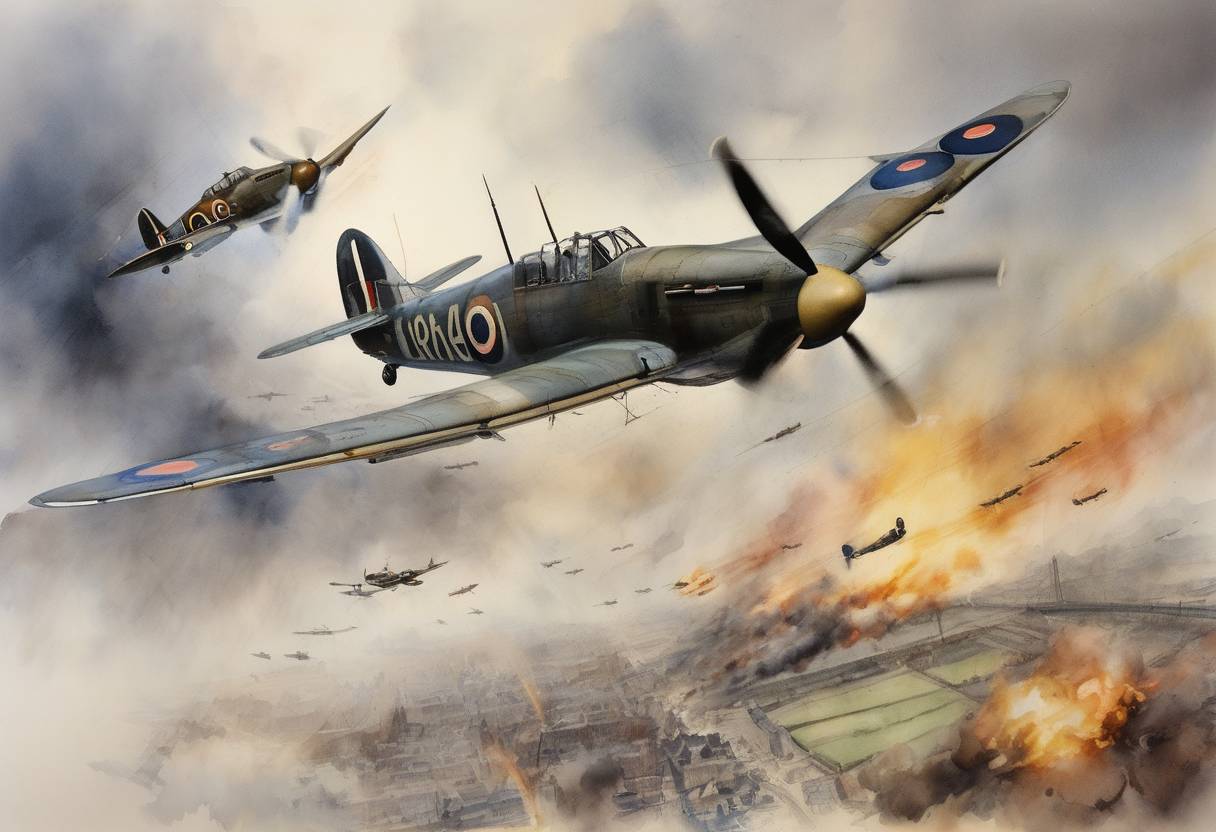
The Battle of Britain: Climax on September 15, 1940
On September 15, 1940, the Battle of Britain reached its critical climax as the Royal Air Force (RAF) successfully repelled a massive onslaught by the German Luftwaffe. This day is often celebrated as “Battle of Britain Day” due to its pivotal role in the outcome of the battle and, by extension, World War II.
Context and Background
The Battle of Britain was a military campaign of the Second World War, in which the Royal Air Force defended the United Kingdom against large-scale attacks by Nazi Germany’s air force, the Luftwaffe. Following the fall of France in June 1940, Adolf Hitler aimed to compel Britain to agree to a negotiated peace settlement. The Luftwaffe’s objective was to gain air superiority over the RAF, especially Fighter Command, as a prelude to a possible invasion of Britain, codenamed Operation Sea Lion.
Key Events of September 15, 1940
Morning Attack: On the morning of September 15, the Luftwaffe launched a major assault involving around 250 bombers and fighters. The RAF, under the command of Air Chief Marshal Hugh Dowding and Fighter Command leader Air Vice-Marshal Keith Park, scrambled to intercept the incoming waves.
RAF Response: The RAF deployed nearly every available fighter squadron to counter the attack. The intense air battles saw the RAF’s Spitfires and Hurricanes engage the German bombers and their fighter escorts in fierce dogfights.
Afternoon Assault: A second wave of attacks followed in the afternoon, with similar intensity. The RAF once again rose to the challenge, successfully dispersing the Luftwaffe formations.
Outcome and Significance
German Losses: The Luftwaffe suffered significant losses, with around 60 aircraft destroyed or damaged, while the RAF lost approximately 26 aircraft. The high attrition rate for the Germans was unsustainable.
Turning Point: The successful defense on September 15 marked a turning point in the Battle of Britain. It demonstrated the resilience and effectiveness of the RAF, bolstering British morale and proving that the Luftwaffe could be defeated.
Strategic Impact: The failure to achieve air superiority forced Hitler to postpone and eventually cancel Operation Sea Lion. The battle’s outcome ensured that Britain remained a formidable base for Allied operations, ultimately contributing to the eventual liberation of Western Europe.
Aftermath
The Battle of Britain continued until the end of October 1940, but the Luftwaffe gradually shifted its focus to night-time bombing raids, known as the Blitz. The RAF’s victory in the Battle of Britain was a crucial moment in the war, as it thwarted Hitler’s plans for invasion and maintained Britain’s position as a key member of the Allied forces.
The events of September 15, 1940, are commemorated annually in the United Kingdom as a testament to the bravery and skill of the RAF pilots and their critical role in defending the nation during one of its darkest hours.