The First Launch of Space Shuttle Columbia: April 12, 1981
1981 · Cape Canaveral, United States
The first launch of a Space Shuttle, Columbia, occurred, marking the beginning of the Space Shuttle program by NASA.
January 5, 1972
U.S. President Richard Nixon ordered the development of a space shuttle program.
Washington, D.C., United States | NASA
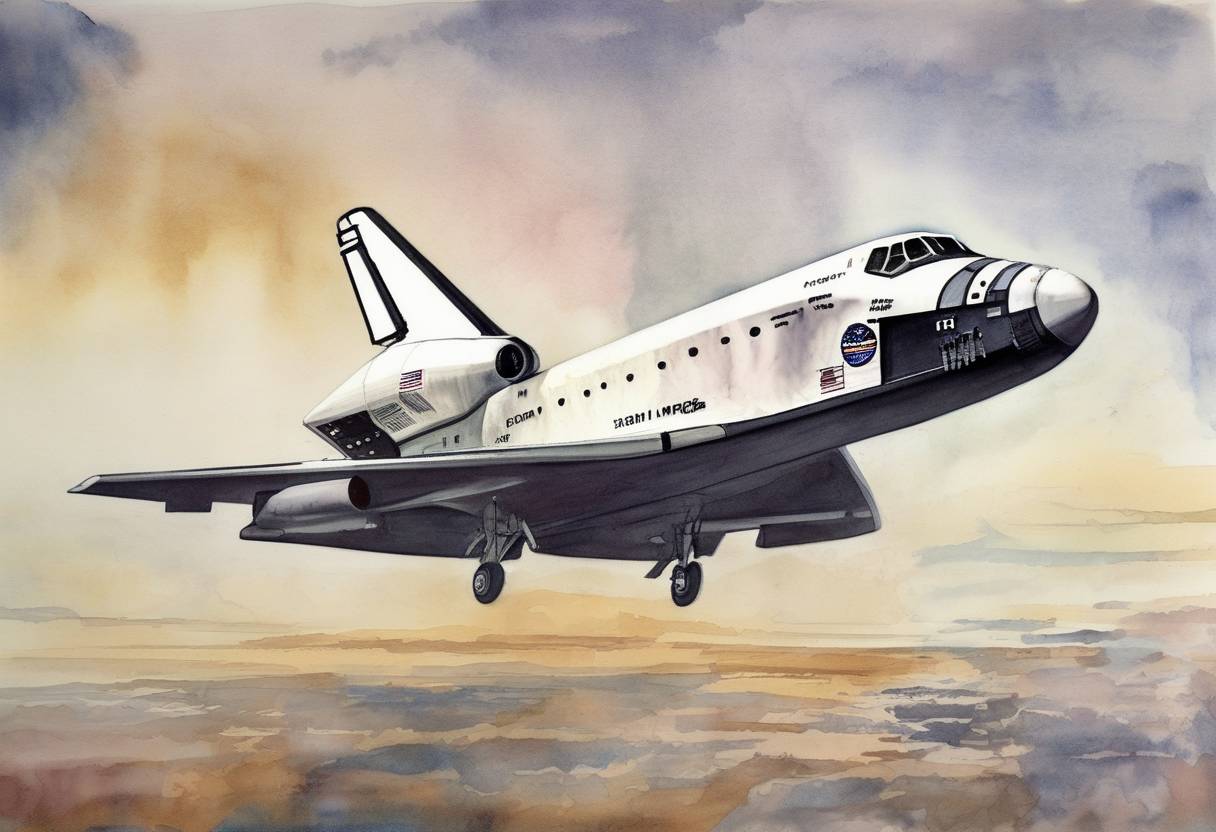
On January 5, 1972, U.S. President Richard Nixon announced the decision to proceed with the development of a reusable space shuttle program. This pivotal decision marked a significant shift in the United States’ approach to space exploration and transportation, setting the stage for the future of NASA’s human spaceflight endeavors.
The announcement came during a period of transition for NASA. Following the success of the Apollo moon landings, there was a need to redefine the agency’s goals and objectives. The Apollo program had demonstrated the United States’ capability to achieve extraordinary feats in space, but it was also costly. As the Apollo missions concluded, NASA sought a more sustainable and economically viable approach to space exploration.
The concept of a reusable spacecraft had been under consideration for several years. The idea was to create a vehicle that could be launched, returned to Earth, and then refurbished for subsequent missions. This would theoretically reduce the cost per launch and make space more accessible for a variety of missions, including scientific research, satellite deployment, and potential commercial applications.
Reusable Orbiter: The space shuttle was designed to be partially reusable, with the orbiter being the primary component that would return to Earth and be prepared for future flights.
Payload Capacity: The shuttle was intended to carry both crew and cargo, with a significant payload capacity that would enable the deployment of satellites, scientific instruments, and other materials into orbit.
Versatility: The shuttle was envisioned as a versatile platform that could support a wide range of missions, from scientific research to military applications.
Cost Efficiency: By reusing components, the shuttle program aimed to reduce the cost of access to space, making it more feasible for continued exploration and utilization.
The development of the space shuttle program was a complex and challenging endeavor that took nearly a decade to come to fruition. The first shuttle, Columbia, was launched on April 12, 1981, marking the beginning of a new era in spaceflight.
The shuttle program had a profound impact on space exploration and technology. It enabled the construction and servicing of the International Space Station (ISS), the deployment of the Hubble Space Telescope, and numerous scientific missions. However, it also faced significant challenges, including the tragic losses of Challenger in 1986 and Columbia in 2003.
Nixon’s decision to develop the space shuttle program reflected broader trends in U.S. space policy and priorities during the Cold War era. It underscored the importance of maintaining a strong presence in space as a means of demonstrating technological prowess and national prestige.
The space shuttle program ultimately ran until 2011, completing 135 missions. It left a lasting legacy on human spaceflight and paved the way for future innovations in space transportation, including the development of commercial spaceflight initiatives.
In summary, President Nixon’s order to develop the space shuttle program on January 5, 1972, was a landmark decision that shaped the trajectory of U.S. space exploration for decades, highlighting the ongoing quest for innovation and sustainability in space travel.
Source: en.wikipedia.org