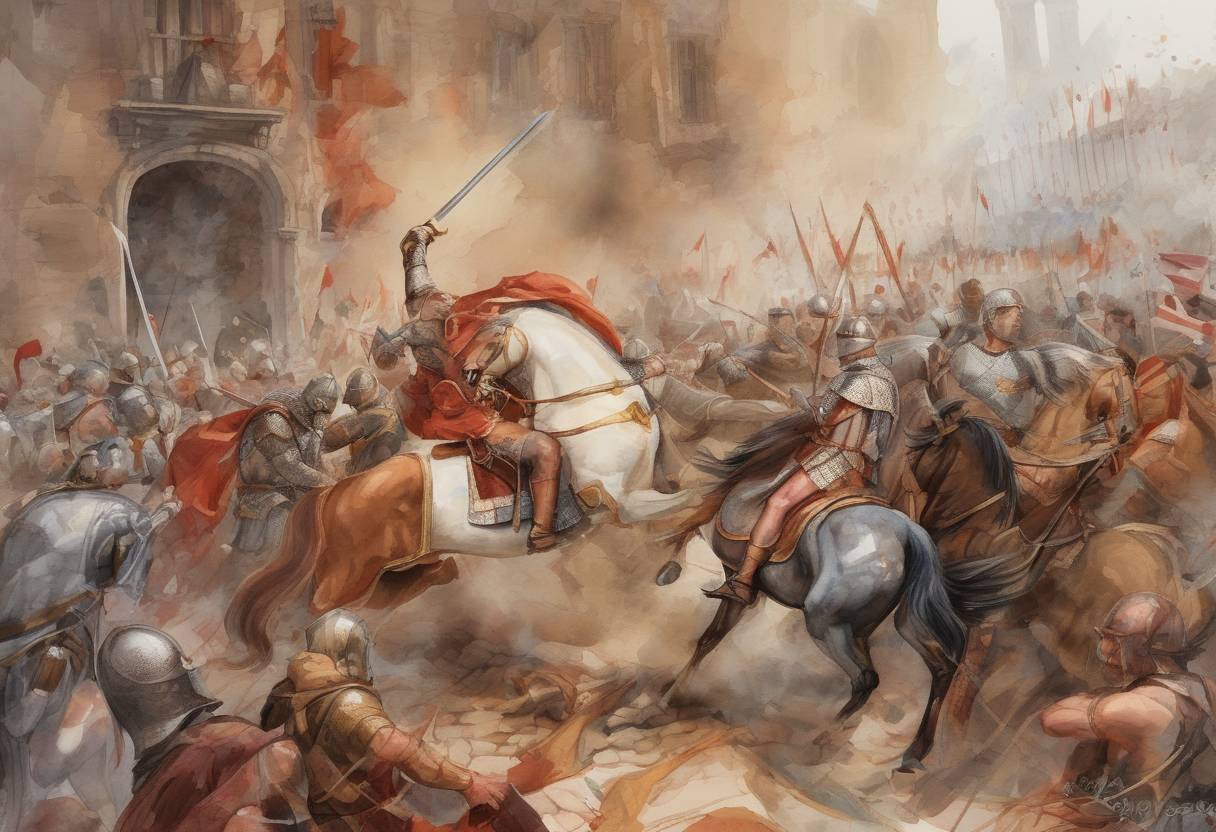
The Defeat of Odoacer by Theodoric the Great at the Battle of Verona
On January 14, 493, a pivotal event unfolded in the waning days of the Western Roman Empire: Odoacer, the first King of Italy, was defeated by Theodoric the Great, leader of the Ostrogoths, at the Battle of Verona. This battle was a significant turning point in the power dynamics of Italy and marked the transition from Roman to Gothic rule.
Background
Odoacer’s Rise to Power
Odoacer, a Germanic chieftain, rose to prominence in 476 AD when he deposed the last Roman emperor of the West, Romulus Augustulus. This event is often cited as the end of the Western Roman Empire. Odoacer declared himself King of Italy, ruling over a kingdom that was nominally under the authority of the Eastern Roman Emperor in Constantinople.
Theodoric’s Ambitions
Theodoric the Great, an Ostrogothic leader, was initially allied with the Eastern Roman Empire. Emperor Zeno saw an opportunity to rid himself of Odoacer, who had become a problematic ruler. Zeno encouraged Theodoric to invade Italy, promising him support and recognition if he succeeded in overthrowing Odoacer.
The Battle of Verona
The Battle of Verona was part of a larger conflict between Odoacer and Theodoric, which began in 488 when Theodoric led his Ostrogothic forces into Italy. The two leaders clashed multiple times over the years, with the Battle of Verona being one of the decisive engagements.
Key Events
- Strategic Movements: Theodoric’s forces, skilled in both cavalry and infantry tactics, managed to outmaneuver Odoacer’s troops. The battle took place near Verona, a strategic location that controlled access to northern Italy.
- Tactical Superiority: Theodoric’s military acumen and the discipline of his Ostrogothic warriors played a crucial role in their victory. Odoacer’s forces were unable to withstand the coordinated assaults and strategic encirclements executed by Theodoric’s army.
Aftermath and Significance
The Fall of Odoacer
Following his defeat at Verona, Odoacer retreated to Ravenna, his capital. Theodoric laid siege to the city, which eventually fell in 493. Odoacer was captured and executed, solidifying Theodoric’s control over Italy.
Theodoric’s Rule
Theodoric established himself as the ruler of Italy, marking the beginning of the Ostrogothic Kingdom. His reign is noted for its attempts to preserve Roman traditions and infrastructure while integrating Gothic elements. Theodoric maintained a delicate balance between his Gothic subjects and the Roman population, fostering a period of relative stability and prosperity.
Broader Historical Impact
The defeat of Odoacer and the rise of Theodoric represented a significant shift in the post-Roman world. It highlighted the transition from Roman to barbarian rule in the West, a theme that would continue to shape European history for centuries. Theodoric’s reign is often seen as a bridge between the ancient Roman world and the emerging medieval European order.
In summary, the Battle of Verona was a crucial event that not only marked the end of Odoacer’s rule but also set the stage for the Ostrogothic Kingdom under Theodoric the Great, influencing the cultural and political landscape of Italy and beyond.