The Ratification of the United States Bill of Rights
1791 · Richmond, United States
The United States Bill of Rights becomes law when ratified by the Virginia General Assembly.
September 25, 1789
The United States Congress proposed the Bill of Rights, the first ten amendments to the U.S. Constitution, which were designed to protect individual liberties.
New York City, United States | United States Congress
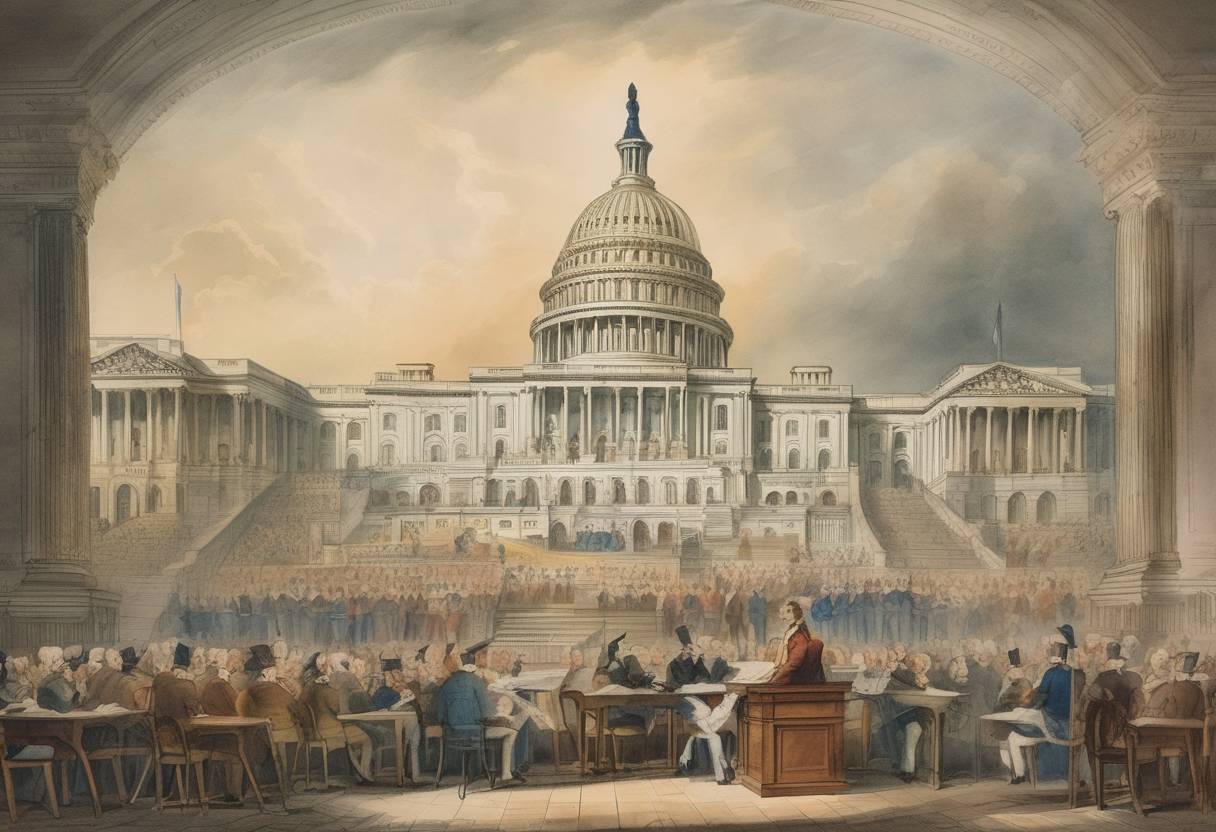
On September 25, 1789, the United States Congress took a pivotal step in American history by proposing the Bill of Rights, the first ten amendments to the U.S. Constitution. These amendments were crafted to safeguard individual liberties and address concerns raised during the ratification of the Constitution.
The U.S. Constitution, ratified in 1788, established the framework for the federal government. However, it faced criticism for lacking explicit protections for individual rights. Many Anti-Federalists feared that a strong central government could infringe upon personal freedoms. To address these concerns and ensure broader support for the new Constitution, the promise of a Bill of Rights was crucial.
1787 Constitutional Convention: During the drafting of the Constitution, some delegates, including George Mason, advocated for a bill of rights. However, the proposal was initially rejected, as many believed the Constitution’s structure inherently protected liberties.
Ratification Debates: As states debated ratification, the absence of a bill of rights became a significant point of contention. Several states, including Massachusetts, Virginia, and New York, ratified the Constitution with the understanding that amendments would be added to protect individual rights.
James Madison’s Role: James Madison, initially skeptical of the need for a bill of rights, became a key advocate. Elected to the first Congress, he introduced a series of amendments in June 1789, drawing from state constitutions and the Virginia Declaration of Rights.
On September 25, 1789, after extensive debate and revision, Congress proposed twelve amendments to the Constitution. These amendments were sent to the states for ratification. The first two amendments, concerning congressional representation and compensation, were not immediately ratified. The remaining ten amendments, known today as the Bill of Rights, were ratified by the states on December 15, 1791.
The Bill of Rights includes fundamental protections such as:
The Bill of Rights has become a cornerstone of American democracy, embodying the principles of individual liberty and limited government. It has served as a model for other nations and remains a vital part of legal and political discourse in the United States. The adoption of these amendments helped to unify the nation by addressing the concerns of Anti-Federalists and ensuring broader acceptance of the Constitution.
In summary, the proposal of the Bill of Rights on September 25, 1789, marked a defining moment in American history, laying the foundation for the protection of personal freedoms and shaping the nation’s identity as a bastion of liberty and justice.
Source: en.wikipedia.org