Kapp Putsch Begins: March 13, 1920
1920 · Berlin, Germany
Kapp Putsch begins in Germany in an attempt by right-wing elements to overthrow the Weimar Republic.
November 9, 1918
Kaiser Wilhelm II of Germany abdicated, leading to the end of the German Empire and paving the way for the establishment of the Weimar Republic.
Berlin, Germany | German Empire
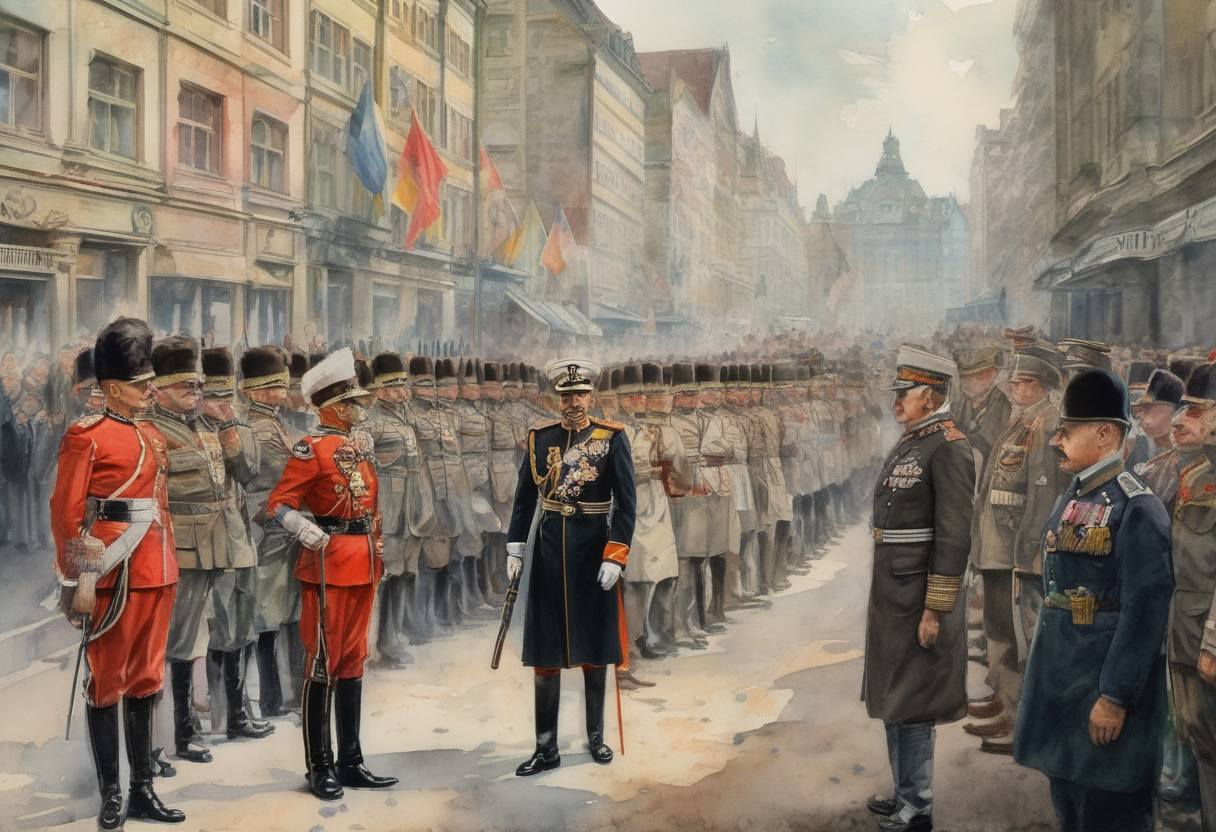
On November 9, 1918, Kaiser Wilhelm II of Germany abdicated, marking a pivotal moment in German history as it led to the end of the German Empire and the establishment of the Weimar Republic. This event was the culmination of a series of military, political, and social upheavals that had been intensifying throughout World War I.
World War I Strain: By late 1918, Germany was facing severe hardships due to the prolonged conflict. The war had drained the nation’s resources, and the Allied blockade had led to widespread food shortages and economic instability.
Military Defeats: The German military was suffering significant defeats on the Western Front. The failure of the Spring Offensive and the successful Allied counteroffensives had demoralized both the military and the civilian population.
Political Unrest: The German populace was increasingly disillusioned with the war and the imperial government. Strikes and protests were common, and there was a growing demand for political reform and peace.
Revolutionary Movements: Inspired by the Russian Revolution, socialist and communist movements gained momentum in Germany. The Kiel Mutiny in early November 1918 saw sailors revolt, which quickly spread to other cities, signaling widespread discontent.
Pressure from Military and Political Leaders: By November 1918, key military leaders, including General Erich Ludendorff and later General Wilhelm Groener, recognized the need for a political change to secure an armistice. They advised the Kaiser to abdicate to prevent a full-scale revolution.
Chancellor Max von Baden’s Announcement: On November 9, 1918, Chancellor Prince Max von Baden, acting preemptively, announced the Kaiser’s abdication without Wilhelm’s explicit consent. This was done to stabilize the situation and facilitate peace negotiations.
Wilhelm’s Departure: Facing no viable alternative and with diminishing support, Wilhelm II fled to the Netherlands, where he lived in exile until his death in 1941.
Proclamation of the Republic: On the same day as the abdication, Philipp Scheidemann, a member of the Social Democratic Party, proclaimed the establishment of a German Republic from a balcony of the Reichstag in Berlin.
Formation of a New Government: Friedrich Ebert, leader of the Social Democratic Party, was appointed as the head of the new provisional government. This government was tasked with negotiating an armistice and drafting a new constitution.
Weimar Constitution: The Weimar Republic was officially established in 1919 with the adoption of the Weimar Constitution, which created a democratic parliamentary system in Germany.
End of Monarchical Rule: The abdication of Kaiser Wilhelm II marked the end of the Hohenzollern dynasty’s rule and the German Empire, transitioning Germany from a monarchy to a republic.
Prelude to the Treaty of Versailles: The abdication and subsequent establishment of the Weimar Republic set the stage for the signing of the Treaty of Versailles in 1919, which imposed heavy reparations and territorial losses on Germany.
Challenges for the Weimar Republic: The new republic faced numerous challenges, including political extremism, economic difficulties, and societal divisions, which ultimately contributed to its instability and the rise of the Nazi regime in the 1930s.
The abdication of Kaiser Wilhelm II was a transformative event in German history, reshaping the nation’s political landscape and influencing the course of 20th-century European history.
Source: en.wikipedia.org