Hawaii Becomes a United States Territory - June 14, 1900
1900 · Honolulu, United States
Hawaii becomes a United States territory.
July 4, 1894
The Republic of Hawaii is proclaimed after the overthrow of the Kingdom of Hawaii.
Honolulu, Hawaii | Provisional Government of Hawaii
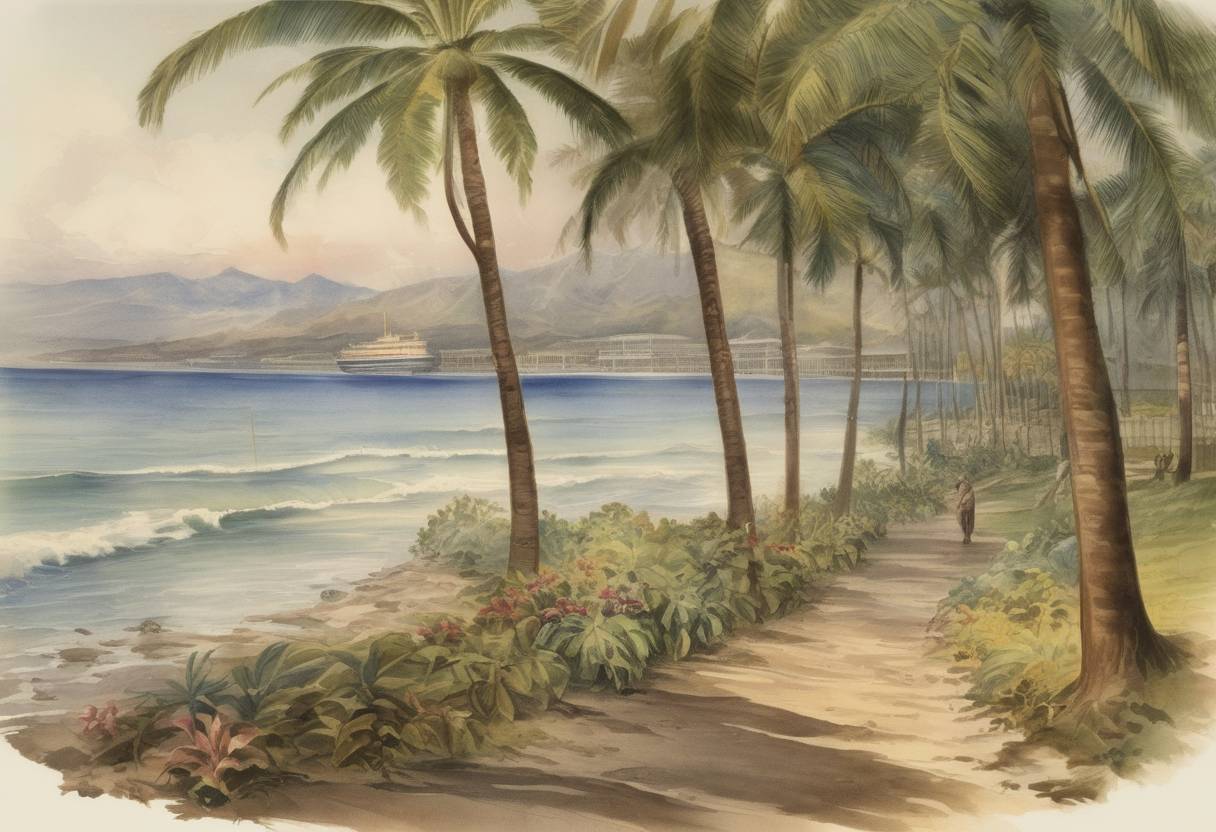
On July 4, 1894, the Republic of Hawaii was officially proclaimed, marking a significant shift in the political landscape of the Hawaiian Islands. This event followed the overthrow of the Kingdom of Hawaii, which had been a sovereign monarchy since its unification under King Kamehameha I in 1810.
The overthrow of the Hawaiian monarchy was a culmination of political and economic tensions that had been building for decades. By the late 19th century, Hawaii had become an important hub for sugar production, attracting significant interest from American and European businessmen. These foreign interests, coupled with the strategic location of Hawaii in the Pacific, made the islands a focal point for expansionist ambitions.
In 1893, Queen Liliʻuokalani, the last reigning monarch of Hawaii, attempted to implement a new constitution that would restore the power of the monarchy and reduce the influence of foreign interests. This move was met with resistance from a group of American and European residents, many of whom were part of the powerful sugar industry. Supported by the U.S. Minister to Hawaii, John L. Stevens, and a contingent of U.S. Marines, these individuals orchestrated a coup d’état on January 17, 1893, leading to the establishment of a provisional government.
The provisional government, led by Sanford B. Dole, sought annexation by the United States. However, the initial annexation treaty was withdrawn by President Grover Cleveland, who opposed the overthrow and called for the restoration of the monarchy. Despite Cleveland’s opposition, the provisional government continued to consolidate its power.
On July 4, 1894, the Republic of Hawaii was formally established with Sanford B. Dole as its first and only president. The new government adopted a constitution that effectively disenfranchised many Native Hawaiians and Asian immigrants, consolidating power among the American and European elite.
The establishment of the Republic of Hawaii set the stage for eventual annexation by the United States. In 1898, during the Spanish-American War, the strategic importance of Hawaii was highlighted, and the U.S. Congress passed the Newlands Resolution, formally annexing Hawaii as a U.S. territory.
The events surrounding the overthrow of the Hawaiian monarchy and the establishment of the Republic have had lasting impacts on Hawaiian society and politics. The loss of sovereignty and subsequent annexation remain contentious issues, with ongoing discussions about Hawaiian rights, cultural preservation, and the legacy of colonialism.
The proclamation of the Republic of Hawaii on July 4, 1894, is a pivotal moment in Hawaiian history, reflecting the complex interplay of local and international forces that shaped the islands’ destiny.
Source: en.wikipedia.org