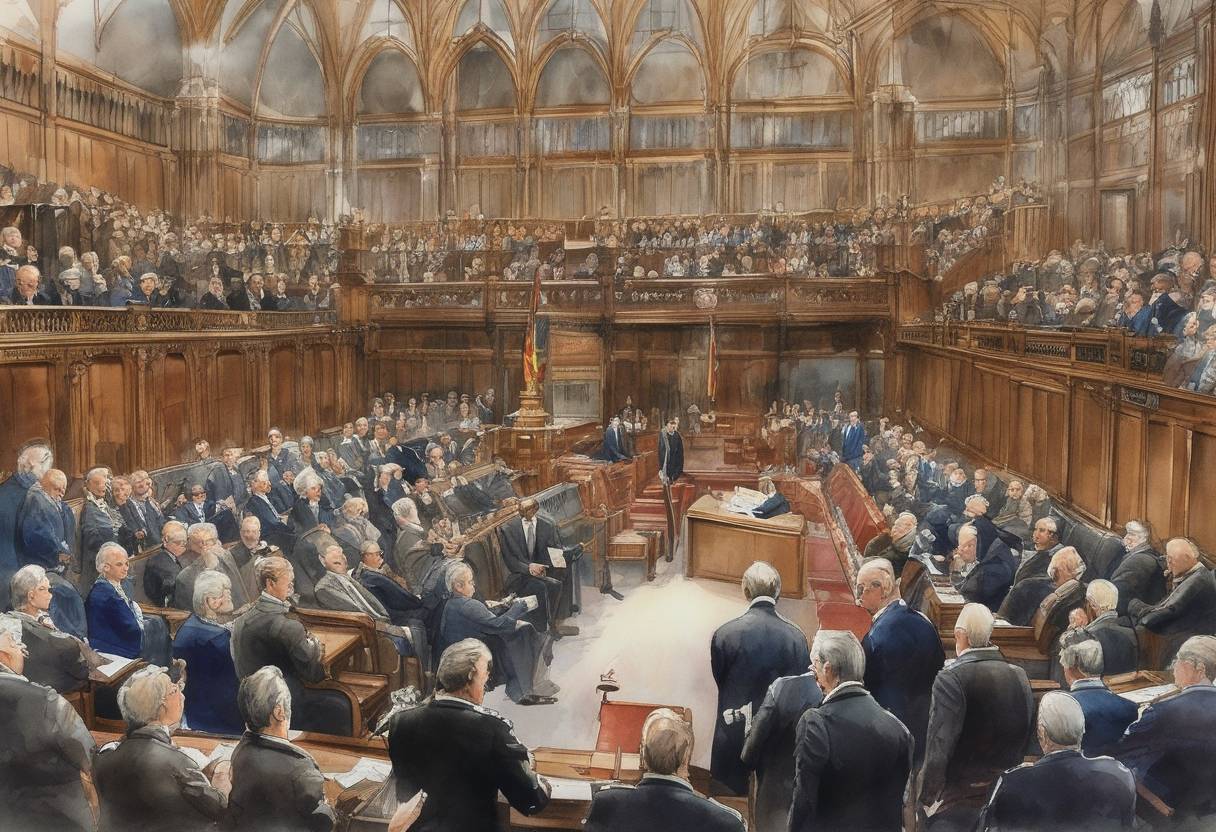
Vote of No Confidence Against Prime Minister James Callaghan - March 29, 1979
On March 29, 1979, the House of Commons in the United Kingdom passed a vote of no confidence against the government led by Prime Minister James Callaghan. This pivotal event led to the dissolution of Parliament and the calling of a general election, marking a significant moment in British political history.
Context Leading Up to the Vote
Economic Challenges: The late 1970s were a tumultuous period for the UK, characterized by economic difficulties, including high inflation and unemployment. The Labour government, led by James Callaghan, faced mounting pressure to address these issues.
The “Winter of Discontent”: The winter of 1978-1979 was marked by widespread strikes by public sector workers, demanding higher wages in response to the government’s attempts to control inflation through wage restraint policies. This period, known as the “Winter of Discontent,” severely damaged the government’s popularity.
Political Landscape: Callaghan’s Labour government was a minority government, relying on support from smaller parties to maintain a majority in the House of Commons. This precarious position made the government vulnerable to a vote of no confidence.
The Vote of No Confidence
The Motion: The vote of no confidence was tabled by the opposition Conservative Party, led by Margaret Thatcher. The motion was a direct challenge to the government’s ability to govern effectively amidst the ongoing economic and social crises.
The Outcome: On March 28, 1979, the vote was held, and the government lost by a single vote, with 311 votes against and 310 in favor. This narrow defeat underscored the fragility of Callaghan’s administration.
Consequences and Aftermath
General Election: Following the vote of no confidence, James Callaghan was compelled to call a general election, which was scheduled for May 3, 1979.
Conservative Victory: The general election resulted in a decisive victory for the Conservative Party, and Margaret Thatcher became the first female Prime Minister of the United Kingdom. Her leadership marked the beginning of a new era in British politics, characterized by significant economic and social reforms.
Legacy: The events of March 29, 1979, and the subsequent election had a lasting impact on the UK’s political landscape. Thatcher’s policies and leadership style would dominate British politics throughout the 1980s, influencing both domestic and international affairs.
In summary, the vote of no confidence against James Callaghan’s government on March 29, 1979, was a critical turning point that led to a change in leadership and set the stage for a new direction in British politics under Margaret Thatcher.