Hernando de Soto: Death on the Mississippi River - May 21, 1542
1542 · Mississippi River, United States
Spanish explorer Hernando de Soto died on the banks of the Mississippi River. He was the first European documented to have crossed the river.
November 6, 1528
The Spanish conquistador Álvar Núñez Cabeza de Vaca, after being cast ashore in what is now Texas, embarked on an epic journey across the North American continent lasting several years.
, United States | Spanish Empire
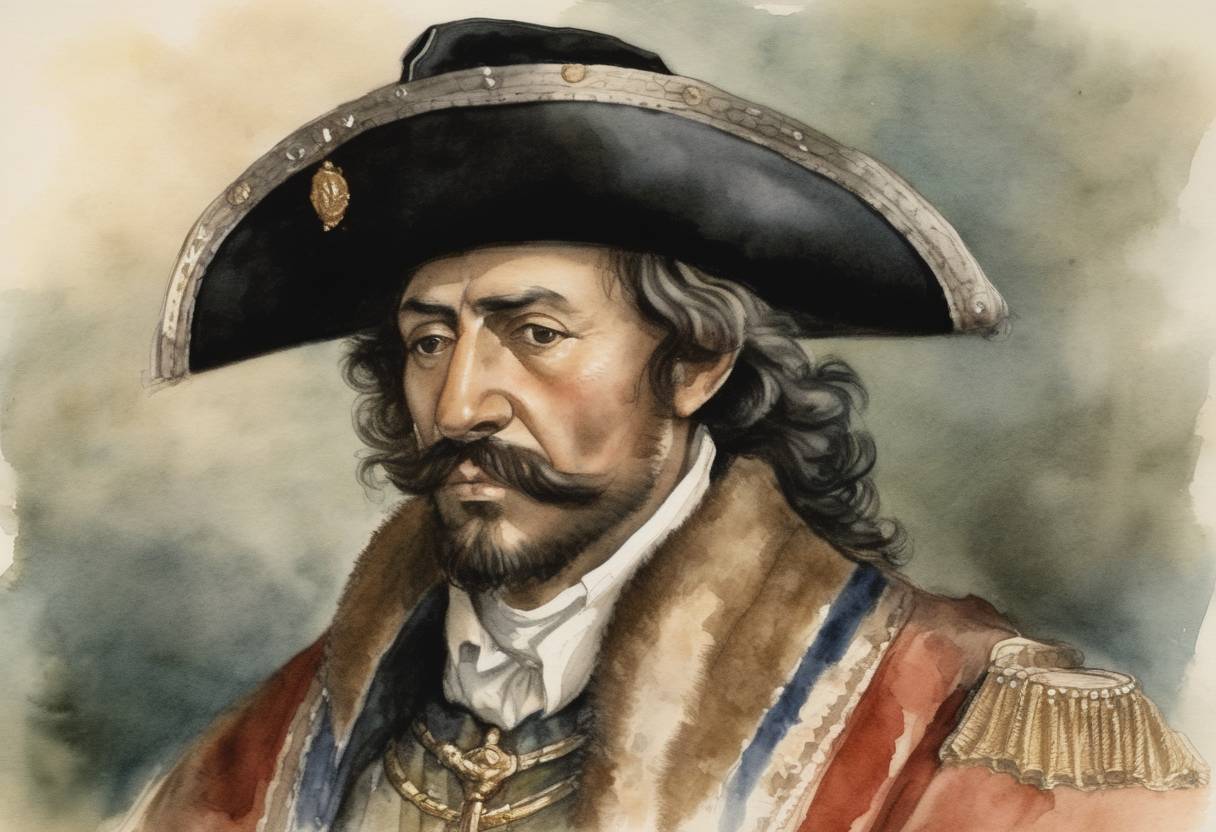
On November 6, 1528, the Spanish conquistador Álvar Núñez Cabeza de Vaca and his companions were shipwrecked on what is now the coast of Texas. This marked the beginning of an extraordinary multi-year journey across the North American continent.
Álvar Núñez Cabeza de Vaca was part of a Spanish expedition led by Pánfilo de Narváez, which aimed to explore and colonize the lands of what is now Florida and its surrounding regions. The expedition, however, faced numerous challenges, including treacherous weather, scarcity of supplies, and resistance from indigenous tribes.
By late 1528, the expedition had become desperate. Attempting to reach Mexico via the Gulf of Mexico on makeshift rafts, the group encountered a massive storm off the coast, leading to their shipwreck. Cabeza de Vaca and a small number of survivors found themselves stranded near present-day Galveston Island, Texas.
Struggling for survival in an unfamiliar and harsh environment, the survivors faced starvation and illness. Cabeza de Vaca and his men encountered various Native American tribes, some hostile and others who provided aid. Over time, Cabeza de Vaca adapted to the local indigenous cultures, learning their languages and customs, which significantly aided in his survival.
Cabeza de Vaca’s journey is remarkable for the distance and duration it covered. He and a small group of survivors, including notable companions such as Andrés Dorantes de Carranza, Alonso del Castillo Maldonado, and Estevanico, traversed vast expanses of what is now the southern United States and northern Mexico. Their journey took them across Texas, through parts of modern-day New Mexico and Arizona, and ultimately into Mexico.
After years of hardship, Cabeza de Vaca and his companions finally reached Spanish settlements in Mexico in 1536. Their accounts of the journey provided one of the first detailed descriptions of the diverse landscapes, indigenous peoples, and cultures of the North American interior. Cabeza de Vaca’s narrative, “La Relación,” became an essential document for understanding early European encounters in the New World and contributed to further Spanish expeditions in North America. His experiences highlighted themes of survival, cultural exchange, and the early complexities of colonial interactions.