The Knesset Votes to Move the Capital of Israel to Jerusalem - December 13, 1949
1949 · Jerusalem, Israel
The Knesset voted to move the capital of Israel to Jerusalem.
May 16, 1948
Chaim Weizmann was elected as the first President of Israel by the Provisional State Council. This came shortly after the declaration of the establishment of the State of Israel on May 14, 1948.
Tel Aviv, Israel | Provisional State Council of Israel
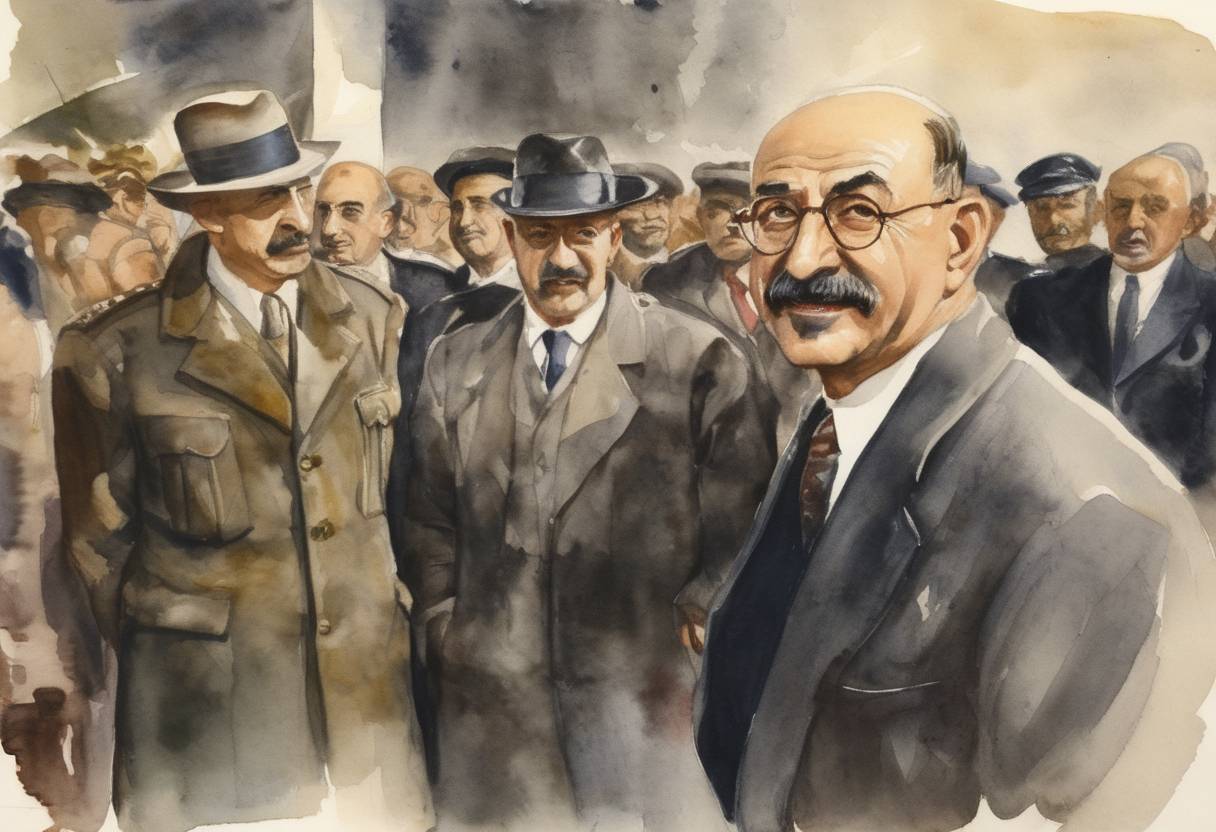
On May 16, 1948, Chaim Weizmann was elected as the first President of Israel by the Provisional State Council, marking a significant milestone in the nascent state’s formation just two days after the official declaration of independence on May 14 by David Ben-Gurion.
Chaim Weizmann, born in 1874 in Motol, Belarus (then part of the Russian Empire), was a prominent Zionist leader, chemist, and statesman. He had been a key figure in the Zionist movement since the early 20th century and had played a vital role in securing international support for the establishment of a Jewish homeland in Palestine.
As a scientist, Weizmann contributed significantly through his work in chemistry, which helped him gain recognition and build influential relationships, notably in Britain. His advocacy was instrumental in the Balfour Declaration of 1917, in which the British government expressed its support for the establishment of a “national home for the Jewish people” in Palestine.
Weizmann’s election as President was both a symbolic and strategic choice. As a highly respected leader who had worked tirelessly for the Zionist cause, his presidency was emblematic of the legitimacy and sovereignty of the newly independent state. His global connections and diplomatic experience were seen as invaluable for Israel’s challenges ahead, particularly in gaining international recognition and support.
Assuming the largely ceremonial role of President, Weizmann’s tenure began at a time when Israel was under existential threats from neighboring countries and was in the throes of the 1948 Arab-Israeli War. Despite the limits of his executive power, Weizmann’s presidency was crucial in helping to unify the fledgling state and serve as a moral anchor during turbulent times.
Weizmann served as President until his death in 1952, during which he helped lay the groundwork for Israel’s institutional development. His diplomatic efforts also continued to shape the young nation, as he worked to secure vital international alliances and recognition.
Weizmann’s presidency underscored the theme of persistence and diplomacy that had characterized his life, continuing to reflect these virtues through Israel’s early years of nationhood.
Source: www.knesset.gov.il