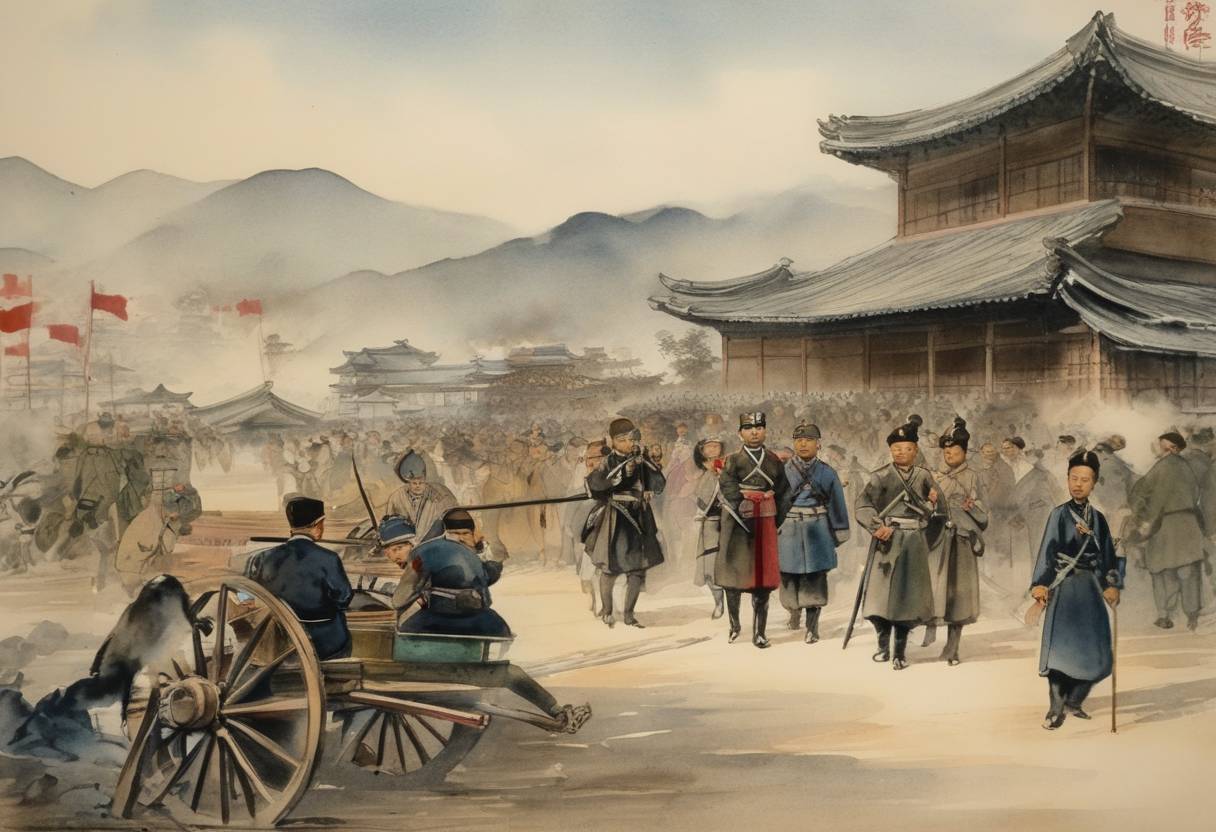
The End of the First Sino-Japanese War: An Inaccurate Date
The specified event does not align with the actual timeline of the First Sino-Japanese War. The war between the Qing Dynasty of China and the Empire of Japan occurred from August 1, 1894, to April 17, 1895. During this period, Japan emerged victorious, which significantly altered the balance of power in East Asia.
Historical Context
Before the war, tensions between China and Japan were escalating over influence in Korea. Korea had traditionally been a tributary state under the influence of China’s Qing Dynasty, but Japan sought to expand its sphere of influence.
Key Events Leading to Peace Talks
- September 1894: Japanese forces captured Pyongyang.
- October 1894: Japanese military captured the strategic port city of Lüshunkou (Port Arthur).
- February 1895: By this time, Japan controlled much of the Liaodong Peninsula and had isolated Chinese forces in several areas.
Treaty Negotiations
While the request cites February 3, 1894, the actual preliminary peace discussions took place later, leading to the Treaty of Shimonoseki:
- April 17, 1895: The Treaty of Shimonoseki was officially signed, marking the formal end of the war.
Treaty Provisions
Key terms of the Treaty of Shimonoseki included:
- China recognized the independence of Korea.
- Taiwan (Formosa) and the Pescadores Islands were ceded to Japan.
- The Liaodong Peninsula was initially ceded to Japan but later returned to China due to the Triple Intervention by Russia, Germany, and France.
- China paid a large indemnity and opened several ports to Japanese trade.
Aftermath and Consequences
The war and resulting treaty significantly diminished Chinese influence in East Asia and marked Japan’s emergence as a major modern world power. The loss further weakened the Qing Dynasty and contributed to internal unrest in China, exacerbating the decline that led to the 1911 Xinhai Revolution.