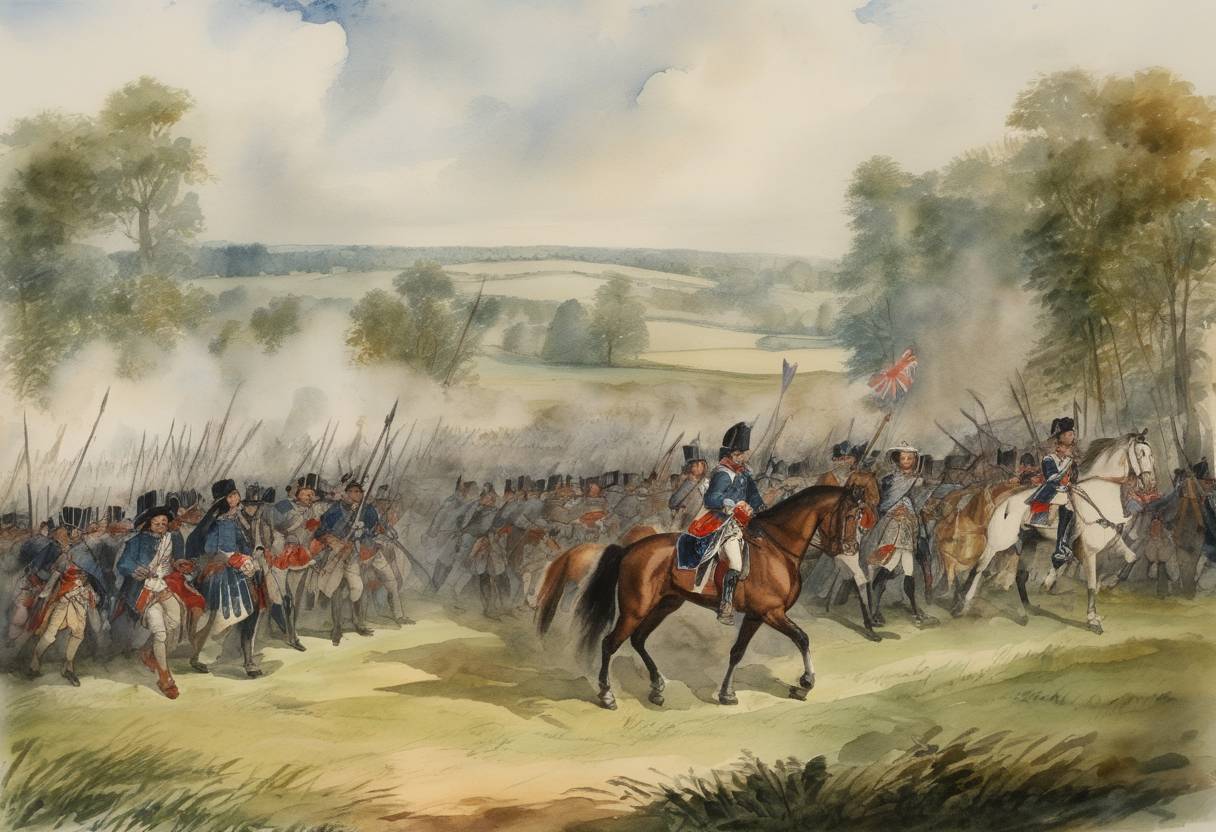
The Battle of Naseby - June 14, 1645
The Battle of Naseby was a pivotal engagement during the English Civil War, fought on June 14, 1645. This battle marked a decisive defeat for Royalist forces under King Charles I against the Parliamentarian army led by Sir Thomas Fairfax and Oliver Cromwell.
Background
The English Civil War, a conflict between the Royalists (or Cavaliers) supporting King Charles I and the Parliamentarians (or Roundheads), had been raging since 1642. By 1645, the Parliamentarian forces had been restructured into the New Model Army, which was better organized and equipped compared to Royalist forces.
Key Players
Parliamentarians: Led by Sir Thomas Fairfax and Oliver Cromwell. Fairfax served as the commander-in-chief of the New Model Army, with Cromwell acting as his second-in-command.
Royalists: Commanded by King Charles I, with Prince Rupert of the Rhine serving as one of his primary military leaders.
The Battle
The Battle of Naseby took place near the village of Naseby in Northamptonshire. The Parliamentarian forces numbered approximately 14,000 men, while the Royalists had around 7,500 troops.
Battle Unfolds
Initial Engagement: Early in the morning, the Royalist army took the offensive. Against the advice of his generals, King Charles and Prince Rupert ordered an attack on the Parliamentarian positions.
Parliamentary Tactical Superiority: Despite a fierce charge by the Royalist cavalry led by Prince Rupert, the Parliamentarians, benefitting from disciplined infantry and cavalry tactics, were able to regroup and counter-attack effectively.
Cromwell’s Leadership: Oliver Cromwell’s cavalry played a crucial role, attacking the Royalist flanks and exploiting weaknesses in their formation.
Collapse of Royalist Forces: As the battle progressed, the Royalists’ disorganized counter-attacks and the Parliamentarians’ superior tactics led to the Royalist lines breaking. The Royalist infantry was quickly overrun.
Aftermath
Royalist Losses: The Royalists suffered significant losses, with approximately 1,000 soldiers killed and 4,500 taken as prisoners. The Parliamentarians captured King Charles’ artillery and baggage, gaining important intelligence through his private correspondence.
Strategic Consequences: The defeat at Naseby was catastrophic for King Charles I, effectively crippling his ability to wage war. It marked the beginning of the decline of the Royalist cause, leading ultimately to the capture and execution of King Charles in 1649.
Broader Historical Significance
The Battle of Naseby was crucial in determining the outcome of the English Civil War. It showcased the effectiveness of the New Model Army and underscored the shift towards modern, professional military forces. Additionally, the Parliamentarian victory set the stage for a new political structure in England, diminishing the influence of the monarchy and paving the way for a constitutional government.