Winston Churchill's Resignation as Prime Minister
1955 · London, United Kingdom
Winston Churchill resigned as Prime Minister of the United Kingdom due to ill health, marking the end of his political career.
July 5, 1945
The United Kingdom held a general election, but due to the vote counting taking longer than usual, the result would not be announced until July 26. This election ultimately resulted in a landslide victory for the Labour Party under Clement Attlee.
London, United Kingdom | British Government
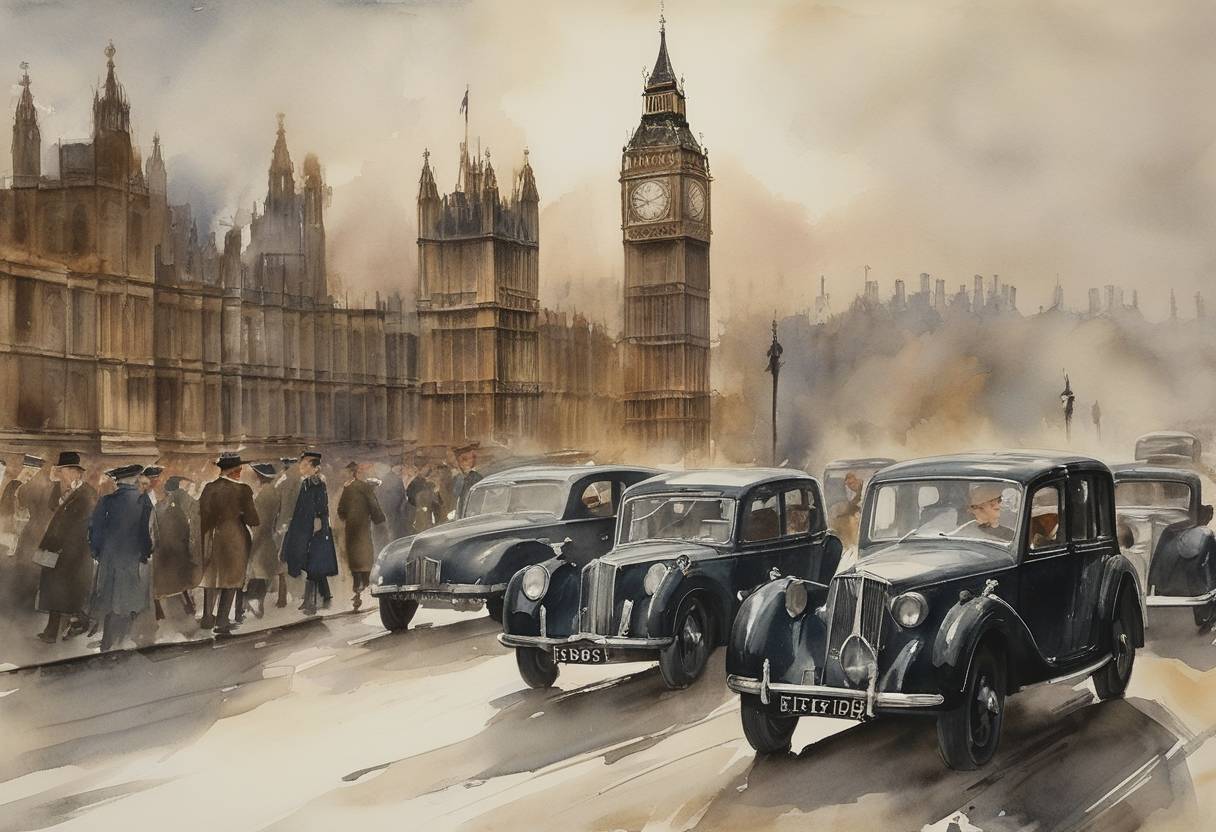
On July 5, 1945, the United Kingdom held its first general election since 1935, marking a pivotal moment in British history. This election was notable not only for its post-World War II context but also for the significant delay in announcing the results, which were declared on July 26, 1945. The Labour Party, led by Clement Attlee, achieved a landslide victory against the Conservative Party led by Winston Churchill, bringing significant political change to the nation.
The 1945 election was held shortly after the end of World War II in Europe. The outcome was awaited eagerly as it was seen as a referendum on wartime leader Winston Churchill and his Conservative Party’s policies versus the Labour Party’s vision for post-war Britain. The British electorate was eager to transition from wartime hardships to peacetime recovery and reconstruction with promises of social reforms.
The main issues at stake in the 1945 election included:
The election was conducted under challenging conditions, including the demobilization of troops and ensuring their votes were counted. Due to the need to transport ballots from overseas service members and other logistical delays, the vote counting process was arduous. Consequently, results were not announced until July 26, three weeks after the poll.
Labour won 393 seats, an unprecedented landslide, while the Conservatives secured 197 seats. This victory allowed Clement Attlee to form a majority government, replacing Churchill as Prime Minister.
Clement Attlee’s government went on to implement sweeping reforms that would profoundly shape modern British society, underscoring the historical significance of the 1945 UK General Election.
Source: en.wikipedia.org