1649 · London, England
King Charles I of England went on trial for treason and other high crimes against the realm. This trial eventually led to his execution.
April 18, 1689
William III and Mary II were formally declared King and Queen of England, Scotland, and Ireland; this event is part of the Glorious Revolution, which caused significant constitutional changes, limiting the powers of the monarchy and expanding those of Parliament.
London, England | English Parliament
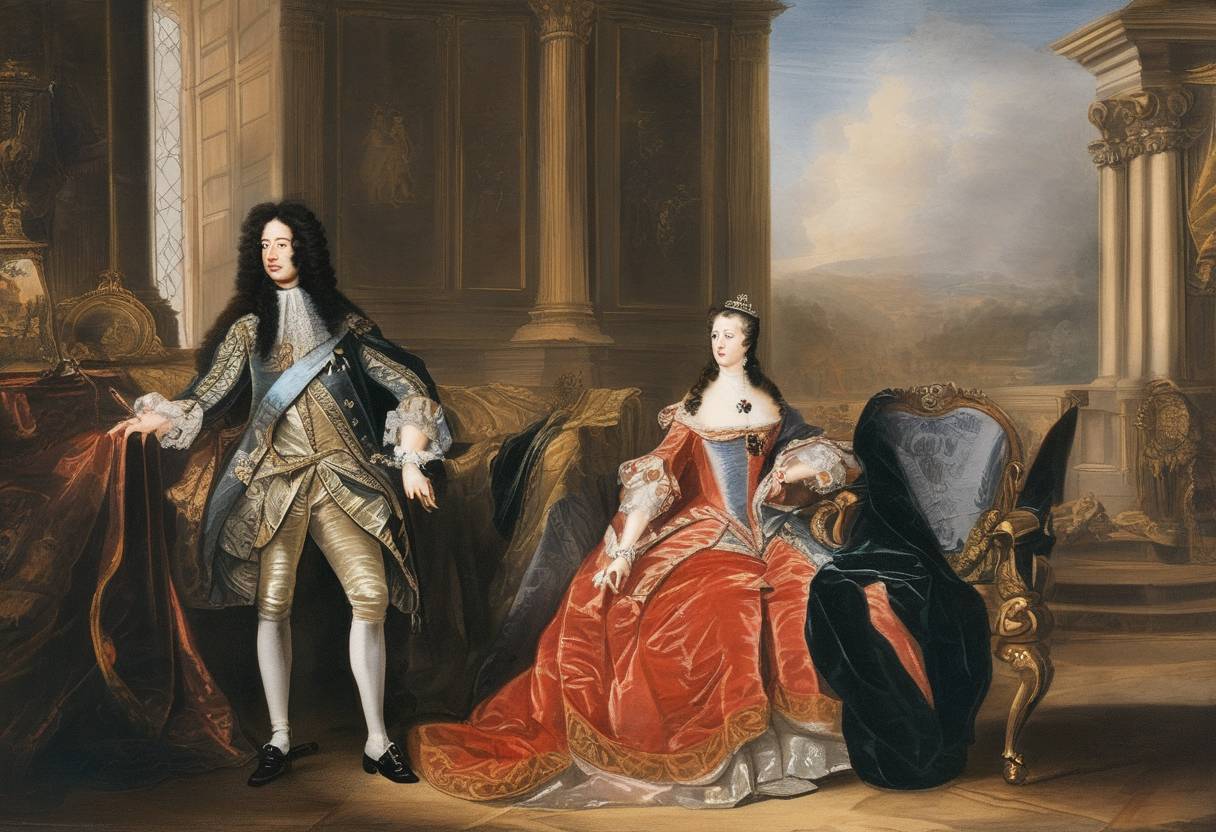
The formal proclamation of William III and Mary II as King and Queen of England, Scotland, and Ireland on April 18, 1689, was a pivotal moment in British history. This event was a direct outcome of the Glorious Revolution, a bloodless coup that brought profound changes to the monarchy’s structure and its relationship with Parliament.
The Glorious Revolution was prompted by widespread discontent with King James II, whose Catholicism and perceived autocratic rule alarmed many Protestant leaders and Parliamentarians. His policies, including the vigorous promotion of Catholic interests and the suspension of laws, threatened to dismantle England’s Protestant establishment and challenged the powers of Parliament.
In response, an invitation was extended to William of Orange, the Protestant stadtholder of the Netherlands and husband of James II’s Protestant daughter, Mary. William’s arrival in England in November 1688 with a substantial army led to James II fleeing to France, effectively abdicating his throne.
In early 1689, Parliament offered the throne to William and Mary, but with conditions. They accepted, but only after agreeing to a document known as the Declaration of Rights, which was later codified into law as the Bill of Rights 1689. This document was instrumental in limiting royal authority and affirming parliamentary supremacy, including:
The coronation ceremony at Westminster Abbey, attended by a host of nobles and dignitaries, solidified William and Mary’s joint rule and symbolized the legitimacy of the new constitutional framework. The event was marked by grandeur and reaffirmed the principles laid out in the Declaration of Rights.
The coronation of William III and Mary II cemented the constitutional monarchy in Britain, curbing the traditional powers of the crown and transferring political authority more fully into the hands of Parliament. This shift set a precedent for future constitutional development in Britain and had long-term effects on the balance of power, contributing significantly to the political stability and evolution of the British state.
Moreover, it underscored the ascendancy of Protestantism in England and influenced the political landscape of Europe, notably shoring up Protestant alliances against Catholic powers like France. The event is remembered not only as a moment of regal transition but as a cornerstone in the establishment of parliamentary democracy in the Western world.
Source: www.britannica.com