The Introduction of the Compromise of 1850 by Henry Clay
1850 · Washington, D.C., United States
Henry Clay introduced a compromise bill in the U.S. Senate that would become known as the Compromise of 1850.
March 5, 1850
Daniel Webster gave his famous 'Seventh of March' speech in support of the Compromise of 1850, which tried to prevent civil war by addressing sectional divisions over slavery.
Washington, D.C., United States | United States Senate
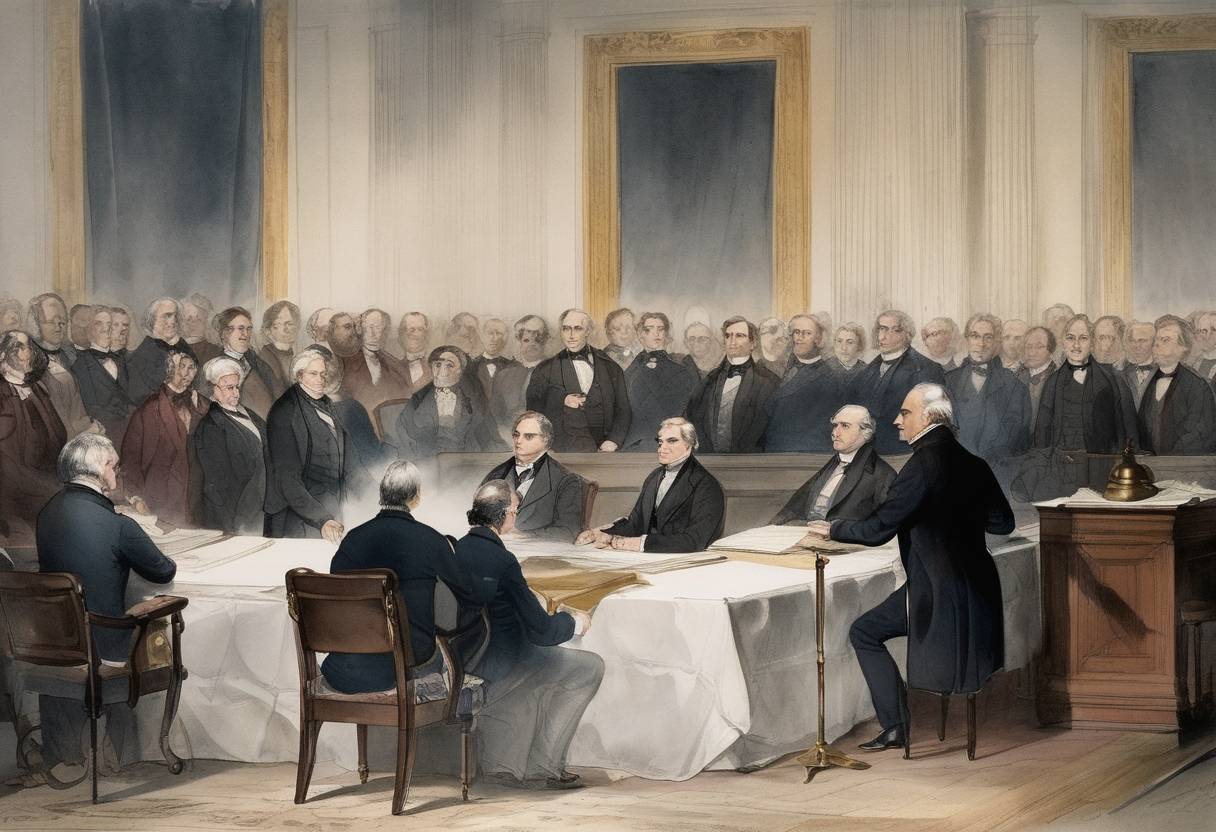
On March 7, 1850, Daniel Webster, a prominent American statesman and orator, delivered his notable ‘Seventh of March’ speech on the Senate floor. This speech was a critical moment in the debate over the Compromise of 1850, a series of measures aimed at diffusing the tensions between the Northern and Southern states regarding the issue of slavery.
The Compromise of 1850 was introduced by Senator Henry Clay and consisted of five bills intended to address the deepening sectional divide in the United States. The core issues surrounding the compromise included the status of territories acquired during the Mexican-American War, the boundary dispute between Texas and New Mexico, and the status of slavery in the District of Columbia.
Webster, representing Massachusetts, took the floor on March 7 to advocate for national unity and the preservation of the Union. Despite his strong personal opposition to the expansion of slavery, he argued in favor of the provisions of the compromise. Webster emphasized the necessity of preserving the Union and cautioned against secession, which he believed would lead to a devastating civil war.
Key points of Webster’s speech included:
Webster’s speech was met with mixed reactions. Many Northern abolitionists felt betrayed by his apparent concession to Southern demands, particularly his support for the Fugitive Slave Law. At the same time, some in the South praised his willingness to compromise. Nonetheless, the ‘Seventh of March’ speech significantly swayed public opinion and legislative action toward adopting the Compromise of 1850.
Despite being temporarily effective in staving off disunion, the peace achieved by the Compromise was fragile. Ultimately, it delayed rather than prevented the Civil War, which erupted a decade later in 1861.
Webster’s address is remembered as a pivotal moment in the antebellum era, illustrating the profound tensions and divisions that beset the United States during this period. It serves as an example of the ongoing struggle to reconcile differing views on slavery and state rights within the framework of the U.S. Constitution.
Source: history.house.gov