The Debut of Tchaikovsky's 1812 Overture in Moscow
1882 · Moscow, Russia
Pyotr Ilyich Tchaikovsky's 1812 Overture debuts in Moscow.
March 21, 1884
The first performance of Modest Mussorgsky's opera 'Khovanshchina' takes place in St. Petersburg.
St. Petersburg, Russia
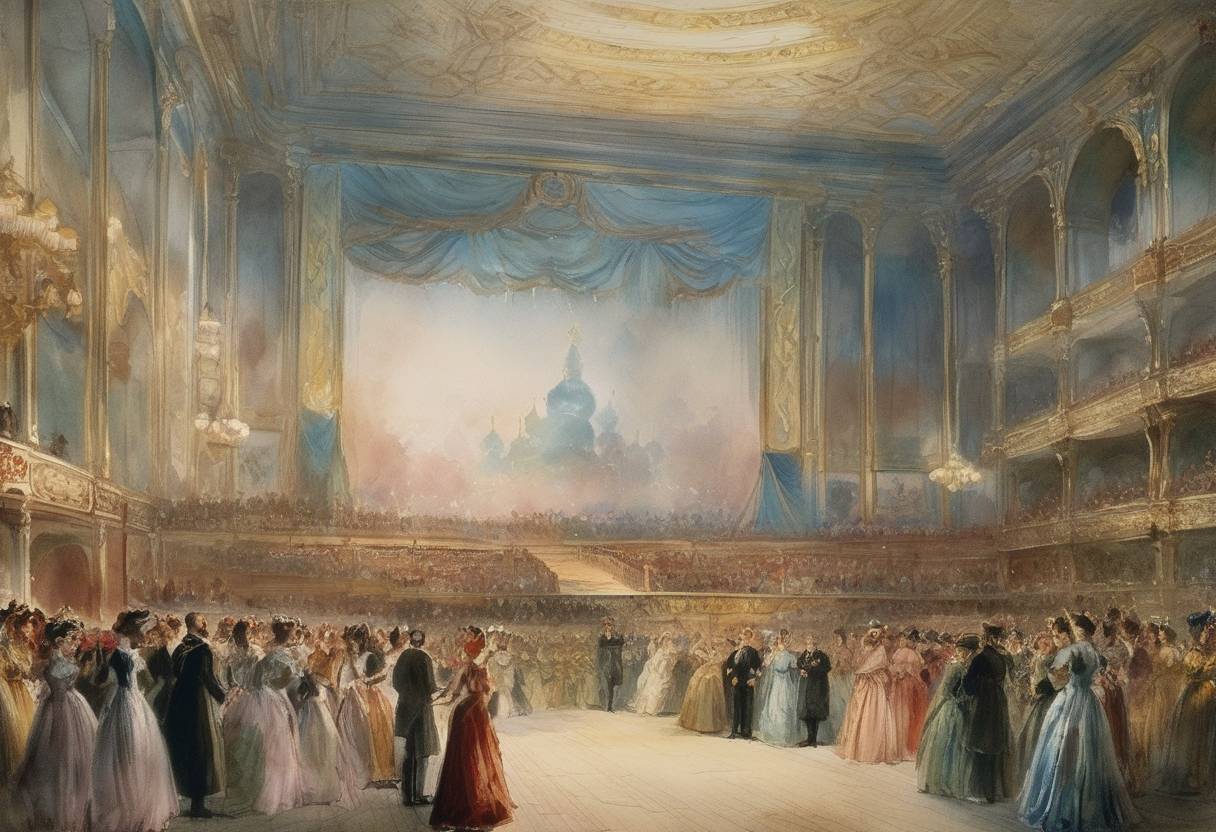
On March 21, 1884, the first performance of Modest Mussorgsky’s opera “Khovanshchina” took place at the Kononov Hall in St. Petersburg, Russia. This event marked a significant moment in the history of Russian opera.
“Khovanshchina” was one of Mussorgsky’s unfinished operatic works, reflecting his interest in depicting pivotal moments in Russian history. The opera dramatizes the political and religious upheavals during the regency of Tsarina Sophia Alekseyevna in the 1680s, focusing on the power struggles among different factions, such as the Streltsy guards, the Old Believers, and the Tsarist supporters.
Sadly, Modest Mussorgsky passed away before completing the opera. After his death in 1881, his friend and fellow composer, Nikolai Rimsky-Korsakov, undertook the task of completing and orchestrating “Khovanshchina.” Rimsky-Korsakov’s version was used for the first performance in 1884.
The premiere of “Khovanshchina” was a pivotal event in Russian music, illustrating the country’s rich history and complex societal issues through a powerful operatic narrative. Mussorgsky’s works, known for their realism and dedication to Russian themes, greatly influenced later composers and contributed to the development of a distinctly Russian style in classical music.
Over time, “Khovanshchina” was further revised and reworked by various composers, including Dmitri Shostakovich, who provided another orchestration in the 20th century to align more closely with Mussorgsky’s original intentions. The opera has been celebrated for its unique blending of Russian folk music with operatic traditions and continues to be performed worldwide as part of the classical operatic repertoire.
Source: en.wikipedia.org