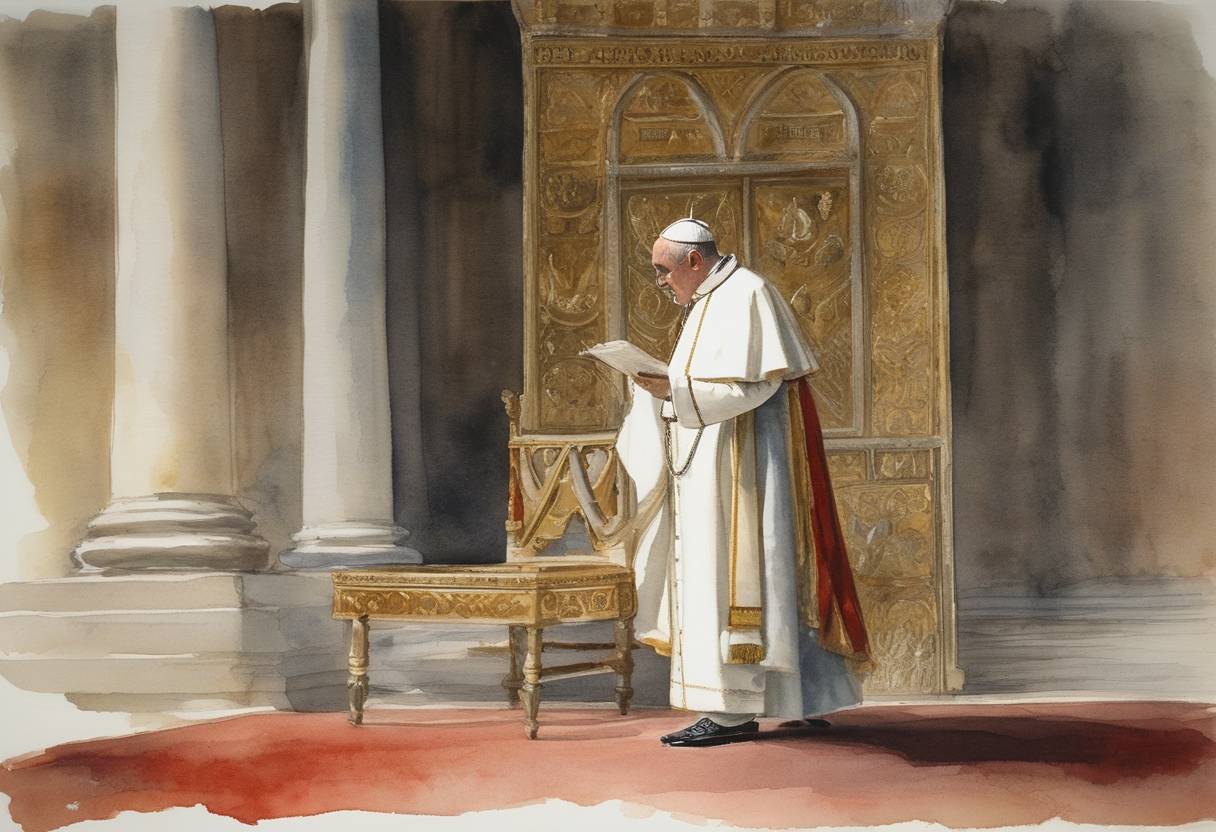
Papal Bull by Pope Paschal II on February 8, 1106
On February 8, 1106, Pope Paschal II issued a papal bull in response to ongoing disputes over the investiture controversy, which was a significant conflict between the papacy and secular monarchies regarding the appointment of church officials like bishops and abbots.
Background
The investiture controversy had its roots in the practice where secular leaders played a significant role in appointing bishops and abbots, which was initially acceptable when monarchs were perceived as protectors of the Church. However, as the authority of the papacy grew, church leaders began to push back against secular interference, arguing it infringed upon religious matters and the autonomy of the Church. The controversy reached a critical point in the late 11th and early 12th centuries.
Papal Bull Content and Impact
Pope Paschal II, following his predecessors, sought to affirm the Church’s position that only the Church could rightfully invest bishops with their spiritual authority. The papal bull issued on February 8, 1106, likely reiterated the position against lay investiture, reinforcing the decisions of the 1075 decree by Pope Gregory VII and further articulated at the Council of Rome and the Council of Clermont.
This specific bull served as a firm statement against the interference of secular rulers in ecclesiastical appointments. The issuing of this bull underlined Paschal II’s commitment to upholding the reforms initiated by Pope Gregory VII, which aimed to delineate clear boundaries between the powers of the Church and the state.
Significance
The investiture controversy was a pivotal moment in medieval European history, affecting the relationship between the church and state for centuries. Paschal II’s bull was part of a broader movement within the Church to secure ecclesiastical independence and integrity. This dispute ultimately paved the way for the Concordat of Worms in 1122, which was a compromise that ended the investiture controversy by allowing the Church to appoint bishops while granting the emperor a limited role in the selection process.
By reaffirming the Church’s position on investiture, Paschal II’s action on February 8, 1106 contributed to the ongoing effort to define and enforce a governance framework that respected ecclesiastical sovereignty while negotiating the complex relationship with secular authority. This document would remain a reference point in medieval Church politics and influence the broader ecclesiastical reform movement of the period.