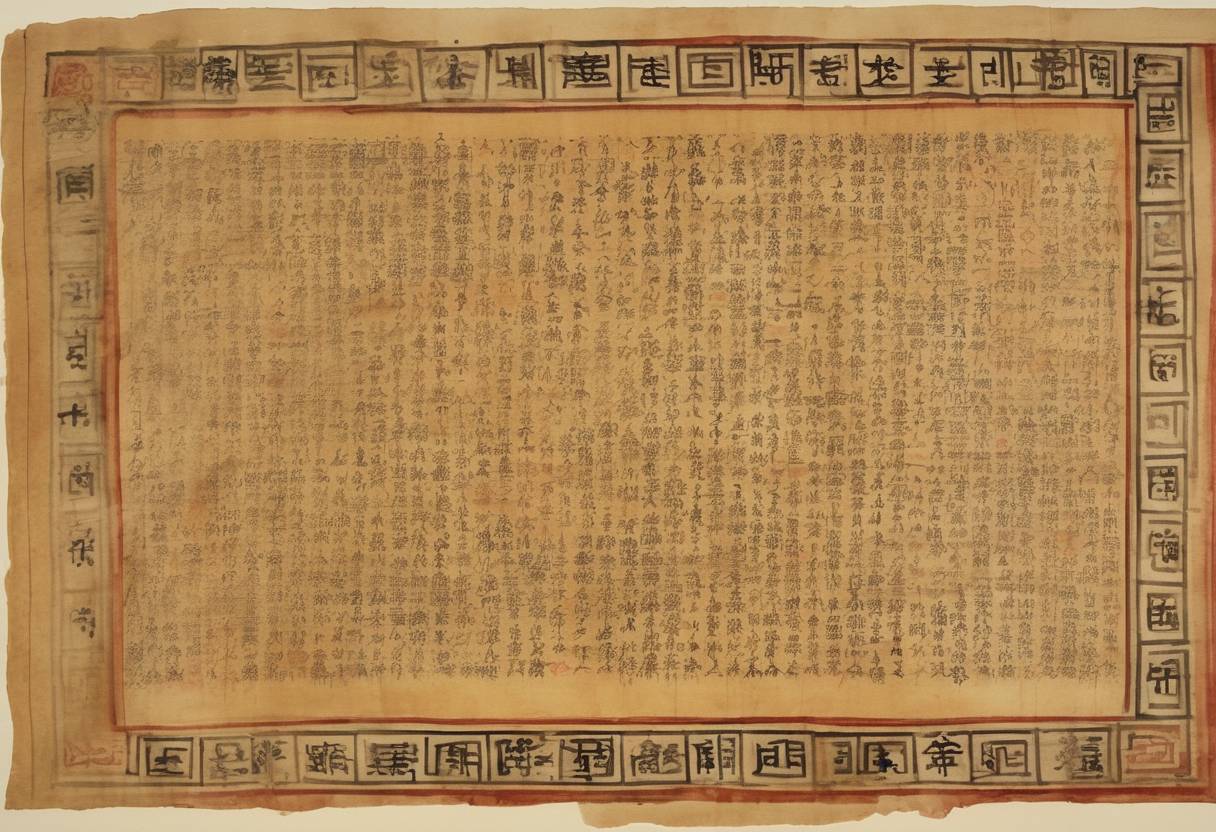
Xuanzang’s Translation: The Earliest Reliably Dated Chinese Buddhist Written Document
On June 2, 657, during China’s Tang dynasty, a significant milestone in the spread of Buddhism was marked by the composition of one of the earliest reliably dated Chinese Buddhist written documents. This document was a translation by the renowned Buddhist monk Xuanzang, an influential figure responsible for the profound dissemination and understanding of Buddhist texts in China.
Context of the Era
The Tang dynasty (618–907 AD), under the reign of Emperor Gaozong during 657, was a period of remarkable cultural, political, and economic development in China. Buddhism, which had been introduced to China several centuries earlier, experienced substantial growth and assimilation into Chinese society, partly due to the translation efforts of eminent monks like Xuanzang.
Xuanzang: The Monk and Scholar
Xuanzang, born in 602 AD, embarked on an epic journey to India in 629 AD to retrieve sacred Buddhist scriptures. Over a seventeen-year pilgrimage, he visited many important Buddhist sites and studied under various masters. On his return in 645, laden with numerous scriptures and relics, Xuanzang dedicated his life to translating these texts into Chinese, significantly influencing the religious and philosophical landscape of China.
The Translation of 657
Among Xuanzang’s vast body of work, the text translated on June 2, 657, stands out for its historical significance. Though the specifics of this particular translation involve broader works that Xuanzang focused on during his time at the Great Wild Goose Pagoda in Chang’an (present-day Xi’an), such activities formed the bedrock of Chinese Buddhist literature. His translations were not mere linguistic exercises but profound endeavors that adapted the teachings of Buddhism to the cultural and philosophical frameworks of China.
Broader Historical Impact
The translations by Xuanzang played a crucial role in the establishment and sustenance of Buddhism in China. They provided access to complex theological ideas that might otherwise have perished in translation inefficiencies or cultural discord. As a result, Xuanzang’s efforts helped foster a period of Buddhist flourishing during the Tang dynasty, influencing art, literature, and philosophy. His legacy lies not only in religious spheres but also in the heightened cultural and scholarly exchange between China and other regions.
This document from June 2, 657, represents an indelible moment in the historical tapestry of Buddhism’s integration into Chinese society, underscoring the enduring importance of cultural and religious exchanges across civilizations.