The Revolt of Basiliscus: January 9, 475
475 · Constantinople, Byzantine Empire
Byzantine Emperor Zeno is forced to flee his capital at Constantinople, as his general Basiliscus stages a revolt and assumes the throne.
July 17, 1393
The Serbian Despot Stefan Lazarević was granted the title of despot by the Byzantine Emperor Manuel II Palaiologos, a recognition of his loyalty and the significance of Serbia in the Byzantine sphere at that time.
Constantinople, Byzantine Empire (now Istanbul, Turkey) | Byzantine Empire
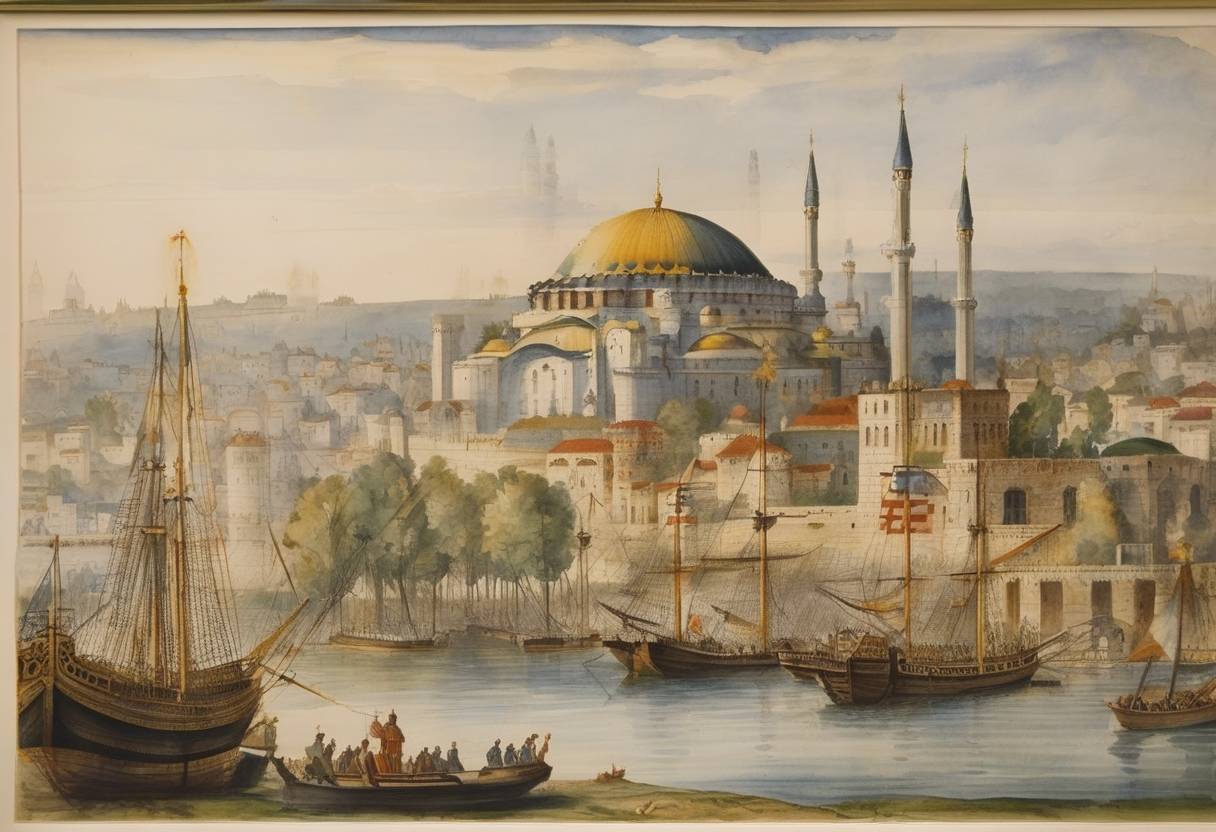
On July 17, 1393, Stefan Lazarević, a significant Serbian nobleman and ruler, was granted the prestigious title of despot by the Byzantine Emperor Manuel II Palaiologos. This event marked a pivotal moment in the history of Serbia and its relations with the Byzantine Empire during a time of political complexities and shifting alliances in the Balkans.
Stefan Lazarević, who ruled the Serbian Despotate from 1389 until his death in 1427, was the son of Prince Lazar Hrebeljanović, who became famous for his martyrdom at the Battle of Kosovo in 1389. This battle was a critical turning point for Serbia, leading to its vassalage under the Ottoman Empire following its defeat. Stefan Lazarević inherited his father’s position and sought to navigate the challenging political landscape marked by the competing influences of the Ottoman Turks and the Byzantine Empire.
The conferral of the title of despot was not merely ceremonial; it signified recognition and legitimization of his rule by the Byzantine Empire. The title of despot was one of the highest Byzantine court titles awarded to foreign leaders and members of the imperial family, denoting both honor and authority. By granting this title, Emperor Manuel II Palaiologos effectively acknowledged Stefan as a crucial ally, reinforcing Serbia’s strategic importance in the region.
By receiving this title, Stefan Lazarević strengthened his position both domestically and internationally. It afforded him greater prestige among the European powers and within the Balkans, enhancing his authority and influence in Serbian territories and beyond. This alliance with the Byzantines also reflected Stefan’s diplomatic acuity in balancing the formidable presence of the Ottoman Empire, against whom the Byzantines were struggling for survival.
Stefan Lazarević’s tenure as despot saw Serbia become a cultural and economic hub. He implemented administrative reforms, patronized the arts, and significantly contributed to Serbian medieval literature and architecture. His court became a center of learning and culture. The relationship established through his title with the Byzantines facilitated cultural exchanges that enriched Serbian society.
The legacy of Stefan Lazarević is reflected in his effective governance and the cultural flourishing of Serbia during a turbulent period. His reign set foundational stones for what would later become the resilient Serbian Despotate, which played a critical role in the region’s history preceding the full Ottoman conquest.
Stefan’s recognition by the Byzantine Empire underscores the interconnectedness of medieval Balkan politics, where titles and honors served as tools of diplomacy and power. This event highlights the nuanced strategies employed by smaller states seeking to preserve sovereignty amidst larger empires’ encroachments.
Source: en.wikipedia.org