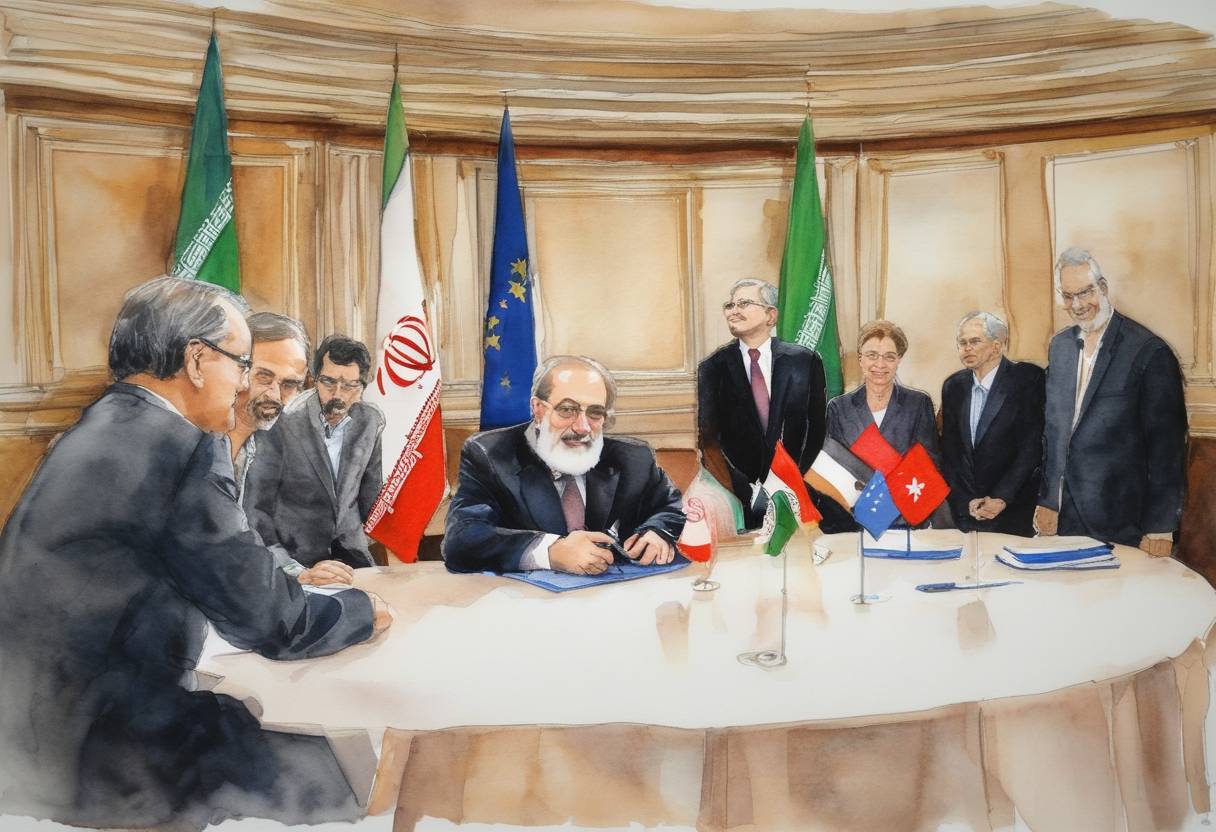
Iran Nuclear Deal Agreement - November 20, 2013
On November 20, 2013, a significant development occurred in Geneva regarding Iran’s nuclear program. On this day, Iran and the P5+1 nations—comprising the United States, the United Kingdom, France, Russia, China, and Germany—made substantial progress toward an agreement aimed at limiting Iran’s nuclear capabilities in return for the easing of economic sanctions that had heavily burdened the Iranian economy.
Context and Background
The discussions were part of an ongoing series of negotiations addressing concerns over Iran’s nuclear ambitions. The international community, particularly Western nations, suspected Iran of developing nuclear weapons under the guise of a civilian nuclear energy program. Iran, however, consistently asserted that its nuclear program was intended for peaceful purposes only. The negotiations involved a delicate balancing act, attempting to ensure that Iran’s nuclear program remained peaceful while providing Iran relief from the sanctions that had significantly impacted its economy.
Key Agreements
The agreement reached in Geneva was a preliminary framework, often referred to as the Joint Plan of Action, which outlined several key points to curb Iran’s nuclear activities:
- Enrichment Limits: Iran agreed to limit its uranium enrichment to a lower level, sufficient for civilian energy purposes but not high enough to produce nuclear weapons.
- Arak Reactor Restrictions: Work on the heavy-water reactor at Arak, which had the potential to produce plutonium (another material that could be used to make a nuclear bomb), was to be halted.
- Increased Inspections: Iran consented to allow increased monitoring and inspection by the International Atomic Energy Agency (IAEA) to ensure compliance with the terms.
- Sanctions Relief: In exchange, the P5+1 nations agreed to provide Iran temporary relief from certain economic sanctions, worth several billion dollars, which offered Iran economic reprieve during a critical period.
Broader Significance
This agreement was seen as a pivotal step in the broader effort to negotiate a long-term comprehensive solution to the Iranian nuclear issue. It marked a moment of cautious optimism, signifying potential for improved diplomacy. The announcement of the deal injected momentum toward further delicate and complex negotiations, aiming ultimately to achieve a lasting resolution to international concerns about Iran’s nuclear intentions.
Impact and Aftermath
In the months following the initial agreement, negotiations continued, ultimately leading to the Joint Comprehensive Plan of Action (JCPOA) two years later, in July 2015. This comprehensive deal was intended to ensure the peaceful nature of Iran’s nuclear program and continued the trend of gradually lifting sanctions in response to verifiable compliance.
The 2013 Geneva agreement was a critical inception point in this protracted diplomatic process, illustrating both the capacity for diplomatic resolution in international conflicts and the complexities inherent in managing global nuclear non-proliferation challenges.