Thomas Wolsey Appointed Archbishop of York
1514 · York, England
Thomas Wolsey is appointed Archbishop of York.
May 15, 1020
Wulfstan, Archbishop of York, dies. Wulfstan was a major religious and political figure in early 11th-century England known for his sermons and writing which promoted social and ecclesiastical reforms.
York, England | Catholic Church
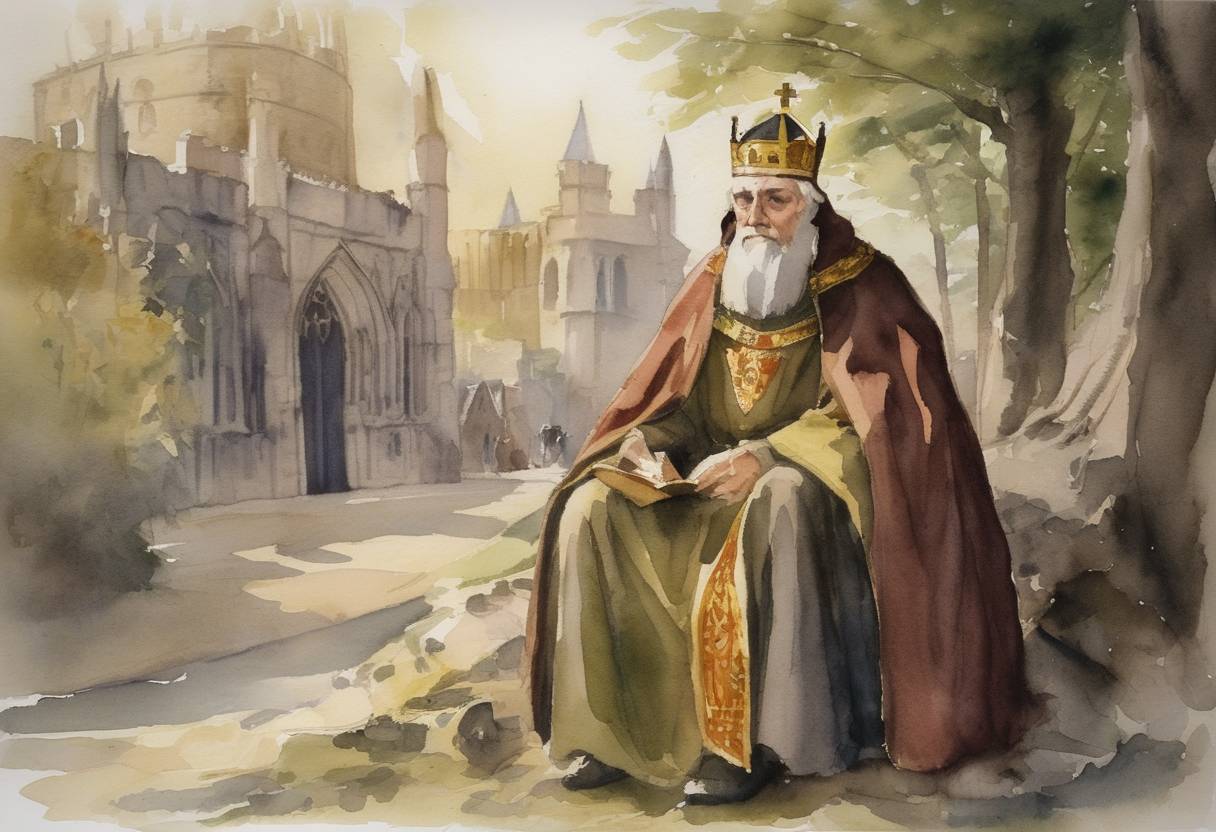
On May 15, 1020, Wulfstan, the Archbishop of York, passed away, marking the end of a significant chapter in early 11th-century English ecclesiastical and political history. A prominent religious leader and reformer, Wulfstan was known for his profound influence in promoting social and ecclesiastical reforms during a turbulent period in England’s history.
Wulfstan, born around 960, rose through the ranks of the Church to become one of its most powerful figures. Initially serving as Bishop of London and later as Bishop of Worcester, his eloquence and dedication to ecclesiastical reform earned him a reputation as a formidable preacher and administrator. In 1002, he was appointed to the role of Archbishop of York, a position he held until his death.
Wulfstan’s tenure was characterized by a series of reforms aiming to address the moral and spiritual failures of his time. His sermons, often delivered with a fiery zeal, urged penitence and social reform, admonishing both clergy and laity to embody Christian virtues more closely. Among his most famous works is the “Sermo Lupi ad Anglos” (the Sermon of the Wolf to the English), a vigorous critique of societal decay and a call to repentance amidst Viking depredations and internal strife.
Beyond his ecclesiastical duties, Wulfstan played a key role in the political landscape of England. He was an advisor to both King Æthelred the Unready and King Cnut, aiding in the consolidation of Christian laws and the unification of Anglo-Saxon and Danish legal systems. His influence extended to the creation of legal codes and efforts to stabilize the kingdom in times of invasion and internal discord.
Wulfstan’s contributions left a lasting impact on both Church and state in England. His writings, particularly his sermons and legal codes, continued to influence English ecclesiastical and secular law for generations. As a reformer, he challenged the norms of his time and endeavored to guide both the Church and society towards a vision aligned with Christian values.
His death in 1020 marked the loss of a major force in early medieval England—one whose impact on religious and legal thought resonated long beyond his lifetime.
Source: en.wikipedia.org