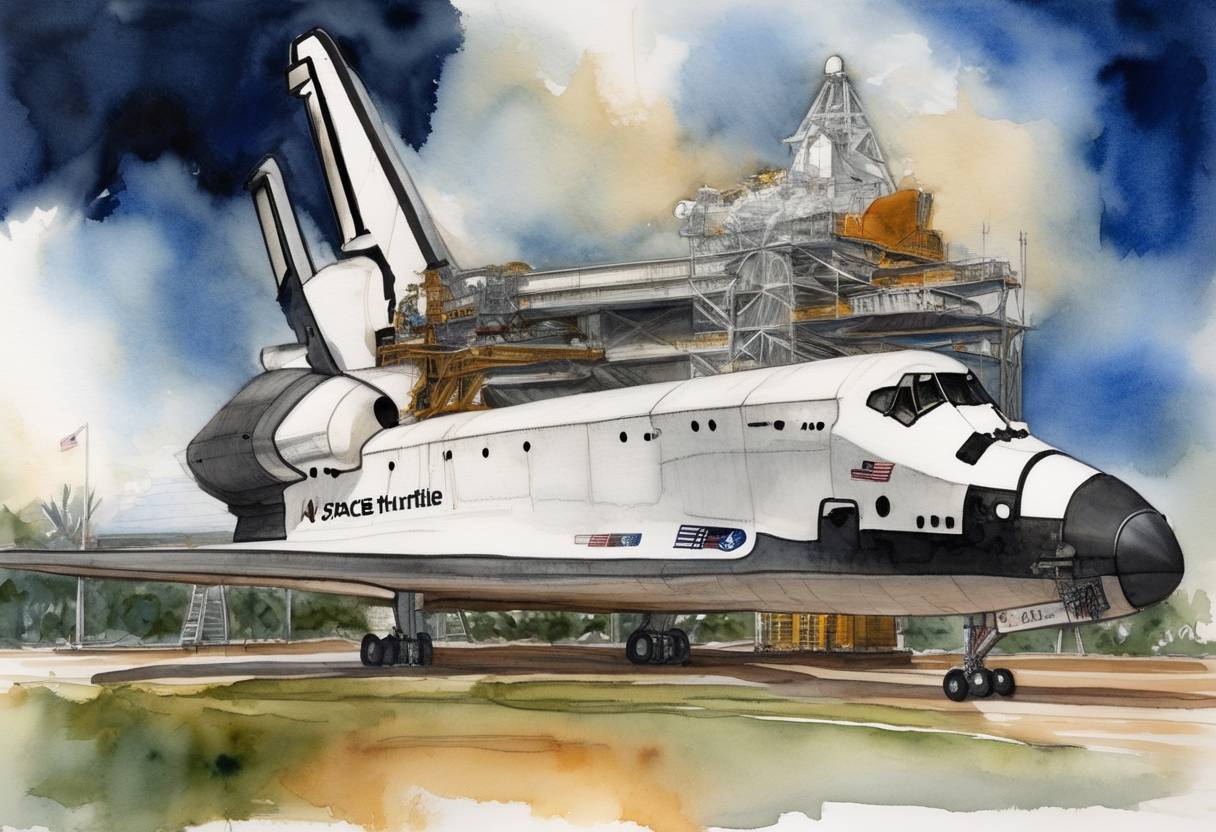
NASA’s Space Shuttle Atlantis and its Final Mission Preparations
On June 28, 2011, NASA’s space shuttle Atlantis was carefully rolled out to Launch Pad 39A at the Kennedy Space Center in Florida in preparation for its final mission, STS-135. This event marked the beginning of the end for NASA’s Space Shuttle Program, which had been operational since the early 1980s.
Context and Background
The Space Shuttle Program was pivotal in the history of space exploration, facilitating numerous missions that included deploying satellites, constructing the International Space Station (ISS), and servicing the Hubble Space Telescope. As the program faced retirement, Atlantis’ scheduled mission represented the 135th and final flight of the shuttle era.
The Rollout to Launch Pad 39A
The transfer of Atlantis to Launch Pad 39A was a meticulously planned and executed process involving the use of a mobile launch platform and a crawler-transporter. This journey from the Vehicle Assembly Building to the launch pad spanned approximately 3.4 miles, requiring several hours to complete. It symbolized the culmination of years of technological advancement and human ingenuity.
Mission STS-135 Goals
Mission STS-135 was designed to deliver supplies and parts to the ISS, ensuring its continued operation and research capabilities. The shuttle’s crew consisted of four astronauts: Commander Christopher Ferguson, Pilot Douglas Hurley, and Mission Specialists Sandra Magnus and Rex Walheim.
Key objectives of the mission included delivering the Raffaello multipurpose logistics module and critical spare parts to the ISS, alongside conducting a range of other scientific experiments and technology demonstrations.
Significance
Atlantis’ final mission was a poignant moment, representing both the end of an era and the transition to new technologies and systems aimed at exploring beyond the low Earth orbit. It underscored NASA’s ongoing commitment to space exploration and international collaboration.
Following STS-135, Atlantis was retired and eventually displayed at the Kennedy Space Center Visitor Complex, where it serves as an educational exhibit, inspiring future generations of space explorers. Its legacy, along with that of the entire Space Shuttle Program, remains integral to the history of human spaceflight.