Napoleon Bonaparte Proclaimed Emperor of the French
1804 · Paris, France
Napoleon Bonaparte is proclaimed Emperor of the French by the French Senate, marking the transition from the French Consulate to the First French Empire.
August 2, 1802
Napoleon Bonaparte is proclaimed 'First Consul for Life' after the results of a plebiscite ratifying a new constitution that consolidates his power.
Paris, France | French government
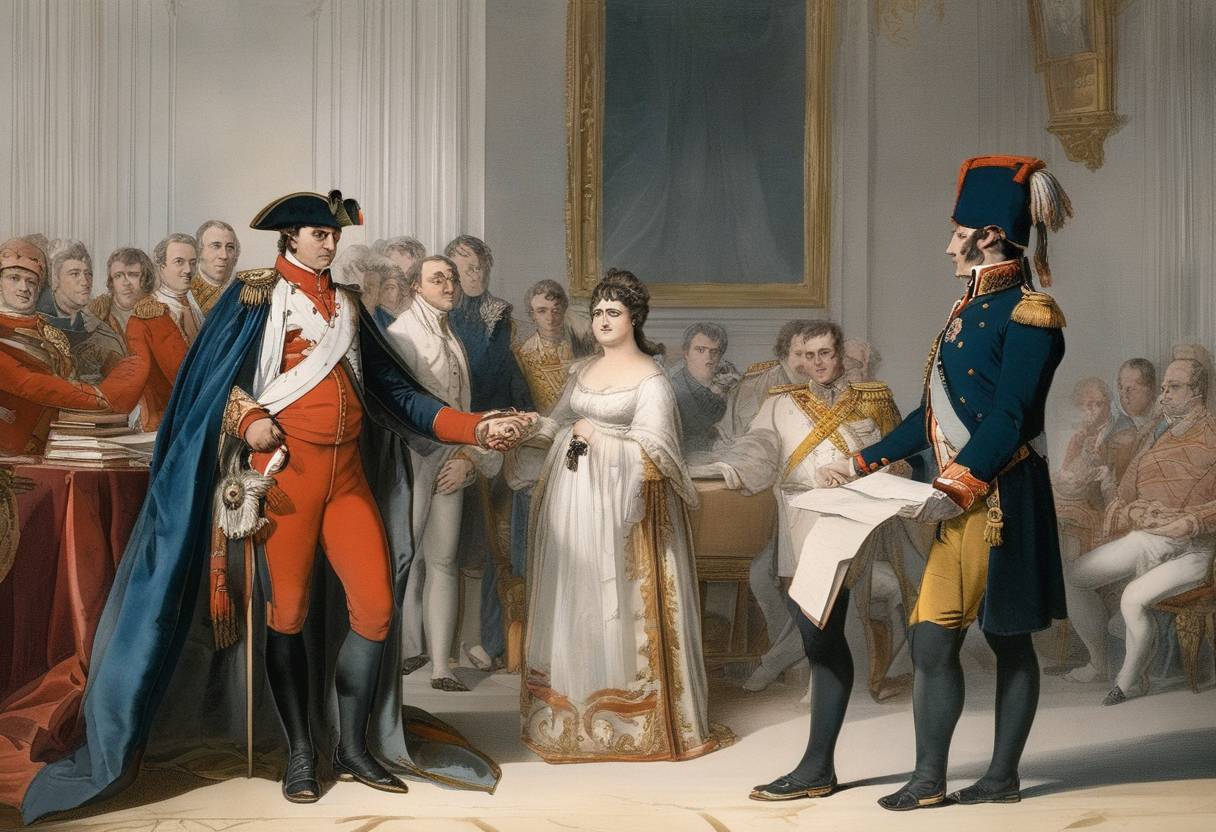
On August 2, 1802, Napoleon Bonaparte was proclaimed ‘First Consul for Life’ following the results of a plebiscite. This event marked a significant consolidation of power for Napoleon and was a crucial step in his eventual rise to become Emperor of the French.
The formation of the Consulate, following the Coup of 18 Brumaire in 1799, saw Napoleon emerge as one of the three Consuls with significant control over the French government. However, from the beginning, it was clear that Napoleon intended to dominate French politics. The Consulate, characterized by a more authoritarian regime, replaced the earlier revolutionary government that had become mired in instability and inefficiency.
In 1802, the political landscape of France was still adjusting after years of revolution and conflict. Napoleon sought to further stabilize his authority by instituting a new constitution—known as the Constitution of the Year X—that would consolidate his power. The constitution was submitted to a popular vote in the form of a plebiscite. This plebiscite gave the electorate the opportunity to endorse or reject Napoleon’s proposal to extend his tenure as the First Consul indefinitely.
The results of the plebiscite were overwhelmingly in favor of Napoleon. Official count reports indicated that over three million votes were cast in his favor, while only a few thousand opposed the measure. These results, although they have been scrutinized for their accuracy, effectively granted him the title of “First Consul for Life” and cemented his control over the French government.
With his new title, Napoleon effectively held dictatorial powers. The new constitution allowed him to appoint and dismiss officials, control the military, and oversee legislation. This centralization of power laid the groundwork for the subsequent establishment of the First French Empire.
Napoleon’s ascendancy as First Consul for Life was pivotal not only for France but for Europe as well. It marked the end of the French Republic and sowed the seeds for the establishment of the Napoleonic Empire. His rule would soon encompass vast portions of Europe and initiate numerous reformations in the legal and social arenas, most notably with the Napoleonic Code.
Napoleon’s proclamation as First Consul for Life exemplifies the transition from revolutionary republicanism to authoritarian rule in France. His leadership style and the changes it ushered in would have far-reaching effects across Europe, influencing governmental structures and the balance of power for years to come.
Source: en.wikipedia.org