The Indo-Pakistani War of 1965 Ceasefire: September 22, 1965
1965 · New York City, United States
The Indo-Pakistani War of 1965 ended after the United Nations called for a ceasefire, which was accepted by both India and Pakistan.
October 22, 1947
Kashmir conflict: A tribal invasion by Pakistani-Afghani forces commenced in Jammu and Kashmir, leading to the Indo-Pakistani War of 1947-48.
Muzaffarabad, Kashmir | Pakistani tribal forces
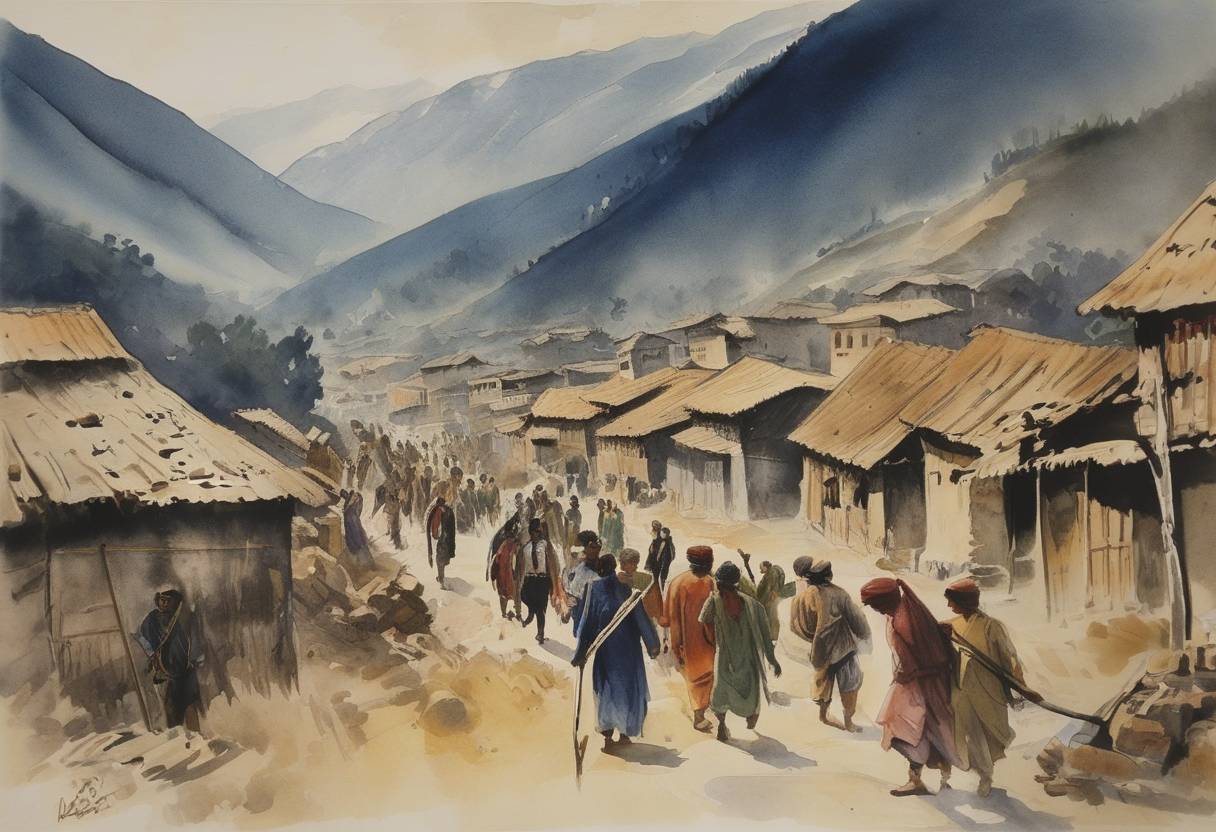
On October 22, 1947, a pivotal event in the Kashmir conflict occurred with the tribal invasion of Jammu and Kashmir. This incursion, consisting primarily of tribesmen from the North-West Frontier Province of Pakistan and supported indirectly by Pakistani authorities, marked the beginning of the Indo-Pakistani War of 1947-48.
Partition of India: In August 1947, British India was partitioned into the independent dominions of India and Pakistan. This division led to widespread communal violence and large-scale displacement of populations.
Princely States’ Dilemma: Jammu and Kashmir, a princely state, faced a choice between joining India or Pakistan following partition. The state’s ruler, Maharaja Hari Singh, was Hindu, while the majority of his population was Muslim, creating a complex political scenario.
Strategic Interest: Kashmir’s geographic location made it strategically valuable to both countries. The region’s potential economic and military significance heightened tensions between India and Pakistan over its control.
Initial Incursion: Early on October 22, thousands of tribal militias, predominantly from the Pashtun tribes of the region, invaded Kashmir from Pakistan. This force, encouraged by claims of impending support and supplies, aimed to capture Srinagar and annex Kashmir to Pakistan.
Plunder and Atrocities: The tribal forces advanced rapidly, capturing the town of Muzaffarabad and causing widespread devastation in their path. Reports of atrocities, including looting and violence against the local population, heightened the crisis.
Maharaja’s Appeal for Aid: As the tribesmen approached the capital, Srinagar, Maharaja Hari Singh sought military assistance from India. In return for support, he signed the Instrument of Accession on October 26, 1947, essentially agreeing to join India, a decision that legally aligned Jammu and Kashmir with the Indian Union.
Indian Military Intervention: Following the accession, India airlifted troops to Srinagar on October 27, 1947. The Indian forces managed to halt the advance of the tribal invaders, securing Srinagar and pushing back the aggressors.
Indo-Pakistani War of 1947-48: The invasion escalated into a full-scale war between India and Pakistan. The ensuing conflict lasted until December 1948, culminating in a United Nations-brokered ceasefire on January 1, 1949.
Division of Kashmir: The ceasefire left Jammu and Kashmir divided along what came to be known as the Line of Control, with Pakistan administering parts to the northwest, known as Azad Jammu and Kashmir, and India governing the remainder.
Prolonged Conflict: The events of October 22, 1947, set the stage for a protracted territorial dispute between India and Pakistan, a conflict that persists to this day, playing a central role in inter-state relations and regional geopolitics in South Asia.
UN Involvement: The Kashmir conflict became one of the earliest challenges for the United Nations in its peacekeeping and conflict resolution missions, influencing the development of international diplomatic interventions in regional disputes.
The tribal invasion of Jammu and Kashmir remains a critical historical event, with enduring impacts on the regional dynamics and international relations of South Asia.
Source: www.britannica.com