The Treaty of Fort Jackson: Ending the Creek War
1814 · Fort Jackson, United States
The Treaty of Fort Jackson is signed, ending the Creek War.
August 3, 1795
The Treaty of Greenville was signed, ending the Northwest Indian War in the Ohio Country.
Greenville, United States | United States government
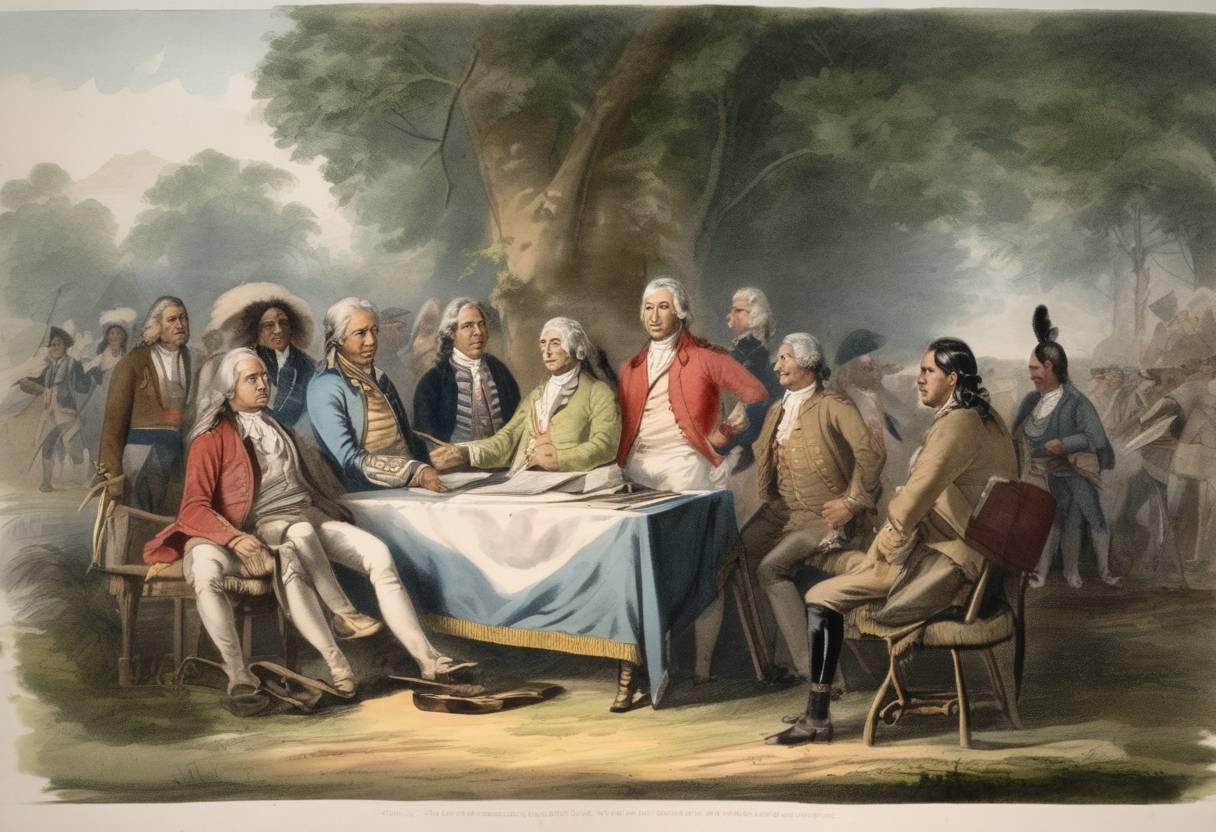
On August 3, 1795, the Treaty of Greenville was signed, marking a significant turning point in the history of the Northwest Territory, now part of the present-day United States. The treaty followed the Northwest Indian War and helped to establish a new boundary line between Native American lands and European-American settlements in the Ohio Country.
The Northwest Indian War, also known as the Ohio War, was a conflict that occurred from 1785 to 1795 between a confederation of Native American tribes and the United States. The war centered around resistance by Native Americans to encroachment upon their lands by settlers moving into the area north and west of the Ohio River.
The Treaty of Paris (1783), which ended the American Revolutionary War, had ceded control of the Northwest Territory to the United States. However, Native American tribes in the region did not recognize this transfer of land, leading to a series of battles, including the decisive defeat of American forces at the Battle of the Wabash in 1791.
The Treaty of Greenville was signed following the United States’ victory at the Battle of Fallen Timbers in 1794, which weakened the Native American confederation. The treaty was signed by General Anthony Wayne for the United States and representatives from multiple Native American tribes, including the Wyandots, Delawares, Shawnees, Ottawas, Miamis, and others.
The key provisions of the treaty were as follows:
The signing of the Treaty of Greenville helped to bring a period of relative peace to the Northwest Territory. It opened the way for increased settlement and development in the region, contributing to the westward expansion of the United States. This expansion, however, would continue to encroach upon Native American territories, leading to further conflicts and treaties in the future.
The treaty is often seen as a precursor to future patterns of United States policy toward Native American lands, highlighting issues of sovereignty, negotiation, and conflict. The treaty signified an important step in the complex history of Native American relations with the U.S. government, setting precedents for future treaties and territorial changes.
Source: en.wikipedia.org