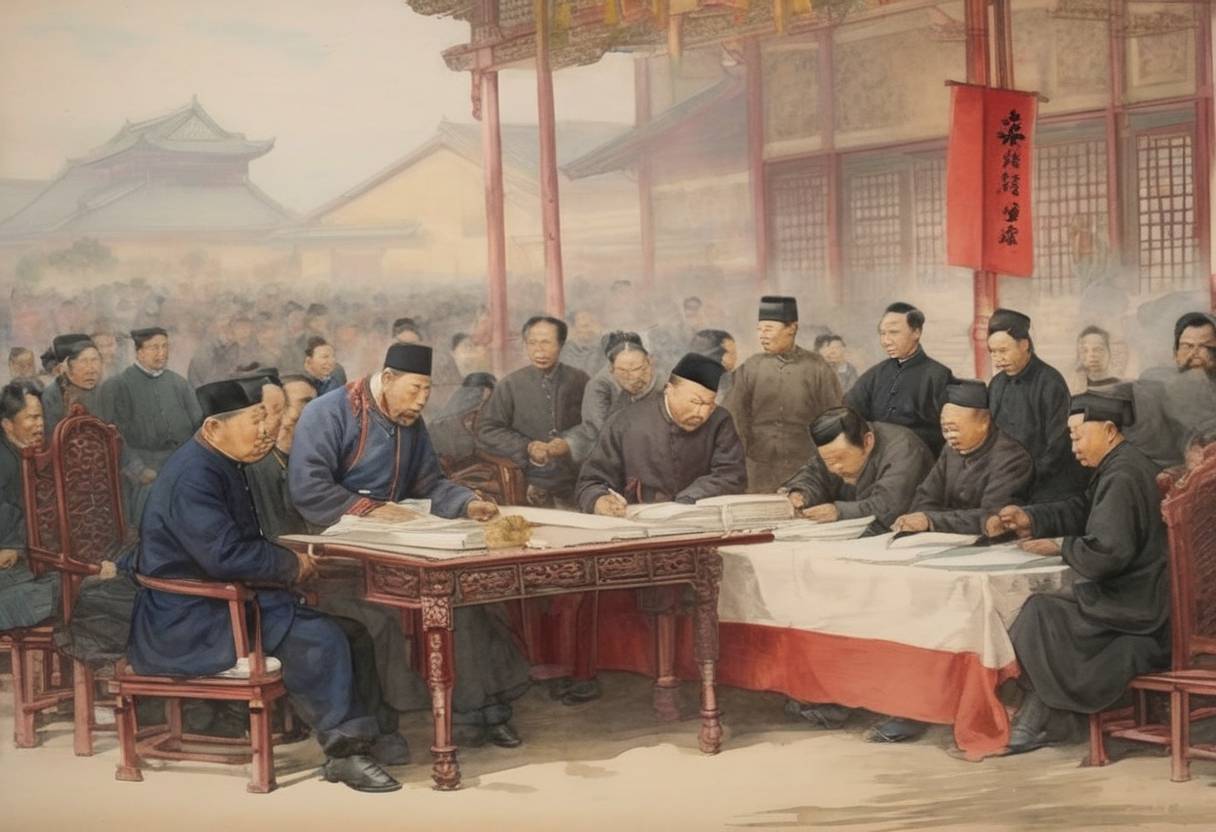
Treaty of Tientsin (Tianjin) - August 14, 1885
The Treaty of Tientsin, signed on August 14, 1885, marked the end of the Sino-French War, a conflict primarily over the status of Vietnam, which lasted from August 1884 to April 1885. This treaty was one of several agreements signed in Tientsin (now Tianjin), China, and is distinct from earlier treaties bearing the same name.
Context and Background
The Sino-French War was rooted in French ambitions to establish control over Vietnam, a region long under Chinese influence. In 1883, France launched a campaign to assert dominance over northern Vietnam, which escalated tensions with China, the protectorate of the region. The hostilities officially commenced with the Battle of Bắc Lệ in June 1884, where French and Chinese forces clashed.
Terms of the Treaty
- Cessation of Hostilities: Both nations agreed to cease military actions, effectively ending the war.
- French Protectorate over Vietnam: China recognized the French protectorate over Annam (central Vietnam) and Tonkin (northern Vietnam). This recognition was a significant diplomatic win for France and solidified their control over the region.
- Withdrawal of Troops: Both nations agreed to withdraw their troops from contested areas, ensuring a demilitarized zone to prevent further conflicts.
- Trade and Diplomatic Relations: The treaty opened up more channels for trade and established official diplomatic relations between France and China.
- Non-Interference: Both parties agreed not to interfere in each other’s spheres of influence, with China relinquishing claims over Vietnam in favor of France.
Aftermath and Significance
The Treaty of Tientsin greatly influenced East Asian geopolitics. With France’s control affirmed over Vietnam, it laid the groundwork for the broader French Indochina, which later expanded to include Cambodia and Laos. For China, the treaty marked another concession to foreign powers during the late Qing dynasty, showcasing the diminished Chinese influence in the region.
The treaty also signaled a shift in regional power dynamics, providing France a strategic foothold in Southeast Asia and shaping the future colonial landscape. The accord paved the way for modernization efforts in China, as Qing leadership sought to strengthen the nation’s military and political standing in response to increasing foreign pressure.